As Nepal prepares for its next national election, the political atmosphere is charged with energy and the prospect of change. The conversation has moved beyond which parties might form alliances or how they will run their campaigns. Instead, a more fundamental question is on everyone’s mind: Can the government ensure a voting process that is secure, fair, and widely accepted?
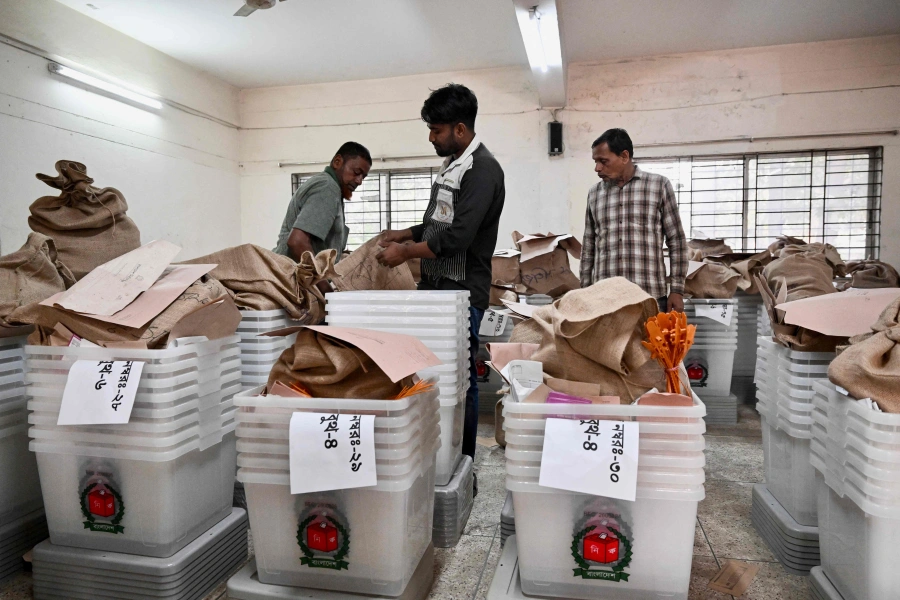
In recent years, South Asian countries have held elections under intense pressure and public watch. One of the most important examples is Bangladesh’s 13th National Parliamentary Election held on February 12, 2026. This massive event took place across 299 areas with over 42,000 polling stations and 127 million voters. To keep things safe, Bangladesh used a very strict and organized security system.
This effort was a major national investment. The Bangladesh Election Commission was given Taka 2,956 crore (about USD 250 million) for the 2025–2026 year. This was a huge increase specifically to manage nearly one million security personnel, including about 100,000 army troops. It shows that election security is not just paperwork—it is a big expense for any country.
While Nepal and Bangladesh have different geography and politics, the way Bangladesh handled its security offers important lessons. However, Nepal must be careful to adapt these ideas to fit its own needs rather than just copying them.
Deterrence Through Visibility
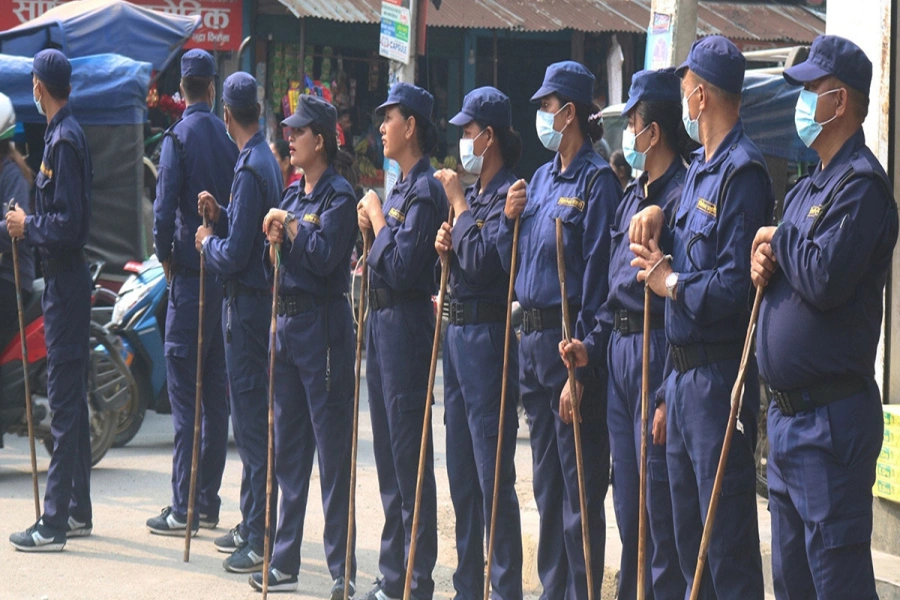
Bangladesh used a strategy called “deterrence through layered visibility.” This means they put security forces in different "rings" or layers around polling centers. Their goal was not to interfere with the voting itself, but to be visible enough to stop anyone from causing trouble. Verified data shows that out of the total 970,000 personnel, there were 103,000 army troops working under a "support-to-civil-authority" rule. The largest group was the 567,868 Ansar and Village Defence Party (VDP) members, supported by 187,603 Police, 37,453 Border Guards, and special units like the RAB.
Nepal to play against Laos in preliminary stage of 2026 World C...

The security was organized from the inside out: election officials were inside the rooms, police were at the gates, mobile teams were nearby, and the army was ready at a higher level. Crucially, the army stayed in the background and was not allowed to touch ballots or manage the booths. This kept the process in civilian hands.
The idea was simple: make peaceful voters feel safe and make troublemakers feel afraid to act. For Nepal, this layered style can be a good example. We don't have the same crowded cities as Bangladesh, but we have difficult mountains and scattered villages. Having visible but calm security in sensitive areas like the Terai and big cities could help people feel more confident about voting.
However, Nepal must be very careful about its own history. In places like the Terai and Madhesh, a heavy military presence can sometimes be seen in a negative way because of past issues. If security feels too aggressive or doesn't respect local culture, it might actually stop people from coming out to vote. Security must be effective but also sensitive to the local people.
Stopping the “One-Size-Fits-All” Model
A big lesson from Bangladesh is that they did not treat every area the same way. They labeled areas as General, Sensitive, or Highly Sensitive based on past trouble. This allowed them to put more guards in high-risk city areas and use mobile teams in rural or border areas. Nepal has usually used simple “normal” and “sensitive” labels, but in today’s world of social media and fast-moving protests, we need a more detailed plan. Identifying specific "hotspots" would help our security forces use their resources better without getting tired out by covering the whole country the same way. This is about being smart and precise, not just using more soldiers.
The Military as a Strategic Backup
In Bangladesh, the military stayed outside the polling rooms and acted as a backup force. This kept the civilian government in charge. In Nepal, the Army is usually called in to help the civil authorities. Because of our mountains, the Nepali Army’s best strength is not just standing at a gate, but moving quickly. Using helicopters to reach remote areas is much better than having police walk for days. But the Army must remain neutral. If people think the military is favoring one side, trust will break. The Army should focus on moving ballots, logistics, and being a quick backup force.
The Money Factor
Security is Expensive Bangladesh’s election showed that huge security costs a lot of money. If Nepal tried to use the same massive number of guards, it would be very hard on our budget. Nepal’s 2017 elections cost around Rs. 3,472 crore. Trying to match Bangladesh’s scale could take away money from schools, hospitals, and roads. Therefore, Nepal should choose efficiency over just "more people." Using intelligence and fast-moving teams is a better and cheaper way for us to stay safe.
Power vs. Trust
Bangladesh proved it has the "capacity" to hold an election even under pressure. But having the power to hold a vote doesn't always mean people will trust the result. If there are too many guards, it can make voters feel uncomfortable. In Bangladesh, the turnout was about 59.4%. For Nepal, where people’s participation is the heart of democracy, the balance is key: we need enough security to stop violence, but not so much that it feels like the state is forcing the vote. A peaceful election is only a success if the people believe in it.
The Myadi Prahari Factor
Nepal uses many temporary police (Myadi Prahari) for elections. While they help fill the gap, they often lack full training. Bangladesh showed that training guards in human rights and professional behavior is vital. In Nepal, we must make sure our temporary recruits are taught how to be protectors, not intimidators. One small mistake by a local guard can ruin the reputation of the whole election.
Geography and Strategy
The biggest difference is our land. Bangladesh is flat with good roads, so they can send help in minutes. Nepal has mountains where travel takes hours or even days. This means we cannot just rely on big numbers; we must focus on being fast and well-coordinated. We need better communication and rescue teams ready in every district.
Thus, the recent Bangladesh election teaches us that good security is about structure, clear roles, and self-control, not just the number of boots on the ground. For Nepal, the goal should be a plan that fits our own mountains, our budget, and our diverse society. Elections are not won by force; they are won by trust. Security brings order, but only being fair and neutral brings acceptance. The real test for Nepal will be whether we can manage a professional, transparent, and neutral process that makes every citizen feel proud to vote.
(The author is a practitioner who closely follows Nepal’s evolving societal and political landscape and has been regularly contributing analytical articles to national newspapers on issues of security, governance and democratic stability.)