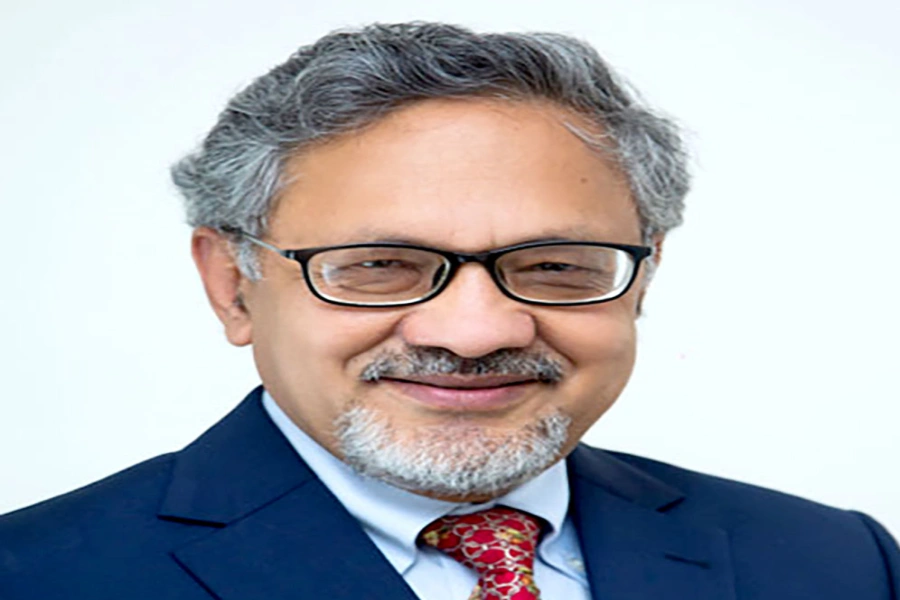
Could you please tell our readers about the company?
We are called Super Religare Laboratories and we started our operation in 1996 with the view of filling in the void that existed in terms of carrying out specialized or complex tests. In most countries, most of the labs are operated by pathologists. So the technology these stand-alone labs deploy is not advanced and not adequate to conduct specialized tests. To carry out such tests one can install modern equipment, which requires huge investment. But on the other hand, demand for such tests is usually lower than regular tests. So to offset the loss, most of the pathology centers raise the cost of tests, which creates burden on consumers. One of the ways to lower the cost is pulling samples from various locations to the center where thorough tests can be done. And this is what we are doing in Nepal.
Are you trying to say that the general conception that big labs charge big money is a myth?
At the end of the day it is the economics which determines the cost of the test. As I said earlier volume is a big determinant of cost. Say for instance, you have a reagent kit which can be used to carry out 100 tests. But if you have collected only 10 samples and are under pressure to provide results of these tests as early as possible, then you will have to sacrifice the revenue that could have been generated from 90 other tests as the kit cannot be used again once it is opened. These kinds of factors raise the cost of tests.
So how do you make optimal use of available resources?
To create the volume that we need, we have opened collection centers in 16 locations throughout the country. We are soon establishing additional four collection centers in various locations and have plans of taking the number to 30 within couple of months. These collection centers basically collect samples from areas in the vicinity and courier them to the main lab located in Maharajgunj. So at the reference lab in Kathmandu we get samples collected from all over the country.

Does this practice of transporting samples to Kathmandu make the tests expensive?
We are always concerned about providing services at competitive rates. Since we are relatively new here, businesses in most of the places where we open collection centers are dominated by local players who have carved a niche for themselves. To compete with these players, we cannot afford to overshoot expectations of the medical community or patients in terms of price. But at times people should also take quality into consideration as we take pride in accuracy of our results.
Despite establishment of reputed labs like yours, we have to rely on companies based abroad to conduct specialized tests. What are the reasons?
The viability of a company depends on the revenue it generates. If we start offering high-end services from day one, without collecting any sample, we will incur huge losses as demand for such tests are usually low while investment is high. Yet we are conducting few specialized tests such as tumor markers and hormone assays which are not carried out by many labs here. In near future we are planning to start performing 20 new tests in the country.
What do you think of quality of pathology labs and diagnostic centers in the country?
Most of the labs here do not focus on quality control. Quality control is an expensive proposition but without this accuracy of results cannot be guaranteed. Yet doctors as well as patients here do not bother to inquire how tests are being conducted due to lack of awareness. In our case, we ensure that quality, which is of primary importance for patient management, is delivered with each and every result that we issue.
In India, you have affiliated your organization with a university to offer biotechnology courses for bachelors, masters and PhD level. Can we expect something like that to happen in Nepal?
Certainly. We believe in the technical and medical human power that we have in our organization. These specialists drive different departments of our organization and they have extensive knowledge on various cases and latest technology. We can use these human resources to educate people. Although we have not approached any university in this regard so far, we will do so in near future. This will help our in-house pathologists to enroll for master´s and PhD courses as well.
Related story
Government allows private labs to conduct COVID-19 tests