KATHMANDU, Dec 17: Voting to elect the new leadership under the 11th General Convention of the CPN-UML was postponed on Tuesday due to technical reasons, pushing a closely watched power contest to Wednesday morning. The deferred voting is now scheduled to begin at 8 AM.
According to the UML Central Election Commission, polling was originally scheduled from 11 AM to 5 PM on Tuesday, but failed to begin at the designated time. Throughout the day, the voting schedule was repeatedly revised. At one point, it was announced that voting would start at 8 PM, but even that deadline passed without polling commencing. Eventually, citing technical difficulties, the election was postponed until Wednesday morning.
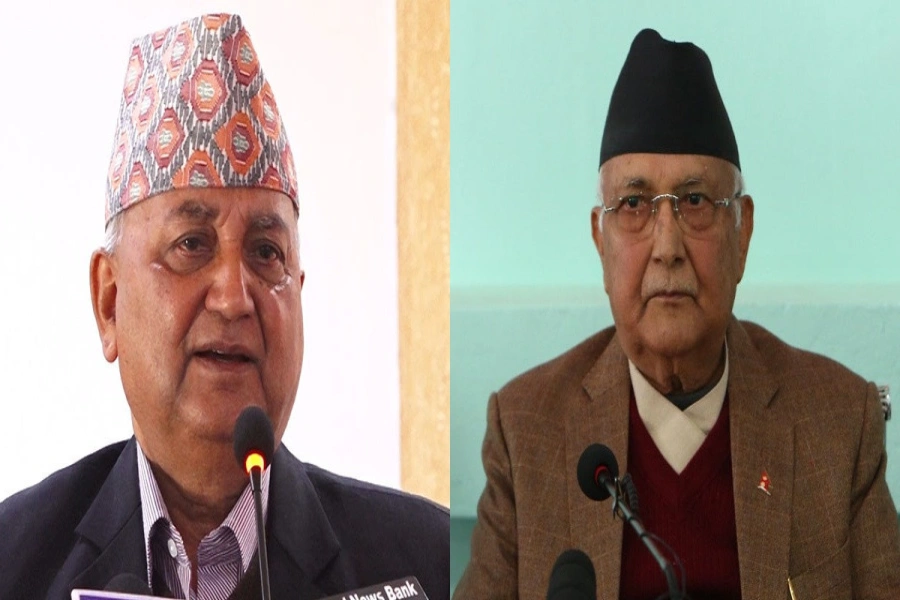
The postponement was announced at the voting venue, Bhrikutimandap, after the incumbent General Secretary, Ishwar Pokhrel, convened party leaders. Pokhrel, who is also contesting for the top post, said voting could not begin at night due to technical reasons and that, with the consent of all concerned, it was deferred until 8 AM Wednesday. Voting will be conducted using electronic voting machines.
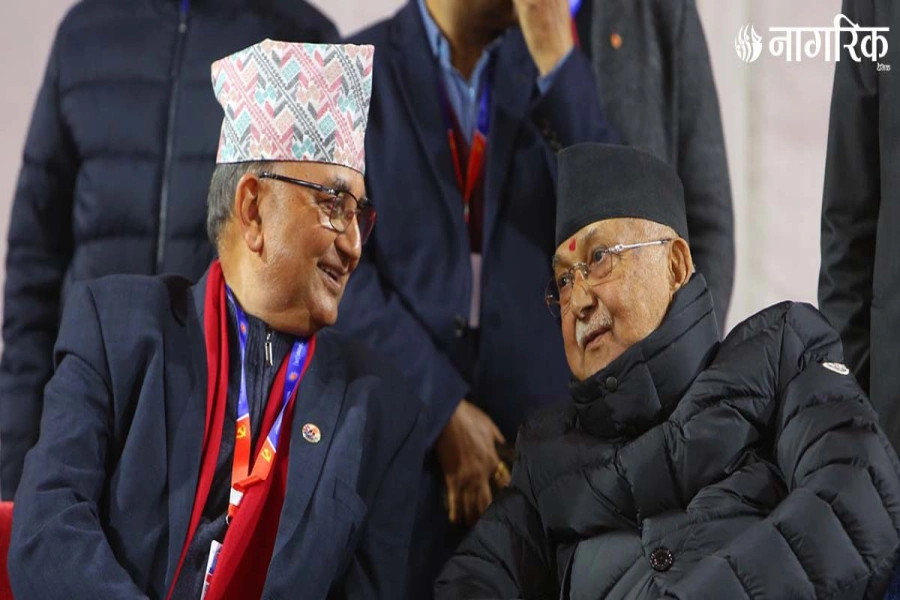
KP Sharma Oli—who has weathered repeated political upheavals and is often seen as uncompromising beyond his own faction—is in the final stretch of his bid to secure a third term as party chair.
With voting deferred, delegates will cast their ballots only on Wednesday. UML Central Election Commission Chair Bijay Subba said results would be announced within three hours of voting concluding and technical verification being completed. “Once voting ends, some time will be required for collection and technical verification. Vote counting will then begin immediately. We estimate the results will be ready within about three hours,” he said.
Around 80 electronic voting machines will be deployed for the election, Subba added.
Oli has filed his candidacy with the clear intent of returning as chair. If re-elected, it would mark a hat-trick. Most delegates present at the closed-session venue on Tuesday predicted an Oli victory, though the race is being keenly contested by incumbent Senior Vice-Chair Ishwar Pokhrel. Nominations for the chair, office-bearers, and central committee members were filed on Monday.
Upcoming general convention will retain Oli as party chairman:...

Oli has led the UML continuously since narrowly defeating then General Secretary Madhav Kumar Nepal at the ninth general convention held in Kathmandu in July 2014. He has already completed two terms and has steered the party for nearly nine consecutive years. The 11th General Convention was convened a year earlier than scheduled, largely due to the pressure generated by the Gen Z movement.
The statute convention held in Godavari, Lalitpur, from September 5 to 7 paved the way for Oli’s third-term bid by removing earlier provisions that capped the chair’s tenure at two terms and imposed a 70-year age limit. As demands for leadership change intensified within the UML following the Gen Z movement, the party advanced the general convention by a year.
In 2018, the then CPN-UML and CPN (Maoist Centre) merged to form the Nepal Communist Party (NCP). Oli, who became one of its chairs, later clashed with co-chair Pushpa Kamal Dahal, leading to the party’s split. After the NCP dissolved and the UML reverted to its original form, Oli retained the chair. Following the departure of leaders including Madhav Kumar Nepal, Oli was once again elected chair at the 10th General Convention in Sauraha, Chitwan, in November 2021.
After the nationwide Gen Z uprising on September 8 and 9, Oli was ousted as prime minister, triggering renewed debate within the party over leadership transition. As internal pressure mounted, Oli advanced the general convention in a bid to secure renewed endorsement. At the 10th General Convention, former vice-chair Bhim Rawal had blocked Oli’s unanimous election. This time, Oli again sought consensus—but Pokhrel mounted a direct challenge.
Oli and Pokhrel are contesting the leadership election with rival panels. While many delegates still predict an Oli victory, the contest is widely seen as tougher than in the previous convention, with Pokhrel viewed as a stronger challenger than Rawal.
Discontent has also surfaced within Oli’s own camp, stemming from dissatisfaction over the distribution of office-bearer positions. Until just hours before the scheduled vote, Oli faced murmurs of dissent from within his faction. Though he managed to placate leaders such as Raghuji Pant, Pradeep Gyawali, and Rajendra Gautam, others remained disgruntled.
Pokhrel, meanwhile, appeared confident and energetic throughout the day. Even if he were to lose, a leader from his camp said, democratic norms and internal competition within the UML would have prevailed.
From the eighth general convention held in Butwal, the UML shifted toward a multi-post leadership structure. At that convention, Pokhrel contested the post of general secretary from Jhalanath Khanal’s camp and defeated Pradeep Nepal, who was Oli’s candidate. Had Pokhrel aligned with Oli at the time, Oli could have secured victory then as well.
At the ninth general convention, Oli defeated Madhav Nepal to become party chair, while Pokhrel was elected general secretary from Oli’s camp. However, following the UML–Maoist Centre merger in 2018 that led to the formation of the Nepal Communist Party (NCP), Bishnu Paudel—then UML deputy general secretary—was appointed general secretary. Pokhrel was relegated to the role of a secretariat member.
Having largely contested elections from within the party establishment, Pokhrel is, for the first time, leading a challenge with his own panel. Backed by former President Bidya Bhandari, he has filed his candidacy for the party chair.
At the 10th General Convention in Sauraha, Chitwan, Pokhrel supported Oli against Bhim Rawal and was elected senior vice-chair. However, the internal balance shifted last June when former President Bhandari publicly expressed her intention to return to active UML politics. After Oli effectively blocked her ambition, Pokhrel emerged as the leading face of the internal challenge to Oli’s leadership.
Known as a strong organizational hand since the days of the CPN (Masal), Pokhrel had already built a reputation as a capable organizer while Oli was in jail. He spent nearly one and a half decades underground during the Panchayat era and was elected to the National Assembly in 2054 BS, and to the House of Representatives in 2056 and 2074 BS. He has served twice as deputy prime minister and headed key ministries including defense, foreign affairs, industry, commerce, and supplies.
Disciplinary baton in the hands of a corruption convict
Professor Dr Bharat Raj Pahari has been elected unopposed as chair of the UML Central Disciplinary Commission, with no other nominations filed for the post.
Pahari was previously convicted in a corruption case. The Commission for the Investigation of Abuse of Authority (CIAA) had charged him with amassing disproportionate assets while serving as dean of Pulchowk Engineering Campus. In 2075 BS, the Special Court found him guilty, sentencing him to 10 months in prison and imposing a fine of Rs 9.8 million. He is currently involved in the hotel business in Pokhara.
Similarly, Chakra Bahadur Parajuli and Dr Rajendra Ghimire were elected unopposed as vice-chair and secretary of the Central Disciplinary Commission, respectively. Dr Pushpa Raj Kandel was elected unopposed to the Central Accounts Commission.
Several leaders were also elected unopposed as central committee members. These include former ANNFSU General Secretary Naresh Rokaya and Menaka Kumari Pokhrel. Rokaya was elected unopposed from the open category as a youth under 40. Lilamani Gautam from Lumbini was also elected unopposed from the youth-under-40 cluster.
From Lumbini Province, women members elected unopposed include Gumadevi Acharya (Goma), Menaka Kumari Pokhrel, and Shantidevi Dhakal.