Damage to housing, human settlements totalled Rs 303 billion
Related story
Damage reported at Phungpingkatti checkpoint in Sindhupalchok d...

KATHMANDU, June 13: The devastating earthquake of April 25 and aftershocks have damaged assets and properties valued at Rs 513 billion, and the loss in terms of foregone earnings in different sectors is to the tune of Rs 188 billion, according to a report.
The draft PDNA, prepared by the National Planning Commission working with some 250 Nepali and international experts, divides the damage assessment into 21 sectors. It has calculated the damage extent in housing and human settlements, the sector suffering the most damage, at Rs 330 billion. Damage to education and tourism is estimated at Rs 28 billion and Rs 18 billion, respectively.
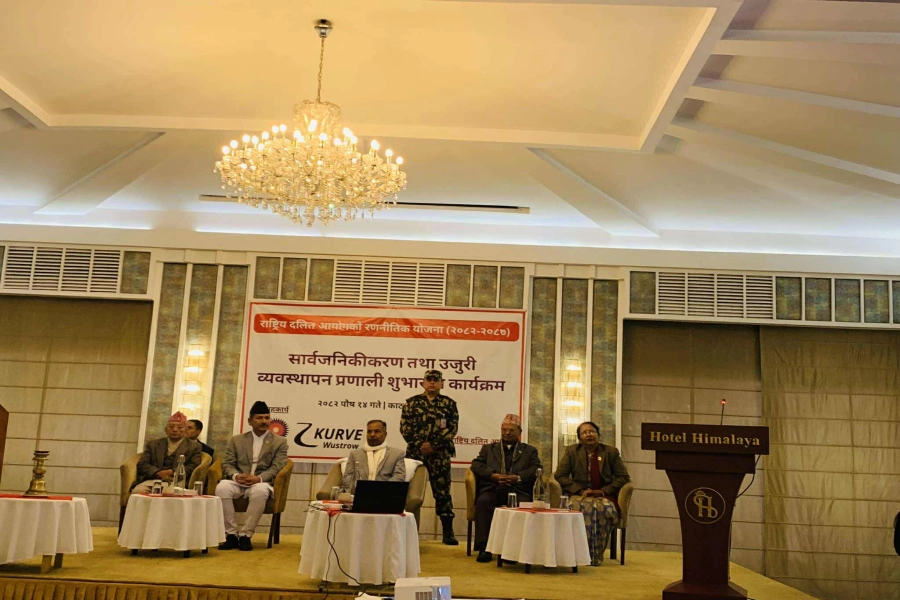
NPC handed over the PDNA draft report to Prime Minister Sushil Koirala Friday. Vice-Chairman of NPC Govind Raj Pokharel claimed that the report will be finalized by June 18 and will including inputs from broader consultations to be organized in Kathmandu Saturday, as well as donors' comments thereafter. "It's a great achievement that we have come out with a comprehensive and acceptable report by all concerned in a matter of only three weeks and that all the teams were led by officials of NPC and supervised by NPC members," added Pokharel.
The report will be tabled before the donor community at an international conference to collect resources for the rebuilding and reconstruction. The conference is scheduled for June 25 in Kathmandu.
In the course of the consultations, a discussion at Parliament's Finance Committee is scheduled on Sunday. NPC member Swarnim Wagle said that they have coordinated properly with all the line ministries and the donor community.
"The report will be the only credible document for seek international support for reconstruction of the damage," said Wagle.
The government is also mulling to form a high-level implementation agency for the reconstruction tasks and a law for this purpose is in the making. In order to convince the donor community, the government is also expected to establish an agency for implementation and reconstruction in a fast-track and effective mode. A tour for the visiting donor representatives is to be organised to some of the damage sites.
The tasks of collecting resources-- both internal burrowing and grants and soft loans from donors--as well as carrying out the reconstruction is challenging for a government with a poor track record of spending development funds.