Around one dozen commissions and taskforces have been set up by the government since then. And, every past commissions or taskforce, like the JBR commission, emphasized the need to upgrade physical infrastructure of the prison houses across the country. Unfortunately, none of the successive governments did anything to improve physical structures of the prisons. [break]
Today, all jails of the country are overcrowded. “It is very difficult for us to manage the prisons as they are overcrowded,” said Shambhu Koirala, director general of Department of Prison Management.
However, Koirala denied that the recent jailbreak had anything to do with the number of prisoners.
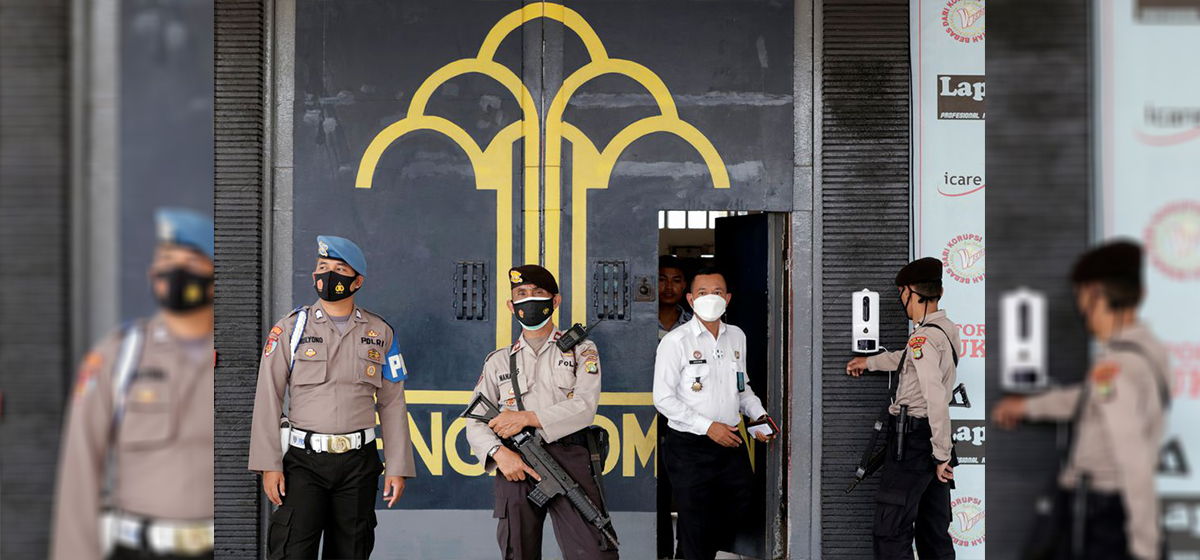
Talking about the recent Jhumka Jail-break, he said that the incident took place due to “total negligence” of the police and administrative staffs refuting the claim of the prison´s jailer who said that the incident had taken place due to the higher number of the inmates.
Most prisons across the country are dilapidated, devoid of even basic facilities and house up to 6 times more inmates than their actual capacity. They do not look one bit the “correctional institutions” they are supposed to be.
According to Koirala, all prisons in the country are overcrowded as the total numbers of inmates exceed the total capacity of the 74 prisons by more than double on an average.
Koirala informed that the prisons in 74 districts including Katmandu have been accommodating altogether over 14000 inmates. However, the total capacity of all the prisons combined is only 7000.
The number of inmates in the Central Jail, the Dillibazar Prison, and Nakkhu Jail in Katmandu has outnumbered the prisons´ capacities. According to Koirala, the Central Jail that has the capacity for 1200 inmates houses around 2300, while Dillibazar and Nakkhu prisons built for 180 and 150 inmates have been accommodating 521 and over 600 inmates respectively.
The prisoners are suffering from sleep deprivation due to overcrowding and the rooms that are infested with bugs are reeking and dirty.
According to the prison branch office Panchthar, the district prison is crammed with inmates six times its capacity. The jail built 40 years ago to accommodate 25 inmates is now in a dilapidated state and is congested with 141 inmates. Similarly, the Taplejung prison contains 90 prisoners, though it was built only for 25 inmates. After the district prison was destroyed in a Maoist attack some 8 years ago, the 24 prisoners in Ilam are kept in police custody, which has the capacity of holding 12 inmates.
Likewise, Jaleshwar prison, which was meant to accommodate 135 inmates, is packed beyond the capacity with 417 inmates. “Managing the prison has become a challenge as the physical structures are deteriorating and the number of inmates rising,” said Sovendra Thakur, Jaleshwar jail in-charge.
Fed up with the over-crowding and lack of basic facilities in the prison, inmates of Baglung Jail had recently launched a serious of protest program. On Monday, the jail administration promised to fulfill some of their demands. “There are only three toilets in the prison and the inmates have to wait for hours to get their turn,” said Mahadev Pantha, chief district officer of Baglung.
The prison in Khalanga, the headquarters of Rukum district, meant for 20 inmates is currently housing 60. “We don´t have big demands. All we want is enough space to sleep and basic amenities,” said an inmate Nandaram Khadka. “Every night we struggle for a place to doss and every morning for a turn to defecate,” he added.
(With inputs from Suresh Yadav in Janakpur, Dilli Poudel in Baglung, Bhim Chapagain in Ilam and Kamal Thapa in Rukum)
Related story
Overcrowded and Neglected