

KATHMANDU, Dec 31: Introduced with the promise of bringing Nepal’s marginalised and excluded communities into the political mainstream, the Proportional Representation (PR) electoral system is once again under intense scrutiny as major political parties unveiled lists of candidates dominated by familiar and powerful faces.
Among Nepal’s electoral mechanisms, few have generated as much debate as the PR system. Designed to correct historical exclusions and amplify the voices of women, minorities and disadvantaged groups, it was meant to complement direct elections by ensuring inclusivity. In practice, however, critics argue that it has increasingly become a safe passage for political elites unwilling to face voters at the ballot box.
A close look at the PR lists submitted by major parties to the Election Commission (EC) suggests that the spirit of the system has been repeatedly undermined. While established parties have long been accused of misusing PR provisions, the repetition of similar patterns by parties branding themselves as “new political forces” has deepened public disappointment.
Revised interest rate corridor system introduced
The case of Maoist leader Ram Bahadur Thapa illustrates the trend. A key military strategist during the decade-long armed conflict, Thapa entered parliamentary politics soon after the peace process began. Over the years, he has served as a member of the Constituent Assembly and the National Assembly. Now, despite holding influential positions within the CPN-UML—including vice-chair and a member of its powerful Secretariat—he is ranked first on the party’s PR list.
Following the Supreme Court (SC)’s annulment of the unification between the then Maoist Centre and the UML, Thapa chose to remain with the UML. Yet, rather than contesting a direct, people-elected seat, he opted for the perceived safety of the PR route—raising questions about whether the system is being used to avoid electoral accountability.
A similar pattern is evident in the Nepali Congress (NC). Veteran leader Arjun Narsingh KC, a prominent figure in parliamentary politics since the restoration of democracy in 1990, has faced direct elections multiple times and served in the outgoing House of Representatives (HoR). This time, however, he has chosen the PR list over a direct contest.
KC’s name appears under the Khas-Arya category in the NC’s list submitted to the EC. This inclusion is particularly striking given the party’s earlier stated policy of not accommodating those who had already benefited from the PR system. The decision appears to hinge on an interpretation that exempts leaders previously elected through direct polls—effectively widening the door for senior figures to re-enter parliament without facing voters.
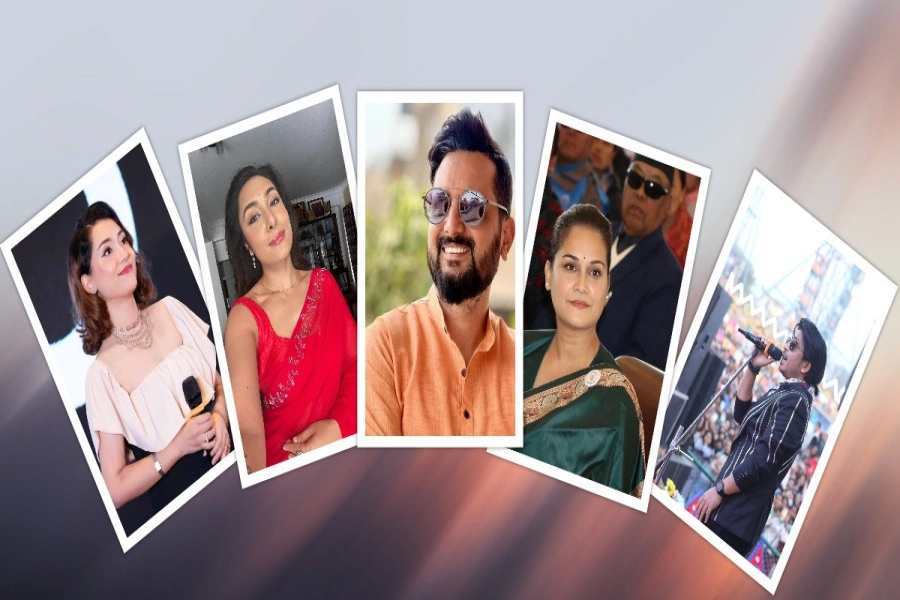
The debate becomes more complex in the case of the Rastriya Swatantra Party (RSP), which rose to prominence by criticising traditional parties for monopolising power. Figures such as Samikshya Banskota and Ranju Darshana—who began their political careers with the Bibeksheel Nepali Party and have contested direct elections—are included on the RSP’s PR list. As they have not previously served in representative institutions, their inclusion is harder to equate with the recycling of long-entrenched political elites.
The PR list of RSP includes former Joint-General Secretary Bipin Kumar Acharya, former government secretary Anup Kumar Upadhyay and Dr Arnico Pandey. Notably, Acharya was himself coordinating the candidate selection process and placed himself at the top of the Khas-Arya list. The list also includes Asif Shah, brother of outgoing MP Asim Shah, at whose office the political unification between the RSP and Kathmandu Mayor Balen Shah was finalised.
These cases in point have reinforced the perception that the PR system—once envisioned as a powerful tool for empowerment—has instead become a ladder for the politically privileged. The promise of giving voice to the voiceless, critics argue, has remained largely rhetorical.
Political observers warn that calling a party “new” carries little meaning if old practices persist. True political renewal, they argue, requires not just new faces but new standards of conduct and decision-making. Without that shift, Nepal risks repeating a familiar pattern: old wine in a new bottle, poured through a system meant to serve those still waiting to be heard.





-1782782519.webp)


