‘In politics, new and old are relative concepts’
Related story
Naya Shakti in Parliament as Naya Shakti, TTPN-D unify

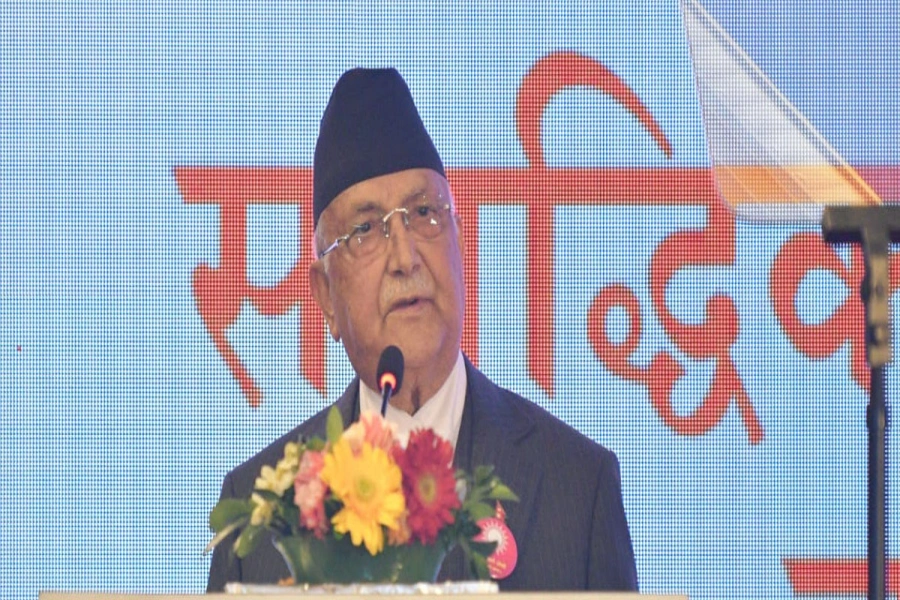
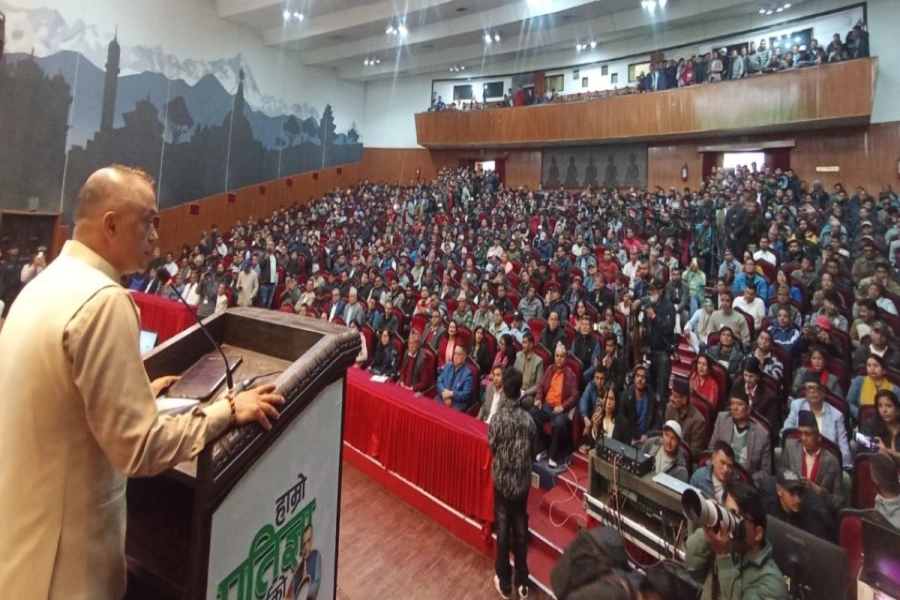
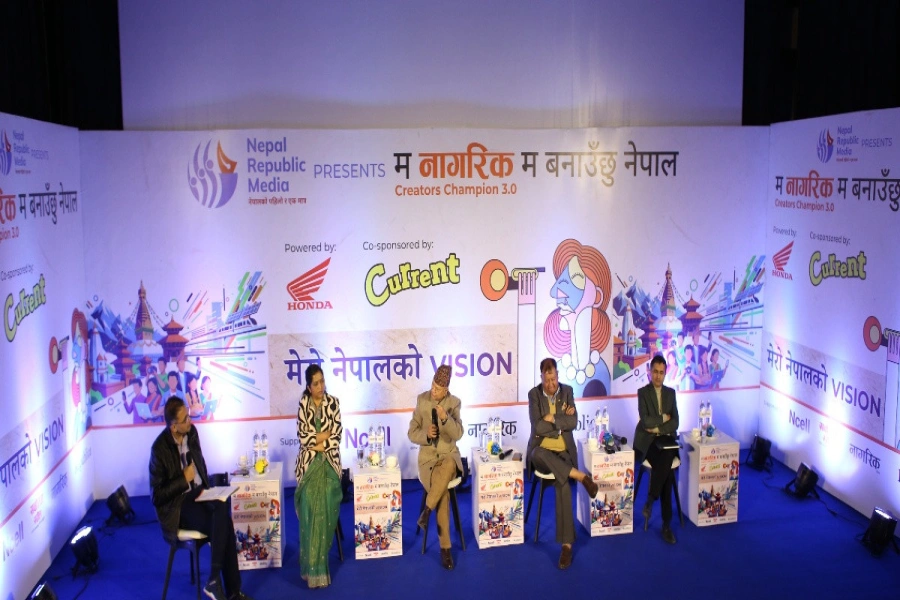
POKHARA, Jan 30: The perennially grey skies of Pokhara had just started to cloud over when the debate on Baburam Bhattarai's Naya Shakti (New Force) began at the fifth edition of Nepal Literature Festival on Friday. "Why do we need such a new force?" Basanta Basnet, the moderator for the session--also featuring CPN-UML leader
Yogesh Bhattarai and editor of Kantipur daily Sudheer Sharma--began by asking the former Maoist ideologue.
"In politics, new and old are relative concepts," Bhattarai began his defense, his cloudy visage suddenly animated by a question he was clearly anticipating. "The way I see it, the 70-year-old chapter that started with the 1950 revolution closed with the promulgation of the new constitution [on September 20th].""The old structures and thoughts have guided us this far," added the sexagenarian former prime minister. "But it is my belief they are not enough to take Nepal farther along on the path of peace and prosperity. For this we need new ways of thinking, new structures."
The way Bhattarai sees it, the main problems of post-constitution Nepal are grinding poverty, dependence on external forces and lack of jobs. Only a new force can tackle these challenges, he says. Yogesh Bhattarai disagrees.
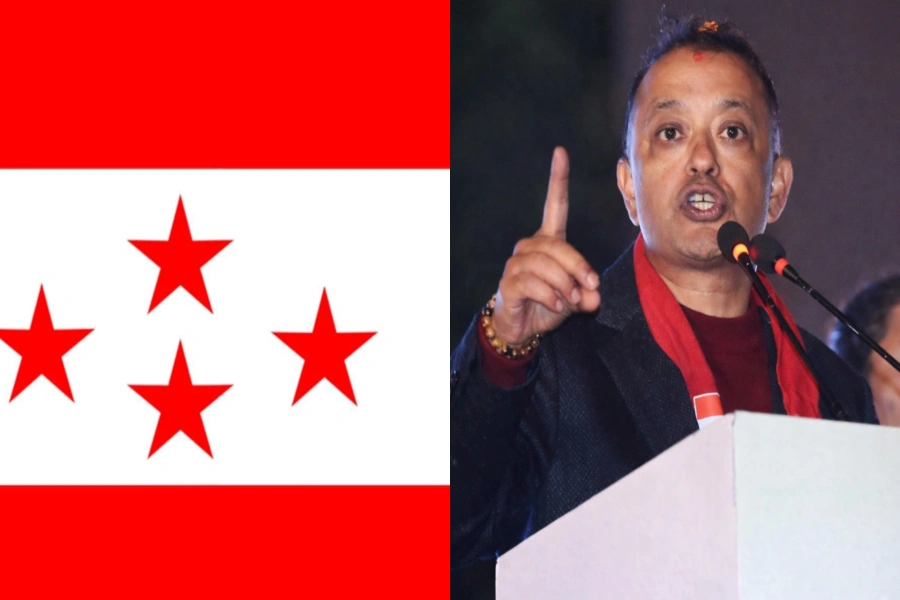
"Every political party is established for a purpose and it is based on particular thoughts," the younger Bhattarai began his criticism of the new force, "and the same is the case with Nepali Congress or CPN-UML or the Maoist party." Saying that the existing political parties were more than capable of handling emerging challenges, the UML leader adds: "Congress is a new party. UML is a new party. In fact, all the forces that joined hands to overthrow the old order during the 2006 Jana Andolan are new parties."
The UML youth leader was just getting into his stride. "Baburam Bhattarai was the chief ideologue of the decade-long bloody conflict," the UML secretary suddenly finds a new pitch. "But now he has abandoned the beliefs for which he waged such a bloody war. Now he says Maoist ideologies are irrelevant. Either Baburam-Bhattarai-the-Maoist-ideologue is correct or Baburam-Bhattarai-the-new-force-founder is correct. They can't both be correct."
"I ask Baburam Bhattarai: What is it that the existing parties cannot do that we need this new force?"
By now the jam-packed audience at the office of the Nepal Tourism Board at Pardi, Pokhara, the venue for the literature festival, are riveted to the lively back and forth between the two Bhattarais. The moderator is happy to leave the two to duel it out.
Bhattarai Senior is in no mood to let the young Turk wrest the initiative. "Listening to Yogesh ji, I am reminded of former American president George Bush who used to say 'You are either with us, or against us.' We will not get anywhere with that mentality."
Clarifying about the 'ideological deviation' Yogesh Bhattarai had hinted at, Baburam Bhattarai added: "It's human beings who make ideologies, not the other way round. Rather than looking for ideological purity, we should rather be more worried about what the country actually needs right now."
But was it worth shedding so much blood in the name of the people? The former Maoist continues after taking a swig from the glass of water in front. "Let's look at our history. Didn't Nepali Congress once shed blood in the course of its democratic movement? Didn't UML do the same, including in Jhapa? Likewise, at a particular time in history, the Maoist party felt the need to wage an armed revolt. But now that we have a new constitution, this long and often violent phase is over."
According to Baburam Bhattarai, among the key tasks of the new force will be: devising Nepal's own development model; fast and inclusive growth; sustainable and environment-friendly development; and, curiously, ensuring "people's peace of mind".
"But Doctorsaab," moderator Basnet interjects at this point. "Don't all parties need an ideological foundation to stand upon?
"Like I said, up until now all of our political parties were guided by what I would call a 'politico-military' ideology. But now we need something new to take the country forward. If you are saying that we have no firm agenda, I would like to clarify that the agenda of the new force will be in keeping with our multi-class, diverse society."
"Our agenda is to increase the income of Nepali people at least 10-fold; to bring Nepali manpower to optimal use in our own country; and to unite all castes andclasses for the common goal of nation-building."
"But, again, why can't the existing forces do all the things that Baburam Bhattarai is talking about?" Yogesh Bhattarai asks. "If you look at Congress or UML or the Maoist party, there is a system whereby if you don't like the party leadership, there is a legitimate way to change it. You also update your ideology with the times,
something UML has done with great success over the years."
"What will happen if janajatis, dalits and the myriad ethnic groups in this country start forming their own parties?"
The moderator at this point has to remind the panelists to keep their remarks short: the sky is overcast; and the one-hour time limit of the session nearly up. Since the whole conversation is centered on Baburam Bhattarai's new force, would he like to say something in his closing remarks?
"I am not saying the old parties are useless. But we have always had what I would call 'halal' revolutions in Nepal. We fought for change but still we have not been able to completely do away with the old order. It is my belief that the old bureaucratic and centralized structures of our existing political parties are not suited to the kind of fast and inclusive development that Nepal needs now that it has a constitution."
The floor is now open to the audience. They more or less have the same gripe with Baburam Bhattarai: he promised so much, but delivered so little. "I did as much as I could in nine months [of his prime ministership]. If you look at developed countries, they were able to develop because they had stable and visionary leaderships. But what I couldn't do back then, I will do with my new force."