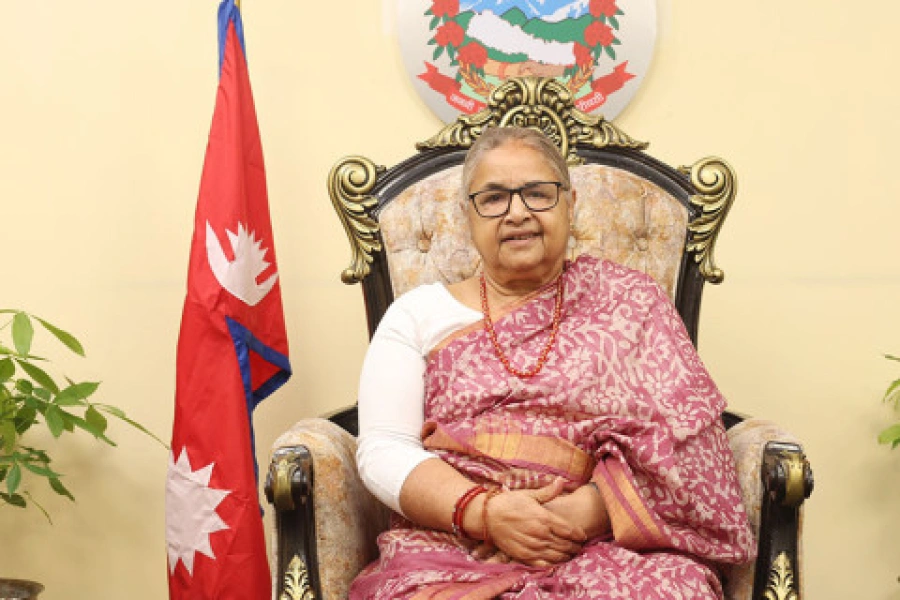
There has been a lot of discussion about our President Bidhya Bhandari's visit to Janaki Mandir on the auspicious day that marks Lord Ram and Sita's wedding. I have tried very hard to keep my tongue tied but for personal reasons I am compelled to speak my mind. I was born on Bibaha Panchami and the priest on "nuaran" named me Janaki as per Hindu culture. My grandfather worked in Janakpur for many years and my father started his career in Janakapur and established life-long relations that have shaped him as a person today. For a daughter who idolizes her father, this on its own is enough to love Janakpur.Like many other women in our country, I was very happy to have a woman as head of the state. I did a brief study on our President and was convinced she deserves to hold the office. I was also very inspired by the way she handled her duties when she was the Defense Minister¬¬—she had proved herself to be a strong leader and was widely loved.
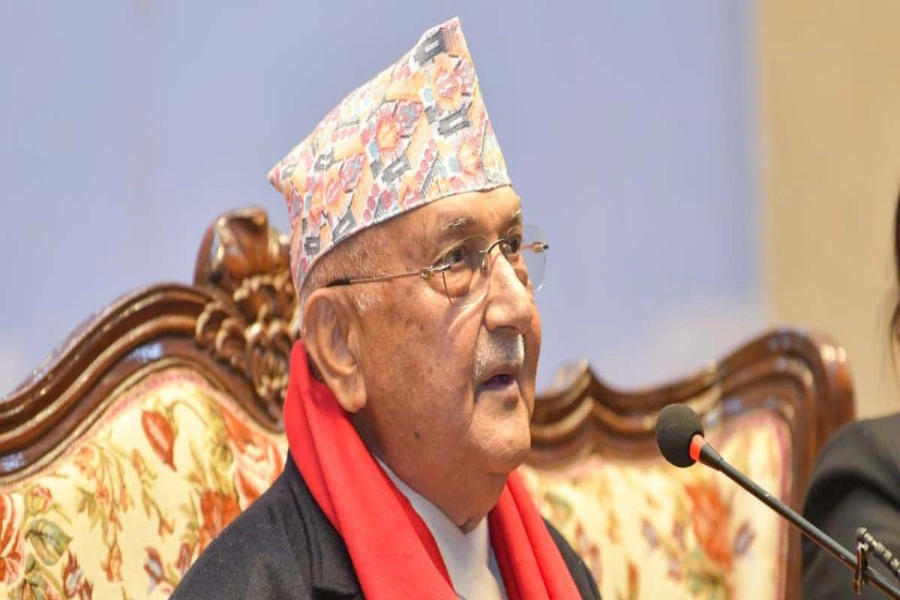
When the news broke that our head of state was insulted during her visit to Janaki Mandir in Janakpur, we were all anguished. A sense of hatred was automatically generated towards those who dared do so. Nepalis felt like their mother was mistreated. Social media readings show President Bhandari as the victim and everyone sympathized with her. However, the intense anger towards those who mistreated her somewhat subsided when our Prime Minister KP Oli condemned the act and called it "barbaric and wild".
The PM also called for a thorough investigation. He termed this behavior as going against the very principles governing the democratic republic of Nepal. While I was happy to see such a strong statement coming from our government, the timing made me wonder. The apologetic government showed its concern over the mistreatment of our president in a split second.
I kept wondering. What about the hundreds and thousands of women who have been mistreated by four-month long economic blockade and the unrest in the Tarai? What about the earthquake victims, including children? What about those youth who dared to dream in Nepal and those Nepali investors who have been pulverized by the financial burden due to ongoing unrest?
The media, the public and I/NGOs have been highlighting the inhuman conditions of earthquake victims. The government keeps saying they are going to provide Rs 200,000 to earthquake victims at the earliest but no action has been taken to this effect. And our economy continues to bleed. According to Nepal Rastra Bank, inflation is now in double digits, at 10.4 percent.
It does not take rocket science to understand many ills in our society can be attributed to lack of education. The alleged "cleansing of Janaki temple" after the visit of a "widow" further reinstates the need for education to overcome traditional prejudices. The legitimate concern of UNICEF over the future of millions of Nepali children has fallen on deaf ears. Almost 80 percent of the schools have not been able to reopen to their potential after the earthquakes. We can only hope that 2016 will be better. Our president has shown interest in education of women and girls in the Tarai and other parts of Nepal, and we hope her interest doesn't fail like former President Ram Baran Yadav's initiative to protect the Chure forests.
I was pleased to see the National Women Commission condemn the mistreatment of our President. Surprisingly, our educated masses could not for once dissect this incident, as an act inflicted on the President of Nepal, and not just on a widow. Once you are head of the state, your gender is irrelevant. We could interpret this act as an insult on all women. But it could also be that people showing their displeasure have suffered relentlessly from the blockade.
Whatever the cause, the only way forward for us as a nation is through education. Yes, education that has been a luxury in Nepal. How many times will we quote the successes of Singapore and Thailand? In Singapore, education is at the heart of its development plan. Their mission statement reads, "to mold the future of the nation, by molding the people who will determine the future of the nation."
Similarly, the first of four principles of Thailand's national development plan (2007-2011) was to instill in its citizens both virtues and knowledge. Just talking and showing concern over education of children and women in Nepal is not enough. The high level of education in Singapore stems from two main factors: strong political commitment to education and governmental oversight that leads to accountability. This is what needs to be embedded into our political system to overcome the social ills we all face.
The author is Corporate Affairs Manager at Nepal Republic Media
Related story
Russia-Ukraine Conflict: 302 Nepalis reach safe destinations