Education is like our ‘third eye’, because it not only directs us to the right path but also broadens our mind, expands our horizon and makes us more civilized. However, in this highly modernized world, the manner in which our children acquire education does not yield desirable and effective results. A new structure in the medium of instructing them is therefore not only desirable, but also imperative for today’s society.
The fundamental goal of education is not only to change one’s behaviors practically, but also to educate people to be honest and devoted to their families, communities and the society. Further, every human should have access to basic education, since there is a competitive and multifaceted world ahead of us. Realizing the urgent need for education in such an advanced era, different advocacy groups, including the UNESCO, were signatories to the World Education Forum (WEF) held in Dakar in 2000, where a strong commitment was made for institutionalizing major goals. One of the major goals agreed at the WEF was, for example, “to ensure that by 2015 all children, particularly girls and children from ethnic minorities, have access to complete free and compulsory primary education of good quality.”
Though the government of Nepal, with the collective efforts of various international organizations—such as the UNESCO, the UNISEF and the INGOs––has committed itself to achieving the aforementioned goal, there is much left to do. The biggest question is why a large number of children representing different ethnic communities are denied access to basic education, even though the ministry of education (MoE)––with the implementation of such multifaceted programs as the Millennium Development Goals (MDGs), the Education for All (EFA) movement and the Scholar Sector Reform Plan (SSRP)––has strengthened guidelines for endorsing multilingual education (MLE) as an intricate part of the education system?
There cannot be any specific answer to such a bold question. However, to advocate it is to make educational opportunities more equitable. For this, we need to deal specifically with the children from ethnic and/or linguistic minorities through affirmative measures. This is possible only when we understand the crux of the significance of the mother tongue as a medium of instruction in our curricula. Some of the reasons are enlisted in this write-up.
One, the endorsement of children’s mother tongues in education not only helps them to learn their own languages but also stimulates them to save and promote their cultures and traditional skills as national assets. Language is at the core of each culture. Bert Van den Hoek, an independent researcher, says that it is only by language that culture can be transmitted and communicated. Moreover, children are likely to express their feelings and thoughts comfortably if they are taught in their own tongues. The mother tongue also ties children with the people in their communities and around, since a greater contact with a multitude of cultures and dialects influences the way we think, speak and write.
Two, to make the learning environment more effective and natural, children should be taught in the language in which they feel easy and comfortable. Highlighting this view, Sheldon Shaeffer, the Director of the UNESCO Asia and Pacific regional bureau for education, has stated that effective teaching depends on clear and comprehensible communication, and thus, the language of instruction is at the heart of any learning process. On the other hand, it is also true that providing education through children’s tongues helps reduce erroneous performance as linguists aver that greater the similarities between the source language and the target language, the greater the ease in learning and hence, lesser the errors.
Three, linguistic minorities are acknowledged as being vulnerable. Many children in Nepal use their mother tongues to communicate in their households and communities and do not have adequate proficiency in Nepali. In such an unfavorable environment, these children feel thwarted since they cannot compete with those whose mother tongue is Nepali. How can the children acquire education naturally and effectively when they are confronted with either a foreign medium of instruction or a language that is different from their mother tongue?

Citing the importance of teaching children in their tongues, J A Fishman, an eminent linguist, has said that people who continuously have to express ideas in a language other than the one they think in will lose the ability to express themselves or “never achieve adequate expressions”. Referring to this idea, I would argue that children should not be compelled to learn in a language they neither speak nor understand. On the other hand, there is no scientific ground to impose a language upon them which eventually creates an educational handicap. Therefore, the government should understand why it is imperative to introduce native languages in all schools urgently.
Four, many educationists assert that successful learning is guaranteed only when children are freed from hurdles like psychological set-backs and other emotional impediments. But in Nepal, children from ethnic minority groups are compelled to face such situations when they enter the formal school system, because of lessons that are constantly delivered about the world outside their community and overlook all that they know and have experienced. Consequently, they feel inferior, isolated or incompetent, and finally feel forced to remain as part of a disadvantaged group.
Education in native tongues is, therefore, one of today’s most urgent needs; the International Mother Language Day has also reiterated the view that the mother tongue and multilingual education are keys to reducing discrimination, promoting inclusion and improving learning outcomes for all. Similarly, famous scholars Pamela MacKenzie and Ajit Mohanty have highlighted that teaching in one’s mother tongue not only enhances the children’s overall educational attainment but also establishes a proximate linkage between schools and communities.
Despite the tremendous advantages of using different mother tongues as mediums of instruction, this agenda has suffered from the absence of long term planning, policies and viable programs. To address this gap, the most fundamental requirement is political will and a meaningful collaboration between the government and ethnic communities.
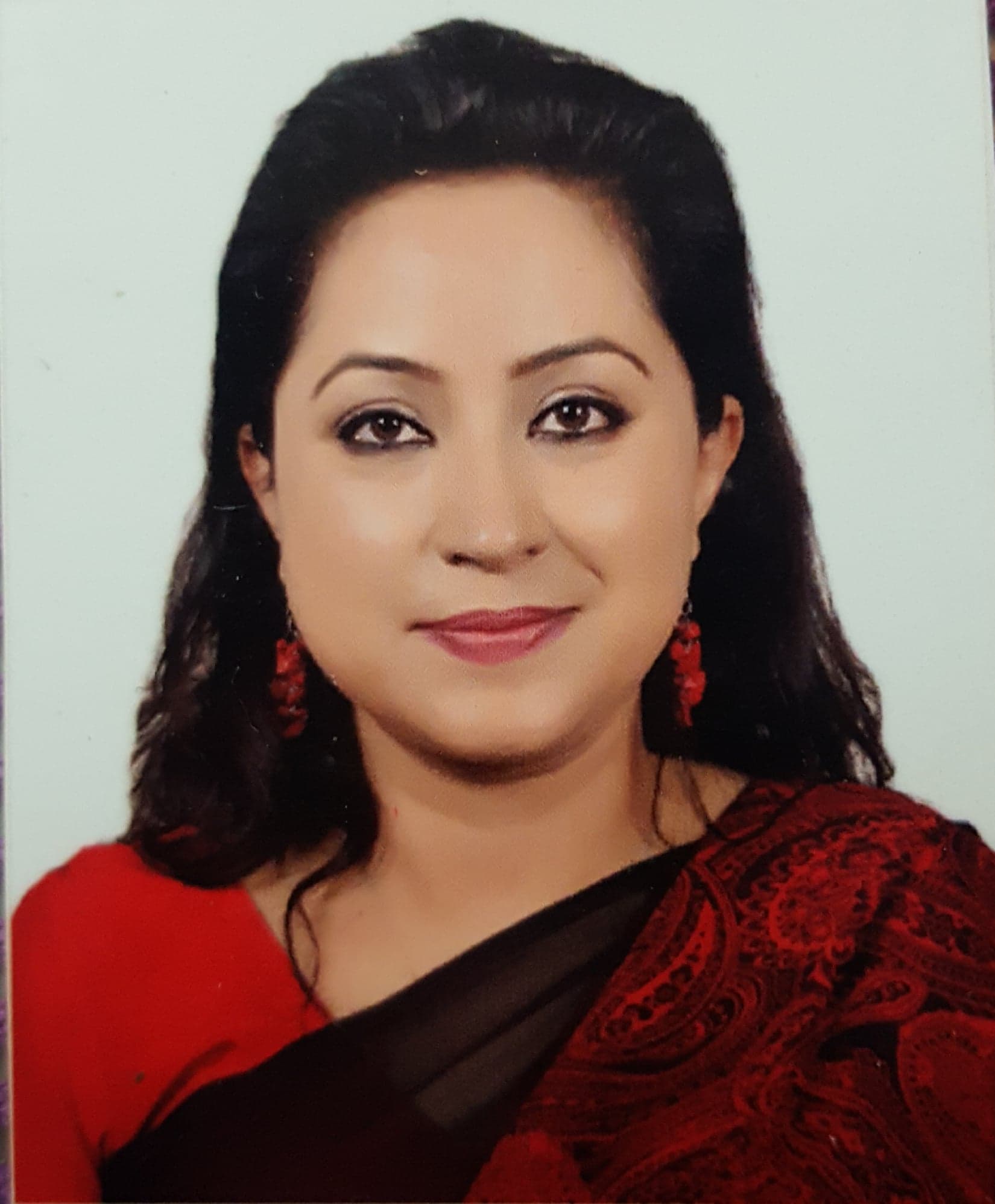
The author is an independent researcher and lecturer of English.
gopal.sijapatimagar@gmail.coms
Related story
Pak embassy organizes poetry symposium — Aalmi Mushaira: Urdu,...