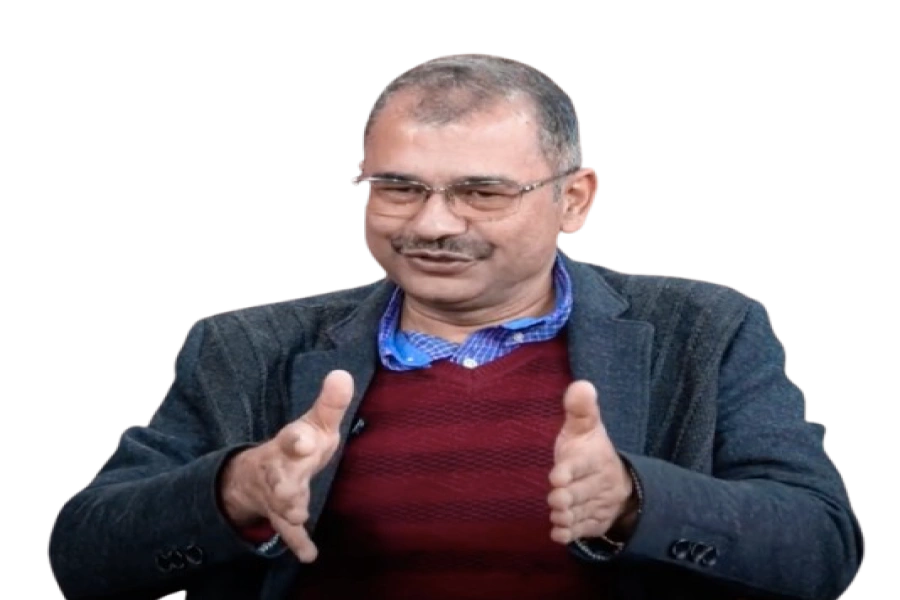
Dr Uddhab Pyakurel is Dean at the School of Arts, Kathmandu University, where he teaches Political Sociology. Dr Pyakurel is a keen observer of Nepal’s democratic evolution and electoral politics. Republica spoke to Dr Pyakurel to get his insights on the shifting political landscape ahead of the March 5 House of Representatives (HoR) elections, being held after the September 8–9 Gen Z protests that ousted the KP Oli-led government from power and paved the way for the formation of an interim government to hold fresh elections.
Excerpts:
What are the key political and economic issues shaping voters’ behaviour in the March 5 House of Representatives elections?
The March 5, 2026 election is not a routine democratic exercise but a response to the country’s political turmoil triggered by the Gen Z protests in September. The primary purpose of holding these elections is to restore the political process and address public concerns, particularly those raised by young protesters. The polls are widely seen as a test of whether Nepal’s democratic republic can withstand the challenges it currently faces. Both citizens and the international community have high expectations from this election.
Voters are central to fulfilling these expectations. It remains to be seen whether they will adapt to the new political context shaped by the September protests. So far, however, campaign dynamics at the grassroots level suggest little change in voter behaviour. Political parties continue to campaign much as they did in the past, with limited reference to the concerns raised by the protests. Most candidates are focusing on local infrastructure development, presenting standard to-do lists that often receive polite approval from voters. Some candidates have offered unrealistic promises and grand visions that are difficult to implement. Others present themselves as “new” faces suited to the changed political context, yet the issues they raise are not always aligned with the spirit of the September movement.
How would you assess the current electoral landscape—are we looking at consolidation of major parties or a more fragmented mandate?
Nepal and India Have a Reset Moment—But History Cannot Be Wishf...

It is still early to make definitive predictions. Rural voters, in particular, tend to form their opinions only after interacting with multiple candidates during the campaign period. However, the absence of a strong socio-political and economic agenda reflecting the new political context poses a risk. If voters are unable to evaluate candidates in light of the changed circumstances, the resulting parliament may resemble old wine in a new bottle.
The real issue is not whether major parties consolidate power or whether the mandate becomes fragmented. Rather, the central question is what kind of new synergy this election can generate to ensure a stable democratic future for the country and the region.
To what extent will party alliances and seat-sharing arrangements influence the final outcomes?
The chapter of pre-election alliances and seat-sharing arrangements effectively closed once the Election Commission (EC) published the final list of candidates. Once party symbols are printed on the ballot, it becomes difficult for leaders to persuade their cadres and voters to support candidates outside their own party. Notably, party cadres across major political parties appear satisfied this time, as they see their own candidates contesting after a prolonged culture of pre-election alliances. Many credit the new leadership of the Nepali Congress (NC) for breaking this chain of alliances. The Gagan-led reorientation of the NC has contributed to restoring direct party competition.
Compared to the previous two or three elections, full-fledged party competition is the most visible change in this campaign. This shift could have a positive impact not only on multi-party electoral politics but also on strengthening grassroots democracy by fostering competitive local leadership.
How prepared is the Election Commission to ensure a free, fair and credible poll, and what risks remain?
I am confident that the Election Commission, in coordination with Nepali society, can ensure a free, fair and credible poll. I have consistently argued against those who opposed holding the March elections on security grounds. Compared to previous elections, there appears to be minimal security threat at the local level. No major political force using violent means has formally boycotted this election—unlike in the period following the Maoist insurgency that began in 1996. If authorities and voters remain vigilant and work to prevent communal unrest or localised violence in the run-up to polling day, this could become one of the most peaceful elections in Nepal’s history.
Which regions or constituencies are likely to emerge as key battlegrounds during this election, and why?
While the overall scenario appears positive, isolated individuals—not organised forces—may attempt to exploit emotions and sentiments for disruptive purposes. Security agencies should remain alert in areas with mixed communities where minority grievances are strong. Some areas in the Tarai-Madhesh region, particularly densely populated constituencies, have historically been more vulnerable to electoral tensions. Preventive security measures and community engagement will be essential in these regions.
What role are social media misinformation and digital campaigning playing compared to previous elections?
The impact is incomparable to previous elections. Algorithms amplify content, and much of what voters receive through their gadgets is either manipulated or outright false. As a result, many voters struggle to distinguish between accurate and misleading information. It is encouraging that much of the campaign remains physical and face-to-face. Direct interaction between candidates and voters may help verify information and reduce the risk of choices influenced by misinformation, thereby safeguarding democratic outcomes.
What could a significant shift in the composition of the House of Representatives mean for governance and policy stability?
A substantial number of new candidates are contesting this election, making it likely that many Members of Parliament will be first-timers. However, being “new” does not automatically translate into effective parliamentary performance. Although parties—especially the Nepali Congress—have fielded a large proportion of new candidates, replacing long-standing political figures in many constituencies, the ground-level debate has not significantly shifted to reflect the circumstances that led to the dissolution of Parliament and fresh elections.
The influx of new faces presents both a challenge and an opportunity. Political parties should treat it as an opportunity by providing training and mentorship to new lawmakers to enhance their legislative performance. If the “new” representatives, many shaped by modern education systems and Western-influenced lifestyles, fail to connect with Nepal’s social and cultural realities, public frustration—particularly among youth—could intensify.
Ultimately, the election results must be linked to the aspirations expressed during the September protests. Voters, candidates and party leaders must collaborate to bridge knowledge gaps and ground political agendas in practical realities. Only then can this election serve as a meaningful democratic reset rather than a mere procedural exercise.


_20210926115209.jpg)