After returning to the country from his six-day official state visit to India, Prime Minister KP Sharma Oli said that his visit to India was successful in removing all misunderstandings between Nepal and India. He also claimed that bilateral relations had returned to status quo ante and they would not be soured again. He did not spell out, either during his visit to India or after returning home, the root cause of such misunderstanding between the two traditionally close neighbors. But removal of misunderstanding of any sort between India and Nepal is to be welcomed.Tensions between Kathmandu and New Delhi started after the Madheshis and Tharus, the two communities which felt discriminated in the new constitution, imposed a blockade at Birgunj-Raxaul border between Nepal and India. This was done to put pressure on Kathmandu to address their grievances. But in Kathmandu people were made to believe that it was India which imposed the economic blockade.
In the process of removing misunderstandings between Nepal and India, a senior leader in KP Sharma Oli's cabinet had taken the draft of proposed amendments of the constitution to New Delhi. It was only after this that Nepal government made two amendments: one was regarding proportional representation in state mechanisms and the other on electoral constituencies. In addition, Nepal government on February 18th constituted a political mechanism to sort out federal boundary disputes, just a day before start of the visit of Prime Minister Oli to India. Through these activities, the Oli government was trying to create an impression that Nepal was doing all that was needed to make the constitution more inclusive.
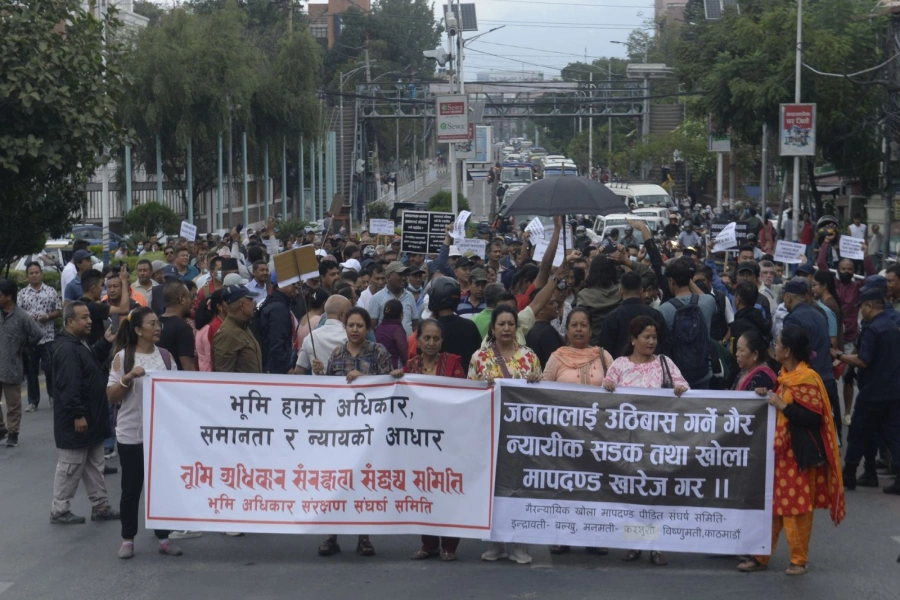
But the Madheshis and Tharus of Tarai are not convinced. They are as such yet to take ownership of the constitution. They feel that the way the government unilaterally amended the constitution and formed a political mechanism for boundary demarcation would not benefit them much.
Kathmandu needs to do more to make the newly promulgated constitution more inclusive, so as to address the grievances of disadvantaged groups in the country. Perhaps, it is on this ground that New Delhi refused to welcome Nepal's new constitution even during Prime Minister Oli's visit to India. New Delhi acknowledged the promulgation of constitution as an achievement, but desisted from welcoming it outright. New Delhi believes that the success of the constitution depends to the extent it meets the concerns of different dissatisfied groups through dialogue and consensus among political parties in Nepal.
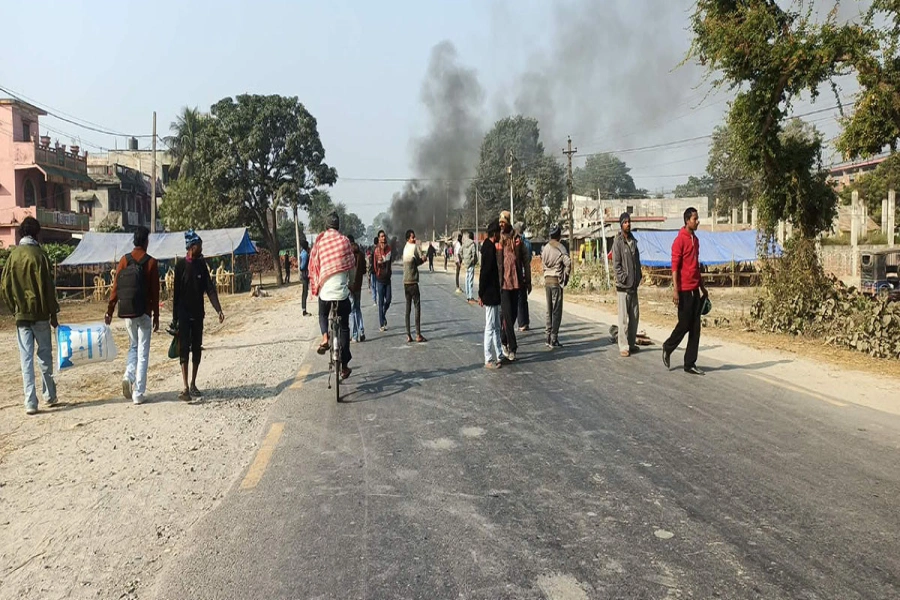
In a significant development, considering the hardships to the common people, the Madhesh-based parties that had been agitating against the new constitution lifted their economic blockade after 135 days. With this development, the supply of goods, including essentials like petroleum products and medicines, from India to Nepal were again normalized.
Recent developments confirm that the Madheshi political parties are in the process of consolidating their strength. Even the political forces in Tarai that earlier were not in the agitation have joined hands to make their new agitation more effective. Certain leaders of Tarai have already said that they want to re-impose economic blockade in May-June this year, if the government is not serious about addressing their demands.
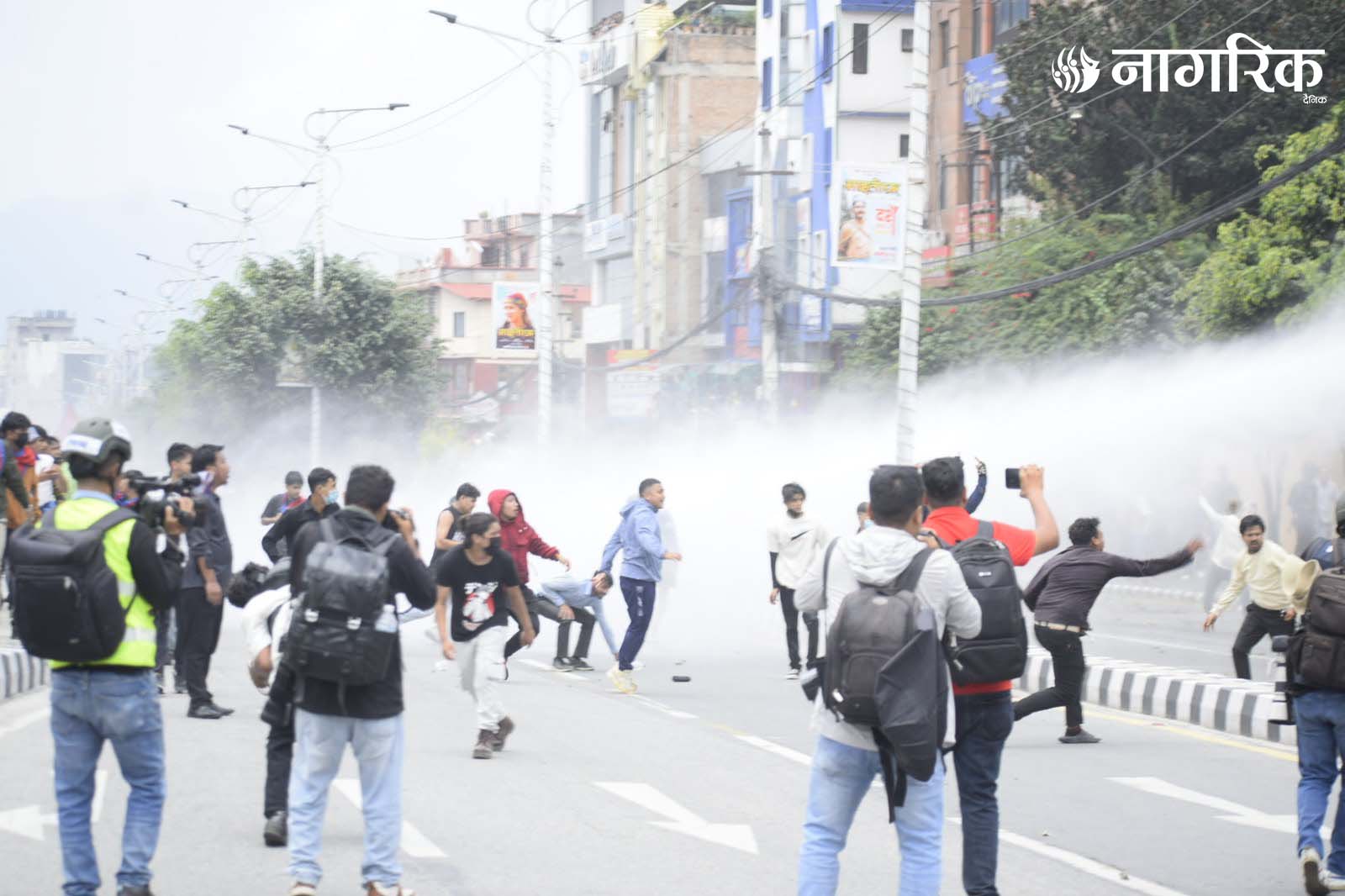
However, during the press conference organized in the Nepali embassy in New Delhi, Prime Minister Oli denied any discrimination of the Madheshis. Nevertheless, the Madhesh issue undoubtedly cast a shadow in almost all programs he attended while in India. A group of Madheshi students protested against him in New Delhi. Also, political leaders of certain Bihar-based political parties, again along with Madheshi students, demonstrated against the injustice done to the Madheshi people in Nepal.
Nevertheless, both Nepal and India were able to discuss certain issues of mutual benefit. Towards this end, some important MOUs were signed in New Delhi, which included post-earthquake reconstruction support from India. As it is well known, Indian Prime Minister Narendra Modi had pledged US $1 billion for Nepal's development during his first visit to the Himalayan nation in August 2014. The second time India made a commitment to provide additional US $1 billion for the post-earthquake reconstruction activities in 2015. Besides, an MOU was also signed to enhance Nepal's connectivity and transit facilities with Bangladesh, Bhutan, India and Nepal (BBIN) as per the commitment of these countries for more sub-regional cooperation.
Another landmark deal during Oli's India visit was regarding roadways development in Tarai. Also, India allowed Nepal to use its Visakhapatnam Port, which is at a distance of about 1,400-km from Nepal, for trade with third countries. So far Nepal has been using only Kolkata Port, which is 800-km from Nepal, for this purpose. Despite the fact that the Visakhapatnam Port is much farther from Nepal as compared to Kolkata Port, Nepal would benefit as it would mean reduced loading and unloading times and also quicker transport of goods between the port and the Nepali territory, which in turn will also decrease costs.
Much of the breakthrough in bilateral relations between Nepal and India was made as per the 'neighborhood first' policy of Indian Prime Minister Narendra Modi, who accords top priority to India's neighbors. He is fully aware of the fact that one can choose one's friends, but not one's neighbors. Therefore, during his oath-taking ceremony as prime minister in New Delhi in May 2014, he invited all heads of government/state of South Asia, so as to bolster India's relations with each one of them.
Both the Nepali Prime Minister Oli and Indian Prime Minister Modi need to be congratulated for their sincere efforts to remove misunderstandings, in the process of normalizing relations between Nepal and India. From now on, there should be persistent engagement between Nepal and India at both political and diplomatic levels to take relations to a greater plain. In order to consolidate the gains of Nepal-India friendship, those in power in Nepal need to create a congenial environment by making suitable changes in the constitution so that the Madheshis, Tharus and other Janajati groups in the country can also take ownership of it.
Related story
History of Madhesh to be written