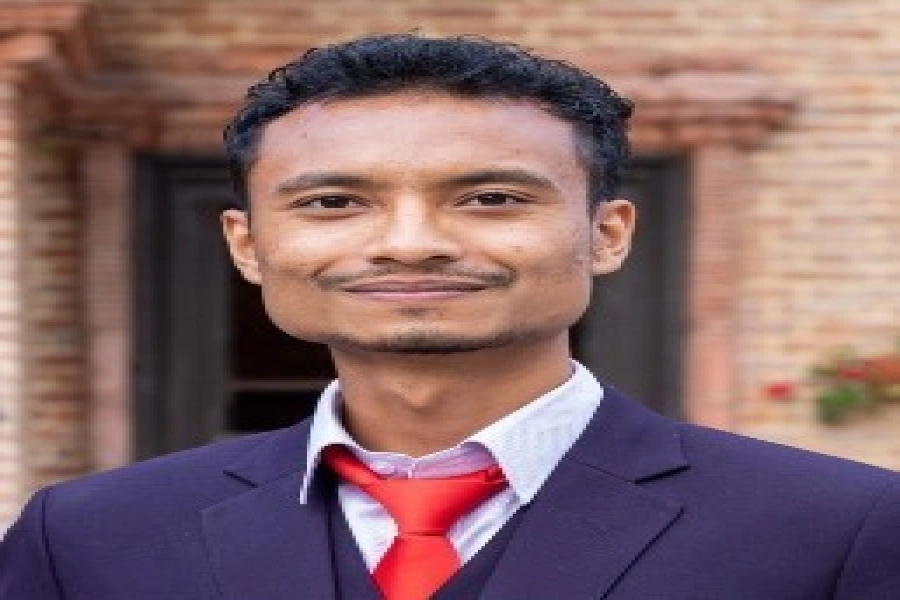
Pacific Asia Travel Association (PATA) Nepal invited PATA Vice Chairman Andrew Jones from PATA headquarters to Nepal last week for a preliminary discussion on tourism recovery plans and strategies. Jones has worked as a crisis management expert in various countries.
Related story
Making a great first impression at an interview

He used his expertise for tourism recovery after Bali bombing of 2002, tsunami of 2004 (Thailand) and the tycoon of 2014 (the Philippines), among many other places. Kriti Bhuju of Republica talked to Jones to know how PATA intends to help Nepal in tourism recovery and what Nepal should do to bring tourists in the aftermath of the disasters. Excerpts:
Why has PATA decided to help Nepal? What kind of support will PATA extend to Nepal?PATA is the only international tourism organization which brings together government agencies and private enterprises. As we have a chapter office in Nepal, it is our responsibility to help this country. We want to support tourism. We have been asked for help and hence we have decided to provide our expertise for recovery of tourism industry of Nepal.
After the earthquake, we immediately gave some recommendations based on our past experiences in other countries, one of which was to form a Tourism Recovery committee (TRC) immediately. We have carried out initial assessment of different areas and will help TRC to develop short-term, mid-term and long-term recovery plan. We, together with the government, will form a taskforce to support and help implement those plans.
What was your observation after the initial assessment?
When we read stories about Nepal earthquake in different media, we felt that Nepal is totally devastated. But when I visited here, it was not the case. There are some places which are badly affected, some partially affected and some are totally intact. But people outside Nepal have a perception that the country is totally devastated. The first thing that we must do is change this perception. Most of the places, which are intact, have been affected because tourists are not coming and no economic activity is taking place there. We need to tell people that they can visit many places like Pokhara, for example, and enjoy like they did it before.
Based on your preliminary assessment, what kind of recommendation have you given to the government?
We have asked the government to work with private sector and form a communication hub so that same message is communicated everywhere. We need to get the exact figure of affected and unaffected areas and need to highlight unaffected areas to the world. Similarly, we have also suggested to the private sector to promote Nepal first, then the destinations and lastly their business because once Nepal is promoted their business will automatically grow.
We had got 200 different ideas while brainstorming with the government officials and private sectors. We will sort out the critical issues and recommend what resources are needed to solve them.
We have also requested the entrepreneurs not to provide heavy discounts and slash tariffs but to diversify their products and enhance their quality of service. Based on my experience in other countries, providing discount will not help the business survive for long-term as people will only come when there is discount and the business owner cannot bounce back as they had to operate without profit or with very less margin.
In your view, how long it will take to bring back tourists to Nepal?
From our initial assessment, we believe that bringing back tourist for this autumn season is possible. But we still have to do further assessment. We are waiting for the assessment report of the organization that is carrying out the study of trekking trails. Once we have the report and certify the areas that are safe, we hope to influence and modify the travel advisories so that governments in other parts of the world can understand that every place is not affected.
As advisories affect the insurance of travelers, we need to make it clear regarding the places that are safe. We also need to boost confidence of supply market and encourage suppliers to bring back people. We will request countries like India and China and their industry people through PATA to help and support Nepal by sending in their people.
We have to send positive messages, promote good things about Nepal, use social media to promote Nepal and make sure everybody is working together with right package to promote this destination.
There are many challenges but it is possible to bring back tourist this September.
How can neighboring countries like India and China help in recovery of tourism in Nepal?
We are organizing PATA Travel Mart in Bangalore in September where Nepal is also participating and telling the industry that it is recovering and doing better. Neighboring countries can help by sending in their people and spreading the word that Nepal is safe to visit.
We will organize familiarization trips for media persons and by this the media there can promote Nepal.
Not only neighboring countries, once we have the report of the damage, PATA will send information to all its chapters and request the industry people and media to support Nepal by sending in their people.
PATA Foundation has also been raising funds from different countries to help in tourism recovery.