A draft inclusion bill, which was directly prepared by the United Democratic Madhesi Front (UDMF) and later submitted at the Ministry of Law and Justice (MoLJ), proposes 48 percent of seats for marginalized communities and 52 percent for open competition. The MoLJ has already forwarded the draft bill to the cabinet for the latter´s nod. [break]
Existing laws related to various government services such as the Civil Service Act and the Nepal Army Act contain provisions ensuring 55 percent of seats for open competition and 45 percent for reservation quotas.
It has come to light that the draft bill was prepared exclusively by the UDMF in a bid to increase reservation quotas in government service as per its own interests. Bills are supposed to be drafted initially by the line ministries. "In a society where rule of law is intact, the inclusive bill should have initially been drafted by the Ministry of Law and Justice, and not by any party organization like the UDMF," a high-level government source said.
Interestingly, the Madhesi leaders had wanted equal percentages for reservation quotas and open competition during recruitment to government services in future.
"Initially, the Madhesi leaders proposed 50 percent seats for marginalised groups and the remaining 50 percent for those coming through open competition," a knowledgeable source told Republica, adding, "The Law Ministry resisted pressure but was compelled to increase the reservation quota by three percent from the existing 45 percent."
If the bill comes into implementation, the government has to recruit 48 percent of its workforce from groups including Madhesis, dalits, women, indigenous and marginalized communities and the differently abled.
Of the total 48 percent of seats proposed for reservation quotas, 33 percent has been proposed exclusively for women candidates.
However, due to mounting pressure from Madhesi leaders, the Law Ministry has divided the total 33 percent into two categories. According to provisions incorporated in the draft bill, the government has to recruit 16.5 percent from women who represent various groups such as dalits, the indigenous, Madhesis and other marginalized. The remaining 16.5 percent should be filled from women candidates representing Brahmin, Chettri, etc.
The bill also proposes that seats allocated for reservation quotas will remain vacant until such time as the candidates keep attending the exam and eventually pass it.
"As per this provision, if a candidate from an ethnic community attends an exam but fails, the post will not be filled," the source quoted the provision as stating, adding, "Seats allocated for reservation quotas will remain vacant until candidates from the ethnic communities pass the exam."
Out of the total 48 percent reservation quota, considering that as 100 percent, 27percent of seats are proposed for Madhesi candidates, 9 percent for dalits, 5 percent for other marginalized groups, and 4 percent for differently abled, among others.
The proposed percentages for government service will be effective for various public posts including the civil service, health service, Parliament, Nepal Police, Nepal Army, National Investigation Department (NID) and Tribhuwan University.
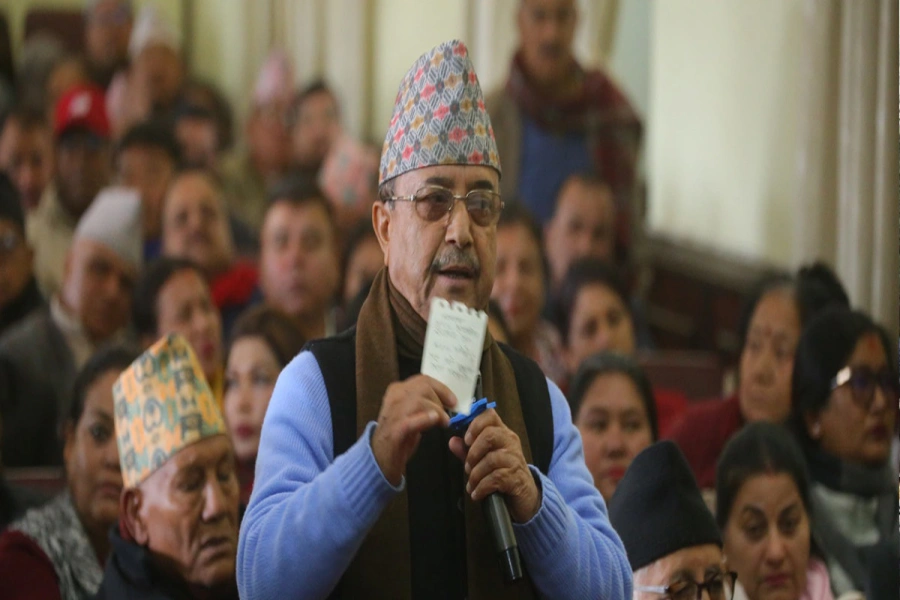
Senior administration experts have strongly opposed the move to increase the reservation quotas. "Increasing reservation quotas by 3 percent doesn´t seem to be very serious for the present," said former secretary Khem Raj Nepal, adding, "But what if the trend continues? It will have severe ramifications in the long run. The government must not compromise meritocracy and should consider the long-term impact of the reservation quotas."
Reservation quotas in government service have not been unsuccessful in neighboring India. The Indian government had allocated 65 percent for reservation quotas in government service in Kerala state a few years ago. Following mass protests and negative results, the system was changed.
Related story
Call to prioritize gender inclusion in budget planning