Ours is an unequal world. A cursory look at how the ‘United’ Nations, considered as a model of international relations, operates clearly reveals the existing inequalities. The five nuclear powers called the great ‘permanent five’ continue to enjoy absolute veto power, at the cost of the other members.
In fact, the UN Security Council remains the most anti-democratic and anachronistic entity, utterly unreflective of contemporary realities. It has refused to reform itself, despite several reform attempts. The glaring inequality in the UN Security Council aside, appointments of the heads of the major international financial institutions, such as the World Bank and the International Monetary Fund are also no less discriminatory. These appointments have been shared exclusively between the US and the EU countries, despite growing criticism against this persistent ‘US/ European duopoly’.
International relations are purely interest-driven. Powerful countries often push their vital national interests with projection of power, as and when needed. As political scientist and former diplomat Henry Kissinger says “Power is the main instrument of foreign policy”. When Saddam Husain attacked Kuwait, during Bush senior’s presidency, the US and the entire industrialized world rallied behind the US-led ‘defend-the Kuwait-mission’ with men, money and material.
Iraq had certainly not committed a direct aggression on the US or any other EU country. Why then did all industrialized countries support the attack on Iraq? The reason is obvious—Kuwait served their vital national interests, as it was one of their principal oil exporting countries.
NATIONAL RESILIENCE
In such an unkind and unequal international system, what is it that a country such as ours, can and should do to preserve, protect and safeguard its national interests, independence and sovereignty? I think, in our search for an answer, we must look within first.

To begin with, ‘internal house-keeping’ and ‘external image building’ efforts have to be undertaken. Nepal’s political landscape today is highly contaminated because of the many—but not all—immoral, power-hungry and corrupt politicians who continue to plunder the country. Political sanitization and purging the country from the corrupt politicians and bureaucrats is the first step in this direction. Further, our present politics is marked by a great disconnect between politicians and the people. True people’s representatives and public servants that have pledged to serve the people should seek to stay connected with them. Therefore, pulling down the high walls erected between the people and the political leaders is the second step.
Three, the existing anomalies where all the decision making power is concentrated and enjoyed exclusively by a ‘select few politicians and their coteries’ must also be put an end to. Four, an extremely vital step is the inclusion, in the new constitution, of people’s ‘right to recall’, and ‘negative voting rights’, as being suggested by many constitutional and legal experts.
These are indeed ambitious reform measures. Implementing them, especially in a country such as ours, is easier said than done. This may require setting into motion a massive reform process involving people, principles and organizations. But the moot point is whether the existing organizations, current crop of leaders and bureaucrats suffering from acute moral and administrative atrophy are capable of reform.
BALANCED FOREIGN POLICY
National resilience development efforts must be accompanied by a bold and balanced foreign policy. Earlier, foreign policy formulation and execution catered to the interests of the then regime. Now it should serve the country’s interests. Popular hopes and aspirations expressed through the second People’s Movement must, therefore, find appropriate resonance in the federal republic of Nepal’s new foreign policy framework. Conduct of such a foreign policy would require bold and balanced execution and is possible only under a leadership that is guided by, among others, high moral integrity, inspired by a deep sense of patriotism and powered by knowledge and wisdom.
Suffice to say, leaders with high moral integrity always strive to balance authority with responsibility. Knowledge is another critical ingredient of such a foreign policy. If moral integrity empowers one with courage of conviction, knowledge enhances understanding of issues more clearly, broadens thinking and improves negotiation skills. Knowledge-powered foreign policy, thus, helps diplomats and political leaders examine the merits and demerits of international issues from national perspectives.
As for a deep sense of patriotism, we should first be clear about the distinction between ‘patriotism’ and ‘nationalism’. General Charles De Gaulle, the legendary French president and one of the Second World War heroes, said patriotism is when “love your own people and country comes first”; nationalism is when “hate the people and the country other than your own comes first.” Because patriotism is all about the love for the country and the people, true patriots are always ready to sacrifice their personal interests when the calling comes to uphold the prestige and dignity of their country and the people.
Our foreign policy handling has often come under heavy national and international criticism because of our leaders’ inconsistent behavior. They say one thing when in power, and quite the opposite when out of power. This makes the international community and our immediate neighbors apprehensive of us and our intentions.
Nepal’s neighborhood relations management, with India in particular, suffers from lack of confidence, consistency and boldness. India’s sheer size, as well as economic, social, political and military prowess, continues to weigh heavily on the psyches of Nepali politicians, and policy makers, generating a sense of fear and low self-esteem. There may be two reasons behind this paranoia. First, the leaders, policymakers and implementers may lack courage of conviction and moral integrity, as they may be guided more by politics of power than that by principles. The second reason is obviously a lack of intellectual prowess, articulation ability and the ability to comprehend the complexities of Nepal-India relations. Otherwise, there is no reason why we should be hesitant to widen and deepen our engagements with India, or China on the basis of mutual respect, and shared interests.
The contemporary challenges of international relations must, therefore, make our future leaders and policy makers wiser. This is more so, at a time when the country is going through a slow and painful process of transition from the old to a new political set-up. We must understand we stand to gain nothing by merely making desperate noises or engaging in blame games against foreign interventions. It is natural for countries to adopt more aggressive ways to push their political, economic and strategic agendas, as their interests become wide-ranging along with an increase in their powers. Handling them with diplomatic tact and dexterity is essential; and this is where, I think, development of national resilience and adopting a bold and balanced foreign policy become all the more important.
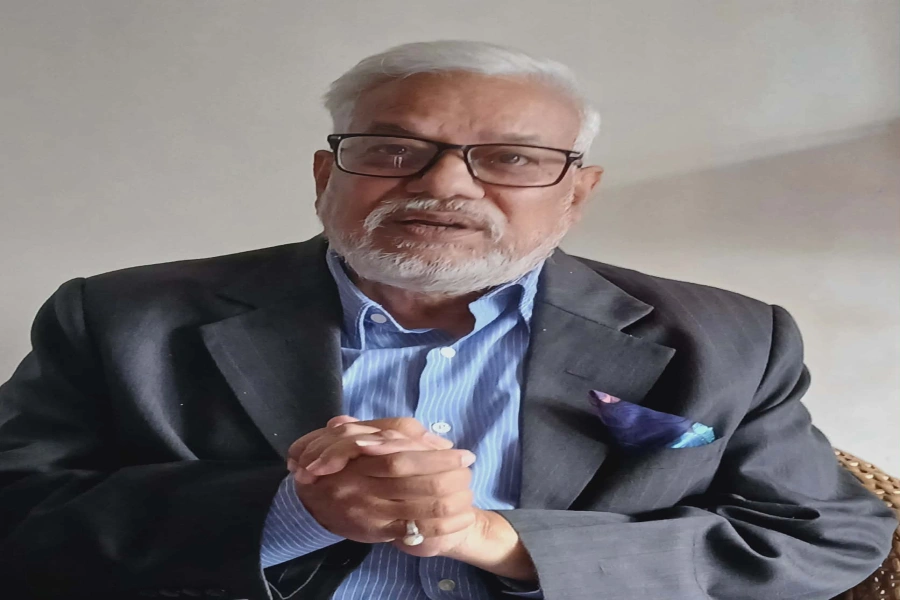
The author is former chief of protocol, Ministry of Foreign Affairs
bhimsen29@gmail.com
Related story
Another health crisis is looming; more than 1105 people committ...