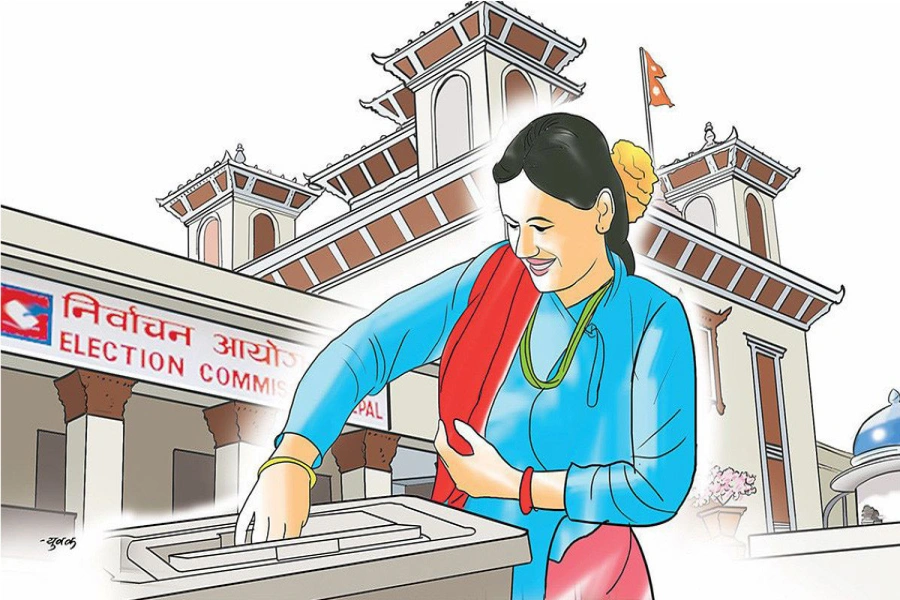
He said the government has planned to hold elections in the first phase in the earthquake-affected 14 districts.
The last polls to elect local representatives were held in 1997 for a five-year tenure. Since then, the local bodies have no elected representatives and these offices are run by a few officials and representatives of political parties take decisions on development and other activities through consensus.
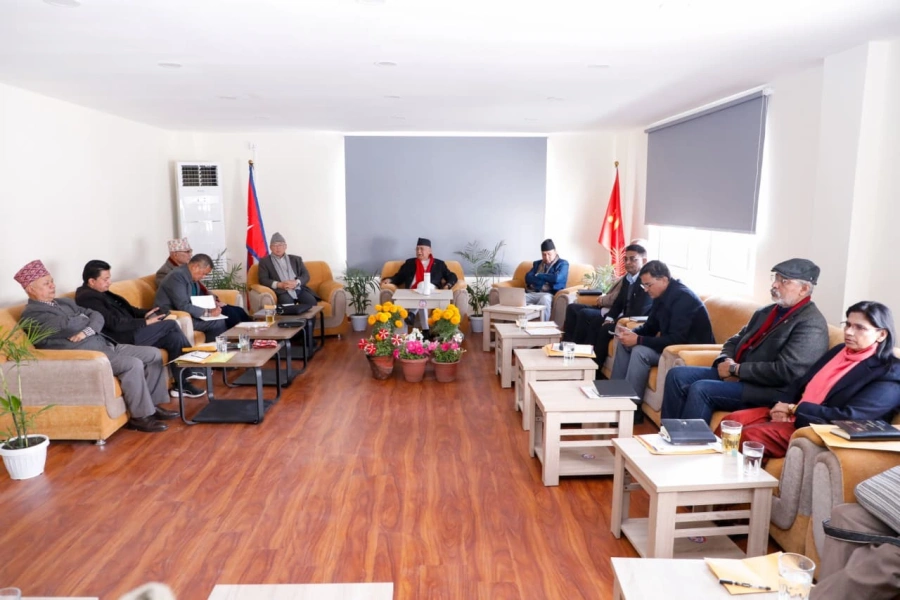
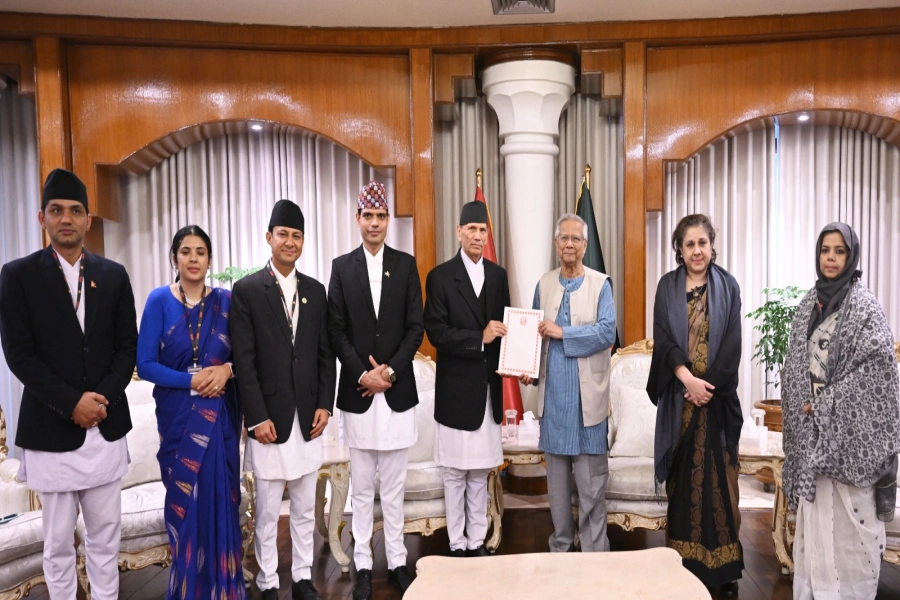
"The government has been holding consultation with major political parties to forge consensus to hold interim local election under the prevailing laws," the prime minister told the representatives of the international community. "I do hope that starting from the earthquake affected districts where the local representation is so important, we will be able to conduct the election in a few phases within the first half of this year with the expectation that major political parties will agree to this proposal."
He said that the government took the decision as people's representatives of the people at the local level has beocme so critical not only for smoothly undertaking the reconstruction work but also for ensuring effective and more accountable development responses at the local grassroots.
The prime minister had explained at great length about the government initiatives to carry out the reconstruction and rehabilitation tasks and major parties' efforts to reach an agreement with the agitating parties.
He also informed about the progress made toward endorsing the constitution amendment bill taking the agitating Madhesi parties into confidence.
"The amendment proposals in the constitution have been tabled in the legislature-parliament and are in the final stages," he said in his 13-point written statement. "Political dialogue with the agitating political parties has been intensified and we are expecting to resolve the genuine concerns very soon through consensus."
He said the government expected the end of the disturbance at the border points and obstruction in the supply of essential items particularly the petroleum products and that such a situation will pave the way toward intensive work on reconstruction and expedited execution of development programs.
The prime minister also claimed that had there been no crisis in the supply of petroleum and other supplies following the obstructions in the southern border, Nepal would have made much more progress in these preparatory works and gone for reconstruction work.
The prime minister also maintained that the recent fuel and supply crisis has adversely affected the implementation of development projects, and thus even the projects of national pride are not performing smoothly since the earthquake and particularly after the blockage at the borders. "With political settlement of the issues triggering the obstruction in the border, we are hopeful to catch up the implementation delays of the projects including those supported by development partners," he added.
Related story
EC sets conditions for polls in two phases