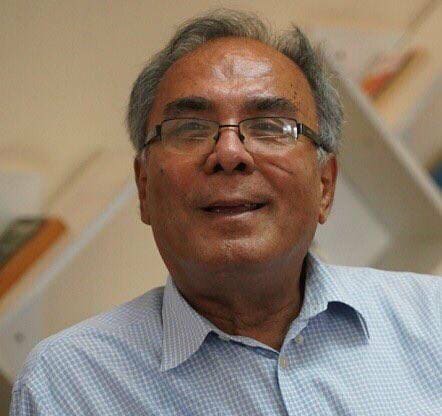
Sewa Bhattarai catches up with the first-time writer to discuss inspirations, social realities, and audiences for writing.
How did you start writing?
I was active in academic and extracurricular activities since my schooldays in Arghakhanchi. I started with poems in the beginning, but recently I’ve become more interested in stories. I’m a teacher, and it often falls on me to entertain children. A poem can interest them for only a short while, but a story can hook them for hours on end.
Your book contains stories for and about children. Do they come from your own experiences as a child, or from your later interactions with children?
Some are from my own experiences. But mostly, they come from my work in education. At the school I’m with children all the time, so I know them closely, and know what they think and feel.
You write by the penname ‘Manjari.’ Why did you choose this name?
Manjari means a flower bud. In my mind, I’m forever fresh, forever young, whatever age I’m in real life. This name means much to me, it symbolizes my very philosophy.
You’re writing on female psychology. What makes a woman’s writing about women
different?
I think when a woman writes about women, true feelings can be expressed clearly. For example, there’s the general perception that men abuse women because they are weak. But I believe women are powerful too, and abusive men should be afraid of women. One of my stories proclaims this clearly.
What are the challenges for a female writer?
The biggest challenge is to manage time to write from household duties. I’m very conscious about keeping my family happy, and it takes a lot of effort to balance family, job, and recreation, the latter is what writing falls under. That’s the reason my first collection came
out so late in life. But thankfully, my
family is educated and is supportive of my writing.
What are your reading and writing
habits?
I read and write at night, not regularly but at stretches of two hours or more whenever I get the time. During the day, even if an inspiration comes to me, it’s lost in the hustle and bustle. At night, when I’ve taken care of all my duties, I can indulge my pursuits.
Is reading important to writing?
I believe it’s extremely important to read in order to write well. Anything you write must give some kind of positive message, or touch some emotion in the reader. It’s impossible to write like this without reading. My own stories are heavily influenced by those of BP Koirala, Bhawani Bhikshu, Govinda Bahadur Malla Gothale, Maya Thakuri, Dev Kumari Thapa, and other senior writers.
How do you take criticism?
Most of my readers have been children at my school, and they have been appreciative. When someone praises my work, I’m obviously pleased. But I appreciate those the most who tell me about the shortcoming of my work and tell me how I can improve. In fact, I’m always in search of such people.
About Ghimire’s book
‘Kaathko Mobile’ is targeted at children and teenagers. It contains stories based on child psychology as well as female psychology. The stories explore issues like peer pressure, the impact of western consumerism on young minds and on parent-child relationship, and the efficacy of corporal punishment.
Related story
‘Black Panther: Wakanda Forever’ Holds Historic Premiere In Nig...