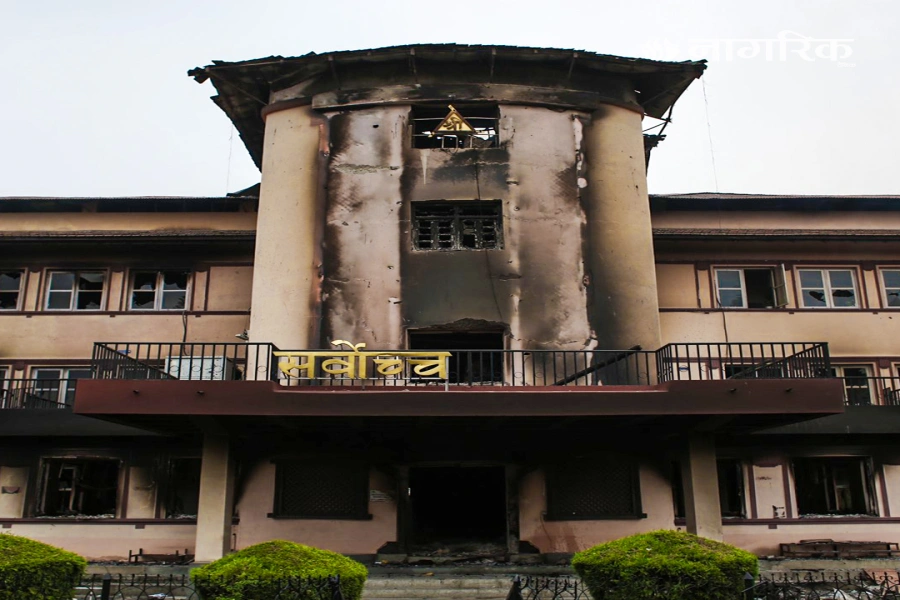
In 1994, a Nepali weekly editor Harihar Birahi was fined and jailed for six days for publishing a cartoon depicting the chief justice and the judiciary.[break]
A Malaysian political cartoonist Zunar was jailed in September 2010 on the charge of sedition. Sedition charges in Malaysia are often used to suppress press criticism. At a meeting in Florida last year, Zunar said, “I’ve filed a suit to challenge the Malaysian government on the grounds that the arrest was made in bad faith.” In July 2012, he sends an email saying that the high court has held that the detention was lawful to suspect that his book on cartoons was seditious. This will help the government use more criminal laws to stop me from producing more cartoons that expose corruptions. He writes the court has denied his fundamental right as a political cartoonist which contradicts the constitution that guarantees the freedom of expression to every Malaysian citizen.

In August 2011, the best-known cartoonist of the Arab world Ali Ferzat, whose work was critical of the President Bashar al-Assad, was badly beaten up by Syrian security forces.
Recent arrest of Indian cartoonist Aseem Trivedi in India also is an attack on the freedom of speech. He has been accused of sedition while driving his anti-corruption campaign through his cartoons in recent years. He is also a primary organizer of Save Your Voice, a free speech campaign to stop unwarranted censorship of Internet sites.
Of course, while exercising freedom of expression, creators/artists must not offend the sentiment of others. Ultimately creativity also has code of conduct.
In my twenty years of lampooning career, I have always tried to remain out of caste and religious issues. Because, I believe that religion, more than anything else, has helped maintain social harmony, though it has also made society equally vulnerable.
The government of Nepal once again failed to be responsible to its citizens. It is utterly ridiculous that instead of showing sympathy to artist Manish Harijan it has shown obeisance to a handful of extremists who have issued life threats to the artist. The government has kept artist Manish Harijan and the curator Sangita Thapa under close surveillance, but has taken no initiatives to find the group that issued life threats.

When I posted a status on a social networking site showing my concern over the government’s apathy over the life threat issued to the artist, most liked my status, but others commented accusing the artist of ‘blasphemy’.
If people have different perspectives on an issue, it must be discussed and debated openly before it gives rise to conflict between the conflicting parties. The authorities need to take the first step to ward off tensions. In cases of sensitive nature, failure of the administration and political leaders to keep things under control may disturb social harmony. So the authorities must step in before unwanted elements take advantage of the situation.
Nepal is in a transition to democracy. India has been practicing democracy for more than half a century. Yet both the neighbors have dealt a blow to the freedom of expression – Nepal by imposing restrictions on display of an artwork and India by locking up a cartoonist on the charge of sedition. The governments in both the countries think that the creators have abused freedom of expression.
UNESCO officials in Kathmandu have issued a statement expressing concern over the death threat issued to Harijan. It says the right to freedom of expression must also apply to artistic expression. Tension that may arise between artistic creation and religious and ethical values should be discussed openly, instead of making it a subject for fomenting disharmony.
Freedom of expression is a basic human right guaranteed by Article 19 of the United Nations Universal Declaration of Human Rights which states that: “Everyone has the right to freedom of opinion and expression; this right includes the freedom to hold opinions without interference and to seek, receive and impart information and ideas through any media and regardless of frontiers.”
Political leaders both in the government and the opposition must not forget that, by signing the article, their political ancestors have promised to honor the freedom of speech of every citizen. Political cartoonist like Zunar challenges authoritarians saying, “Authorities could imprison my body, but not my mind.”
“By protecting these brave cartoon journalists we are in turn protecting the free speech rights of every single one of us” - Cartoonists Rights Network International.
The writer is an editorial cartoonist at Republica.
Related story
Alia Bhatt to be a part of the 'Hook Up' song from 'SOTY2'