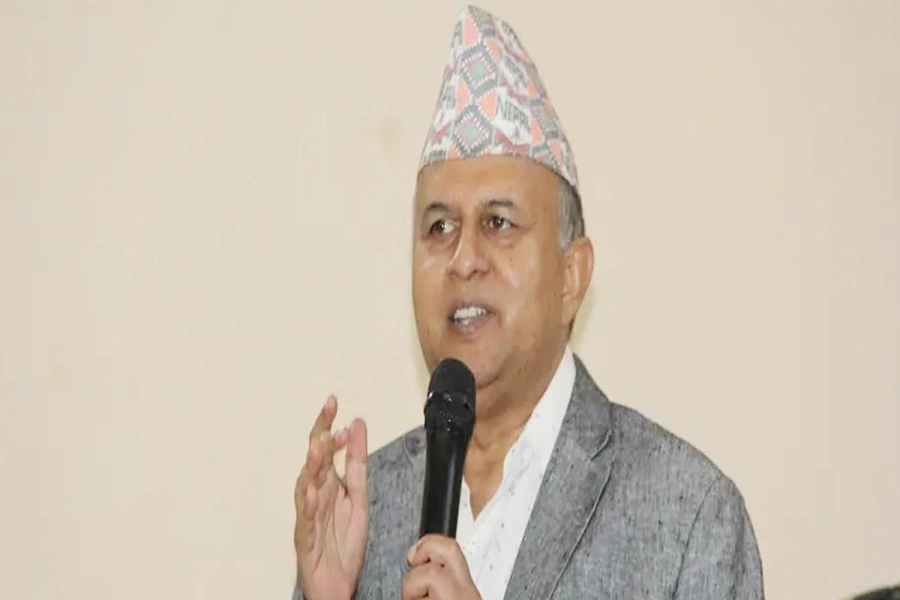
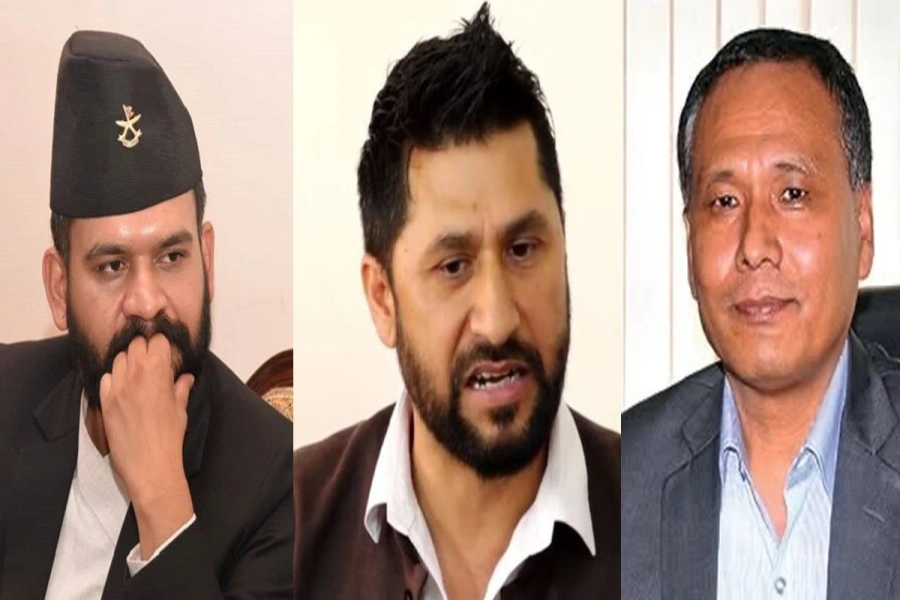
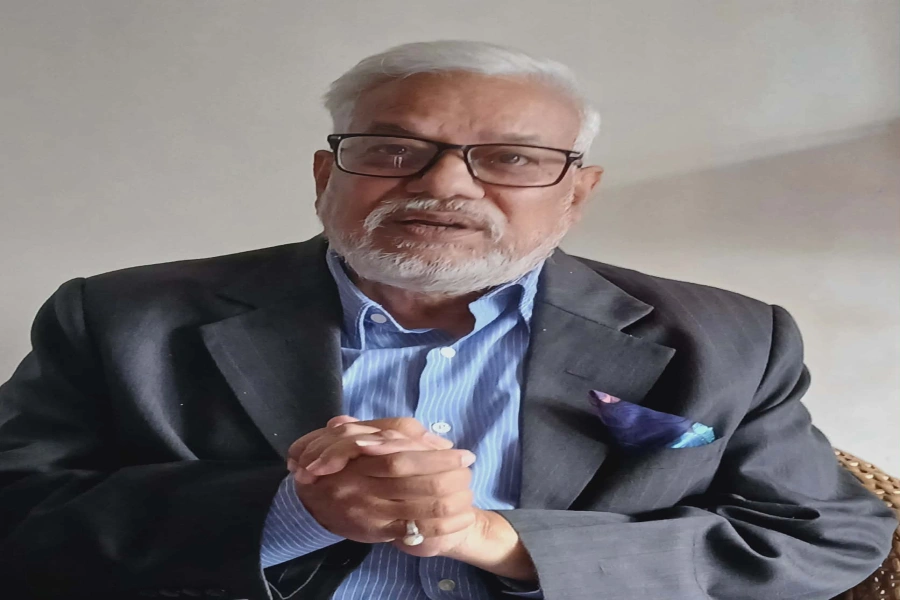
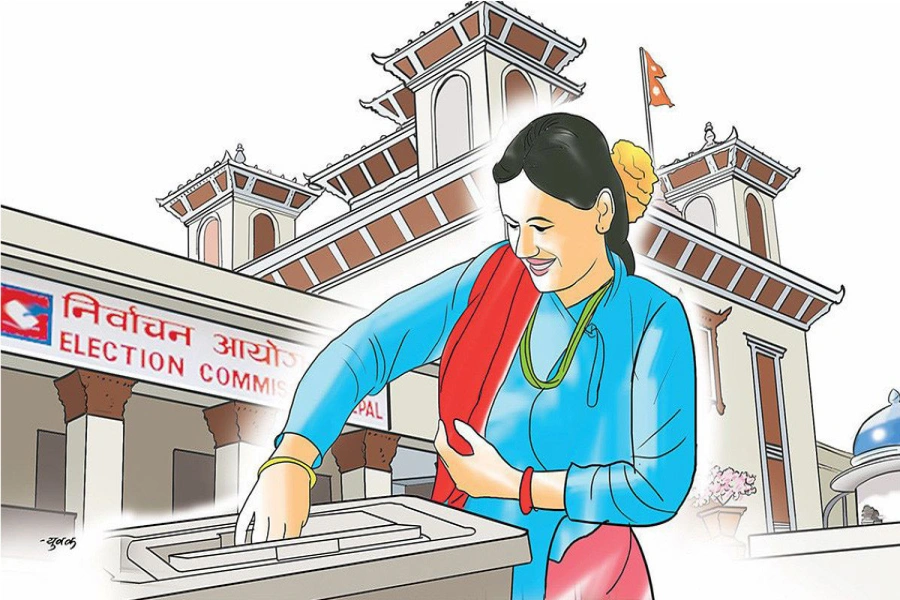
The much-awaited 13th general convention of Nepali Congress kicks off tomorrow, March 3rd. But as we go to press on Tuesday evening, the face of the future Congress leadership remains murky. As per the Congress statute, party president, one general secretary and a treasurer will be elected by the general convention; the new party president will subsequently nominate other vital office-bearers like a vice-president, a second general secretary and a joint general-secretary. It says a lot about the oldest democratic party in the country that nearly half of its top posts will be filled at the discretion of the party president. In comparison, CPN-UML, the nominally communist party, elects all its office-bearers from the general convention floor. With the president given such sweeping discretionary powers, no wonder there is such an unhealthy competition for the top job in Congress. In the fray for this post this year are Sher Bahadur Deuba, Ram Chandra Poudel, Krishna Prasad Sitaula and Prakash Man Singh, among others. The fight for other elected offices is as intense, as are efforts among second-rung leaders to prove their fealty to main contenders for president.We would much rather see the supreme rule-making body that is the general convention pick all office-bearers, as befits a party like Nepali Congress that has historically had an important role in institutionalization of democracy in the country. Another sore point of the 13th NC general convention is that the conclave, held every five years, will make a mockery of the provision in the new constitution that all political parties reserve at least 33 percent seats for women. Of the 2,500-odd delegates to the convention, less than 20 percent will be women. Moreover, chances are that 27 (of the 85) positions in the party's Central Committee that are reserved for members of the marginalized communities will be filled by the old CC members close to powerful party leaders. There is thus a danger that the well-intended proportional representation will be reduced to tokenism. It will be no less damning for the image of Congress that during the 13th general convention there will be very little discussion about party ideology and to how to adapt the party to the realities of post-constitution national polity.
In fact, the Grand Old Party has a lot to learn from UML. Besides the election of all its office-bearers UML is also miles ahead of Congress in making use of information technology—be it in its creative use of social media as a PR tool or making wi-fi and computers available for journalists to directly report from convention floor. But, again, there is also a troubling commonality between the two parties: most noticeably in their glaring lack of ideological clarity. There is nothing communist about UML; likewise it is hard to believe that Congress, which has actively promoted liberal free-market economy over past 25 years, really believes in its long-stated goal of social democracy. Like UML, Congress also has a long way to go to make the party machinery more inclusive and truly reflective of the diverse Nepali society. With the same graying faces in the fray once again, we are not very hopeful of NC's renewal prospects. But if the young Turks in the party keep pushing, there can perhaps be some meaningful incremental changes during the 13th general convention. We certainly hope so. Nepal, we believe, needs an internally strong and united Congress party.
Related story
Business ideas matter