Nepali society also seems to have a very negative way of looking at artists and students of the fine arts because it is believed that a career in the arts often leads to very low income and low career prospects. [break]
In many ways, greed has taken over the educational aspect of a youth’s career choice, parents and teachers alike advise students to get into a field that offers a good pay in the future and students as well decide what they want to do on the basis of the monetary aspect of prospective career options in the future.
Making it big as an artist does seem to be pretty difficult because of the fact that Nepali society still hasn’t started appreciating art all that much.
Artists struggle to make a living on their art alone and often stray away to other options like animations or education.
Many talented artists can be seen working as art teachers in different schools or working as concept artists at many animation studios blooming in Kathmandu.
“When it comes to art appreciation, Nepali people are still far behind,” says 27-year-old Sundeep Neupane, a recent graduate of Bachelor’s of Fine Arts (BFA) from Srijana School of Fine Arts, Lazimpat.
Neupane has been interested in art ever since he was a child, he reveals that he used to love scrawling as a child, and even after he completed his SLC, he studied art and opted for a degree in Fine Arts soon after his graduation for high school.
Neupane, originally from Pokhara, used to work with many artists in Pokhara itself and moved to Kathmandu only in 2005 to further his career in arts because of the lack of arts colleges in Pokhara.
“With an art degree, a student may not have the opportunity to buy a car but he can easily earn enough for a cycle. And I guess, as an artist, you learn to live with what you have. I love arts because it’s what gives me pleasure; it’s what gives me self-satisfaction. I’m working on accomplishing a childhood dream. Money is secondary. As long as I have enough for my livelihood, I’m happy,” he informs.

The misconception that many people have that artists don’t have many career options seem to be challenged by many art houses, advertising agencies and animation studios in Kathmandu.
Many artists are getting hired as illustrators in media houses as well, and people with a background in fine arts can always opt to get into the field of designing. It may be true that artists don’t get paid as much as many of the different careers but they seem to get into the field for the love of it.
“A lot of art here is inspired by western cultures. We have a very artistic culture and we have had art in even the olden times. But these days, people just seem to love art of mountains and of scenic beauty. There is no room for real art, art that artists create from their experiences and memories, because copy art that involves copying natural scenes sells better,” says Kedar Dahal, 23, also a graduate of Srijana School of Fine Arts.
Dahal says his favorite class in school has always been the arts class and he says his motivation also comes from a painting he had created in grade 8 that had been bought by an Australian.
“You have to be good at what you do and you can succeed in any field imaginable. I think Nepali society also plays a big role in the success of artists, because in more developed countries like America, art is well respected and many painting go for more than millions of dollars. Interior designers suggest paintings to decorate rooms and houses. There are huge art museums that celebrate an artist’s work in western countries. Nepali society needs to learn to respect art and only when people learn how to appreciate art will the art industry in Nepal bloom,” he informs.
This negative view of the arts field also affects many talented artists because of the pressure they are under from parents, teachers and their peer groups as well.
Young people have a need to create and to bring something that has never existed in this world to life and that is what motivates young artists to pursue art. But it is definitely difficult for them to go for their dream when people around them are against the idea.
Many young artists are often sidetracked from their dreams because their parents want them to study a more financially sound subject like business or science.
“Many young artists are often forced to study something that they have no interest in because their parents force them to renounce any interest they have for arts and study something that can help them earn more,” says Namrata Singh, 22, a third-year student of BFA at Srijana School of Fine Arts. Singh had an artistic mind ever since she was a little girl, and her parents fully supported her artistic talents.
“It was my father who told me about Srijana School of Fine Arts and had me enrolled there. He has been very supportive about my interest in art. My parents support me fully but there are still other family members who question my parents on my education. The society still has a very negative way of looking at art students and that’s what drives many very talented young artists to waste their talents in something else,” she adds.
Nepali society still seems to have a very negative view to art, and unless people learn to appreciate art and respect the profession, the future of art looks bleak. But on the other hand, many young students are opting for degrees in the arts, with or without the consent of their parents.
Dahal informs that when he was in college, there were 6-7 students in a class but now the numbers have risen quite significantly.
He predicts with certainty that in the near future, there will at least be a 30% rise in the number of art students. Students are starting to opt for art degrees but the society still needs to change and turn more supportive of art in Nepal.
Related story
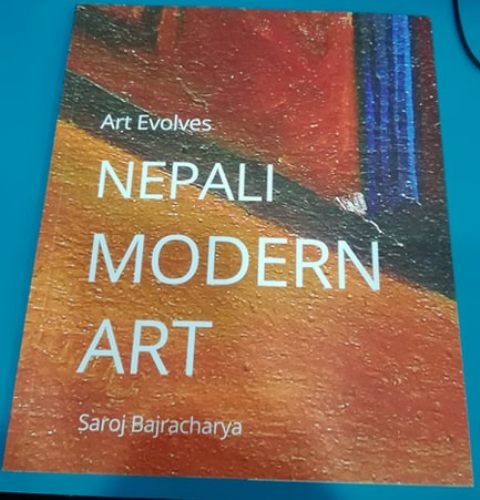
‘Art Evolves: Nepali Modern Art’: Review