No one feels comfortable speculating after an accident, air accident in particular, given the sensitivity of the matter and out of respect for the departed. But this is precisely what the general public wants. On the other hand, formation of an accident investigating committee and report submission within the stipulated timeframe, runs through their ritualistic course, as always.As the system has a weak monitoring capability, little of the recommendations are followed to the word. They are quickly forgotten. The media too are generally happy to follow another hot topic, not to be bothered after an essentially 'dead' topic. This is essentially how the whole cycle runs, every time. Perhaps it is why we do not seem to learn from past mistakes and improve overall aviation safety.
If anything was distinctly apparent in the aftermath of Air Kasthamandap crash, it was the much-delayed rescue effort. A timely rescue could have possibly saved one pilot, and prevented countless other injuries. The rescue took time due to various logistics-related factors and, above all, the difficult topography and the unfavourable weather. When the rescue team finally reached the spot it was much too late for Santosh Rana. While Capt. Dinesh Neupane is said to have succumbed instantly, it was heart breaking to learn that Santosh was alive for about two hours after the forced landing. We lost two young pilots dedicated to serving the historically deprived far western Nepal.
The Agni Air crash on the hills off Jomsom in 2012 had resulted in 15 fatalities, but six survived as it happened in relatively easier terrains. There are examples of prompt rescue resulting in saving many lives especially, with crash sites in and around large airports. The prime examples are 2008 British Airways BA38 crash near Heathrow and Air France flight AF358 crash in Toronto. But little could be done in the case of two Boeings colliding on runway at Tenerife in 1977. It led to 582 fatalities, including all 248 on board KLM while 61 of the 396 on PanAm flight survived miraculously.
Obviously, a rescue is possible only after the crash site is located. Actually, much time is lost when the crash site needs to be spotted first. Again, spotting is relatively fast if it happens to be over flat land; it becomes increasingly difficult in a mountainous country. It took about three weeks to locate RNAC's Dakota (9N-AAH) at Dhorpatan (in early 1960s) and four days to locate the wreckage of TG311 (1992) just few miles north of Kathmandu. Remember they are still searching the vastness of southern Pacific for MH370 that went missing on March 8, 2014, exactly two years ago. We wonder if it will ever be found.
Our records for saving lives as result of timely rescue are not good as most of our accidents are of controlled flight into terrain (CFIT) type, i.e., a perfectly flying aircraft, with all its system functioning, rams into a physical obstruction like hills. As such, CFIT, by its nature, always results in almost high fatalities, save some miraculous escapes. Of the five of those who survived Agni's 2012 Jomsom accident, two were lucky to be able to walk out on their own while the three, including a stewardess, were rescued in true sense. Meanwhile, Yeti's crash in Lukla landing in 2008 resulted in only the Captain defying death. Though injured, he had been catapulted out of the craft, away from the inferno.
There is a bizarre rescue story relating to a Japan Airlines flight (JA123 / 1985), a Boeing on domestic flight with 524 on board. More could have saved than just four who eventually survived, had the rescue party not waited for the night to pass assumption that everyone had perished. On the examination of bodies the following morning, it was found that many individuals had survived the crash only to die from shock and exposure to harsh weather. The injuries, as such, would not have resulted in death had they been treated sooner. Available record suggest that American forces based in Japan had readied a team for rescue effort, but mysteriously this offer was not taken by higher up authorities leading to the inordinate delays despite the apparent urgency. We wonder if the national ego was at the heart of it all.
Any rescue effort is done with the hope that there are survivors in dire need. In short, it is a race against time. The only lesson we need to learn from the Air Kasthamandap crash is that we need to decentralise search and rescue (S&R) team so that not everything needs to be channelled through Kathmandu. We need to have a full-fledged team that can be assembled at short notice, both in the east and west of the country at places like, say, Tumlingtar and Dhangadi. The team must comprise of paramedics and also personnel experienced in mountain scaling. Each station needs to have a small fixed wing aircraft besides a light helicopter as without them the team will be of little use. Yes, this will be an expensive endeavour and the team may not be required to do any rescuing for long time to come. But it is better for the team to remain idle for a while than people dying for the want of timely rescue.
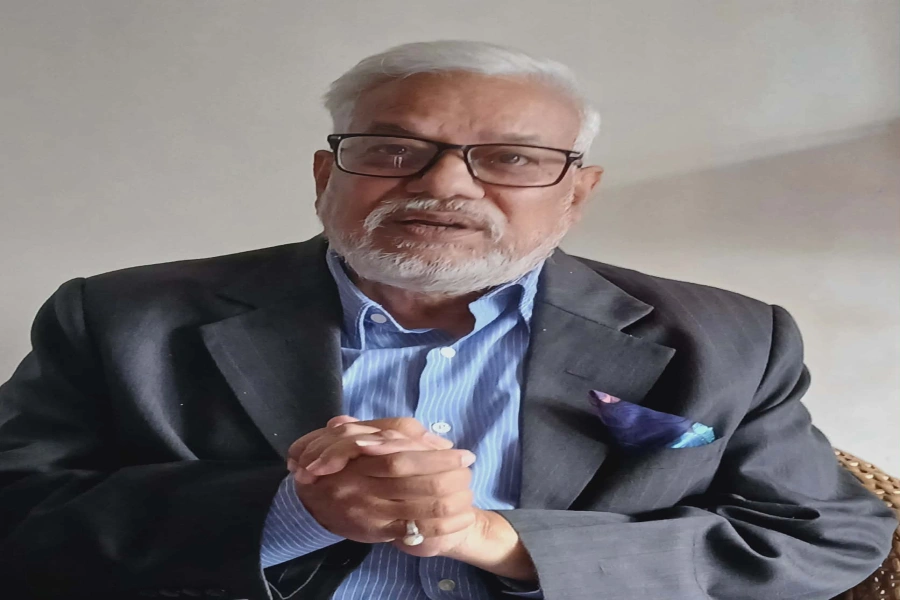
The author writes on aviation issues
harjyal@yahoo.com
Related story
Preparations Underway for Dragon Boat Race in Pokhara