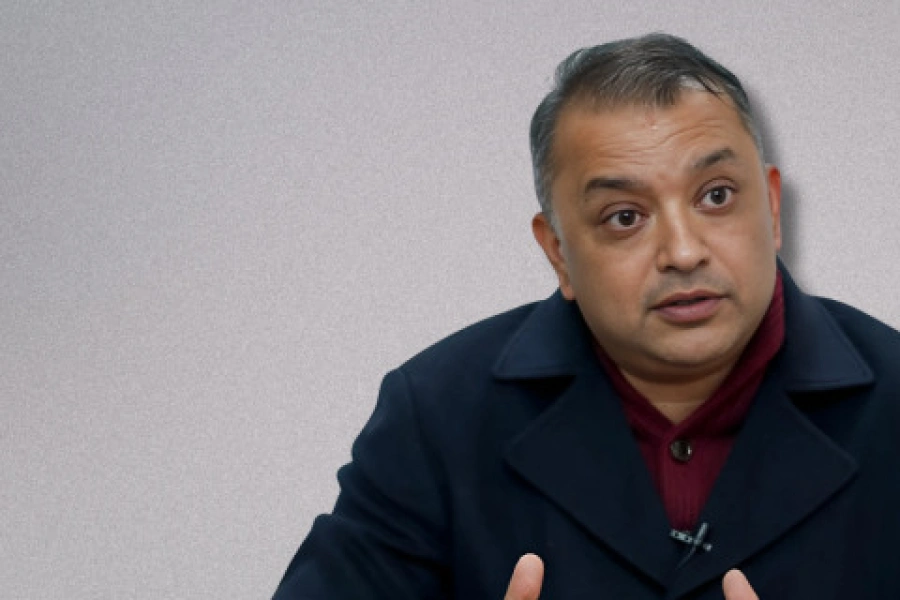
Speaking to Republica's Pramila Rai, the man in his mid twenties shares his advice for his contemporaries. "To young people I'd say, be very concerned about designing your own future. Right now we're just concerned about the present happiness but we should ask ourselves what is the kind of life we really want to live, and work towards that."You've said in an earlier interview that you're an optimistic thinker rather than a positive one. Can you elaborate?
Everyone says, be positive. But what drives me is optimistic thinking. Let me explain using the Bagmati River as an example. A positive person might say the situation is not that bad. But I don't want to be positive; I want to be sad and angry. But I'll also see the possibility of doing something to change that.
What started you on the path to being a motivational speaker?
It's been five years now. I started as an awareness campaigner for WWF's climate change awareness campaign. We went to various schools and colleges to speak about climate change. However, it started when I would frequent different youth clubs and ask questions. People started saying I ask good questions and speak well which gave me the opportunity to facilitate other events. After that, I started giving training programs on confidence and leadership building because I was considered to be a good leader.
Were you always a confident speaker? How do you prepare for your speeches?
Not at all. I remember when I was in class six I had to give a speech but all I did was mumble. All my friends laughed. But then I started practicing and was soon winning awards. Now I've trained my mind to absorb things around me. That's my learning process. I think about things I've absorbed and use them when I'm speaking on stage. I also learn from reading, interactive discussions and listening to conversations.
My advice to people on public speaking would be to practice and enjoy it, and see it as a zone of freedom.
How do you deal with criticisms?
I think I'm one of the people here who receives a lot of criticisms. People say 'he's not a successful person, so why is he talking about success', or 'a three-day training is not going to change anything'. I believe in either smiling about it or taking it as a powerful tool to turn myself into a better person.
How would you define change after three days of training?
People are skeptic but I've seen change firsthand. And it doesn't mean a revolutionary transformation. Change can mean small things; a new perception that dominates your life and changes your focus. Every human being needs motivation every moment of their life.
And what do you say to a person who doesn't show the usual leadership abilities even after taking one of your trainings?
A leader is not necessarily someone who starts his own business or the one who is the most charismatic in the group. In normal life, when you take responsibility for your own decisions, that is being a leader. Even having the ability to say no and stand your ground is leadership.
Many young people believe in you. What about the older crowd?
There are a few older people who say they like listening and talking to me. The driving factor behind their support is their interest to know what is going on with the young people. And there are some people who come to me for advice, even regarding their marriages. I've also given advice to teachers on how they can be better instructors. But we're still stuck in that cultural context where we refuse to believe that young people actually have something concrete to say which can benefit the older generation. As for me, I'll just keep moving forward and developing my quality as a speaker, thinker and analyst.
Related story
'Spider-Man: No Way Home' Gets Special Hardcover Making-Of Book