Edited by Archana Thapa, “Telling a Tale” is a collection of personal narratives by 31 Nepali female voices from various cultural, ethnic, educational backgrounds and age groups who have written about themselves.
“Women talk a lot but not of themselves,” smiles Thapa, an independent scholar and writer who recently completed her MPhil (Masters in Philosophy). “We all have a personal story to tell, but many aren’t comfortable in using the word ‘I’,” she expresses, sitting in the living room of her residence in Maligaun, Kathmandu.
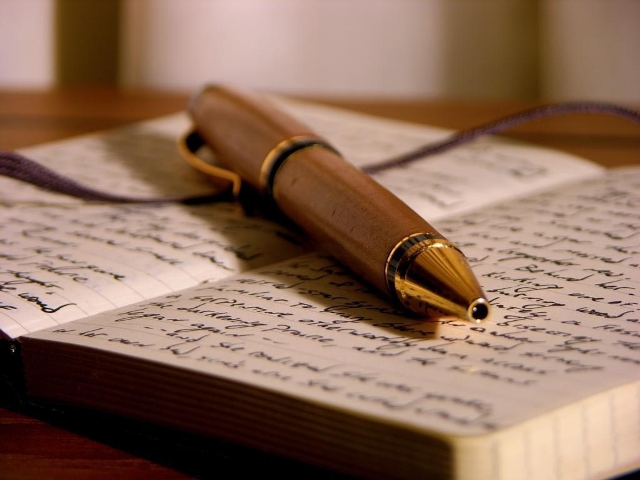
An effort of two years, Telling a Tale is not about “gender differences between men and women” but about the “manifold differences within women.” And these differences unfold in each narrative of the book, which ranges from poetry and prose to essays and diary entries.
Teenager Swasti Sanu writes about her love for shoes. Promina Shrestha, in her twenties, talks about her desire to be treated like a ‘girlie girl’ from time to time. Art curator Sangeeta Thapa relates her visions of her past life. Saguna Shah pours out her struggles as a single mother; and 58-year-old Geeta Khadka explains how her mother fought against her family to educate her.
Editor Thapa has not included her own story in the book, but has written an introduction which presents an academic analysis of the 31 narratives.
Minimally edited for clarity, Thapa states in her introduction that these intimate tales “make an indirect critique of the concept of ‘universal femininity,’ a misconception that continues to make many people believe that every woman is as same as every other woman.”
While daring to share their innermost emotions is a feat in itself, the journey for many of these contributors has not been easy.
“It was a painful process for me, but also a cathartic one,” reveals Ayushma Regmi, who finds writing an easy way to put down her feelings. Nonetheless, writing for a public audience is different, as Regmi unveils her emotions revolving around the death of an uncle, her father’s best friend.
“I haven’t shared it (the narrative) with my parents and family yet,” she says, and hopes that those who have lost someone will be able to go through the process of mourning after reading her piece.
Skipping between gender discrimination in general and her personal tale in particular, Rashmi Sheila touches upon her brief marriage and the psychological traumas she underwent. Yet bravely, she states, “My struggle has made me stronger.” She also outlines an irony – “Modernity for many women has still not brought their freedom.”
Thapa has never met many of the writers in real life as the narratives were collected via email.
“I didn’t meet them because I didn’t want their personalities to affect my editing,” says Thapa and then states, “Their tales were talking to me.”
Indeed, each story in Telling a Tale is a revelation of what defines the particular person, apart from her educational, professional and cultural backgrounds. Well-known individuals, such as Ashmina Ranjit, Sushma Joshi, Manjushree Thapa and Sangeeta Thapa, too have something different to offer.

Thapa hopes that this collection is the first of many to come, as she is currently compiling a Nepali one. “I hope that this will encourage other women to write about themselves in the future and move from silence to articulation,” she opines.
“Telling a Tale” will be available in the market after its launch by Akshar Creations Nepal on Sunday, December 26, 2010, at 2:30 pm in the Nepal Tourism Board Hall on Exhibition Road, Kathmandu.
Related story
Singer Jyoti Magar criticises hollow nationalism