KATHMANDU, May 30: Finance Minister Swarnim Wagle on Friday unveiled a Rs 2.124 trillion budget for Fiscal Year 2026/27, presenting a distribution-oriented plan that has raised concerns over its heavy reliance on debt financing. The announcement, made at a joint session of the federal parliament, exceeded the Rs 1.89 trillion ceiling earlier recommended by the National Planning Commission.
The new budget marks an 8.14 percent increase from the current year’s estimate of Rs 1.964 trillion. Of the total allocation, Rs 1.271 trillion has been earmarked for recurrent expenditure, Rs 422 billion for financial management including debt servicing, and Rs 431 billion for capital expenditure—20.29 percent of the total. The capital allocation is Rs 23.11 billion higher than last year, despite the government’s persistent struggle to utilize development funds effectively.
To finance the ambitious plan, the government has targeted Rs 1.404 trillion from revenue collection, Rs 61.74 billion from grants, and Rs 247 billion from foreign aid. The shortfall of Rs 657.29 billion will be met through Rs 247.28 billion in foreign loans and Rs 410 billion in domestic borrowing. After accounting for repayments of Rs 245.89 billion on internal loans, net domestic mobilization will stand at Rs 164.11 billion.
The budget introduces measures aimed at appeasing the middle class and providing relief to salary earners. These include raising the exemption limit for income tax, increasing salary scales for government employees, and removing excise duty on several goods. While these steps are expected to ease household burdens, critics argue that the government’s reliance on loans undermines its pledge to present realistic and sustainable budgets.
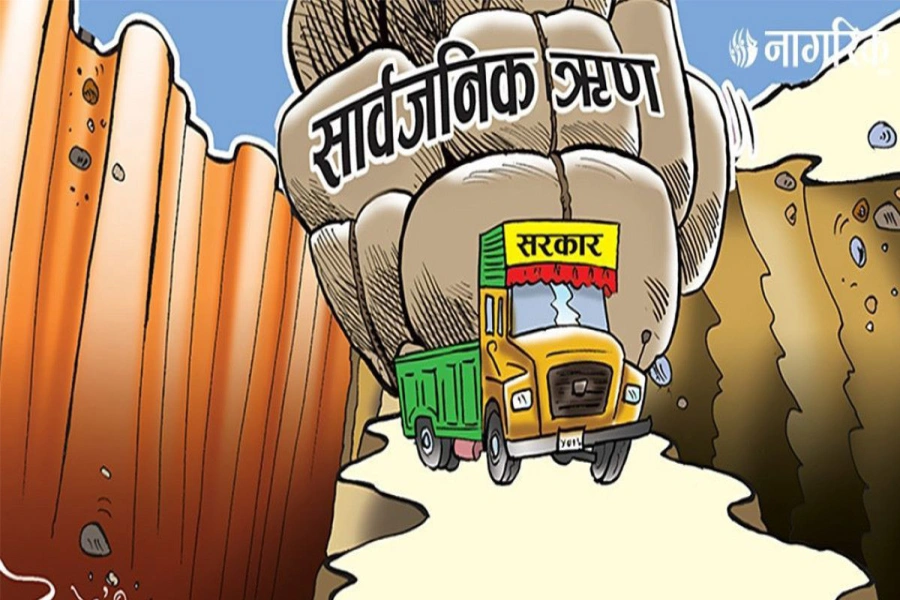
Public debt hits Rs 2.8 trillion mark
Vox Pop Reactions
Barshaman Pun, Former Finance Minister
“The budget is debt-based and lofty in size, contradicting the government’s earlier commitments. It is distribution-oriented but financed largely through loans, repeating the mistakes of past governments.”
Anjan Kumar Shrestha, FNCCI President
“The budget is comprehensive, touching almost every sector. Tax reductions, agricultural subsidies, and infrastructure programs are positive steps, though implementation remains uncertain.”
Ram Sharan Mahat, Former Finance Minister
“The budget is highly ambitious and impractical in terms of revenue generation and foreign loans. While expenditure estimates are unrealistic, measures like salary hikes, agricultural promotion, and customs duty reduction are welcome.”
Sagar Dhakal, President, Securities Brokers’ Association of Nepal
“The budget sets a long-term vision for the capital market. Restructuring of NEPSE, introduction of intraday trading, short selling, and derivatives are positive reforms. Recognizing capital gains tax as final payment will also reduce investor confusion.”


-1200x560-1774606010.webp)