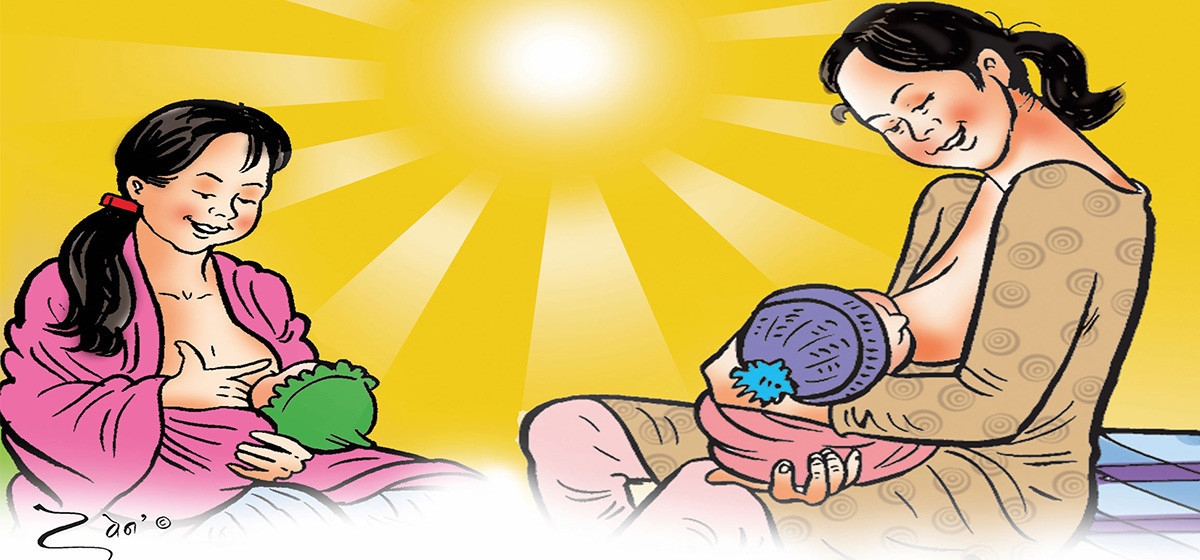
Nepal marks World Breastfeeding Week every year in the first week of August to promote breastfeeding in the country. The World Health Organization (WHO) recommends exclusive breastfeeding for the first six months of an infant’s life because of its significant health benefits for both the infant and the mother. Extensive evidence shows that breastfeeding lowers the risk of infectious and chronic diseases and promotes optimal growth and development in the child, while for mothers, it reduces the risk of breast and ovarian cancer.
There have been ongoing efforts in Nepal to raise awareness about the importance of breastfeeding. Discussions are underway regarding breastfeeding challenges, including maternity leave provisions and the establishment of breastfeeding spaces in public places and workplaces. While discussions on these structural barriers are undeniably crucial to supporting global efforts for exclusive breastfeeding, issues related to early breastfeeding difficulties are largely overlooked. These challenges are a major factor contributing to early breastfeeding cessation and, consequently, the country’s alarming decline in breastfeeding rates.
Early breastfeeding difficulties commonly include cracked nipples, insufficient milk supply, latching problems, breast engorgement, and mastitis, which mothers often experience when initiating breastfeeding after childbirth. The majority of new mothers experience one or more of these issues during the first week postpartum. Studies from different countries consistently identify breastfeeding difficulties as a leading reason for discontinuing breastfeeding earlier than mothers intend to. These challenges can be highly distressing and, when unresolved, often drive mothers to seek alternatives to breastfeeding.
Although breastfeeding is natural, it comes with numerous challenges. When I became a mother for the first time four years ago, I experienced early breastfeeding difficulties such as low milk supply, latching problems, and sore nipples, which hindered my breastfeeding journey early on. I was unaware of these potential challenges, nor did healthcare professionals provide information during neonatal and postnatal care. I had expected breastfeeding to come naturally, but things turned out differently.
‘Breastfeeding key to eliminate malnutrition’

I did not secrete milk immediately after giving birth, and my baby could not latch onto my breast. As a result, hospital staff advised me to use formula milk within a few hours of delivery. It took a couple of days for my milk to come in, but the supply remained low, so my baby relied predominantly on formula milk. This deeply stressed me, prompting me to educate myself about breastfeeding difficulties through online resources. I eventually realised my ongoing issues stemmed from low milk supply and poor latching. I learned that milk production depends on the supply-and-demand principle—the more milk is removed from the breast, the more the body produces. However, bringing the baby to the breast for a proper latch was a fierce struggle without hands-on guidance from healthcare professionals. The situation was mentally draining, physically exhausting, and emotionally shattering. It is at this moment that many new mothers consider quitting breastfeeding—just when they are already experiencing significant physical discomfort following childbirth.
Determined to breastfeed my child, I persevered. After a month of patient effort, my baby eventually latched on. However, as he did, I encountered a new problem—cracked nipples that caused excruciating pain during feeding. Although some pain during the initial days of breastfeeding is normal and usually subsides within a week, some mothers experience severe pain that lasts much longer. This pain alone can be enough to make them stop breastfeeding.
I turned again to online resources and learned that an incorrect latch and poor positioning were the main causes of my pain. I tried to correct both on my own, but it didn’t work. Desperate for support, I reached out to my gynaecologist, but received only generic advice on improving the latch. I knew what to do—but not how to do it. This is precisely where the healthcare system fails new mothers.
Mothers need practical, hands-on support, including assessment of latching and positioning by trained healthcare providers. Unfortunately, due to the lack of lactation consultants and trained professionals in healthcare facilities, mothers are often left to endure their suffering. This not only highlights a critical gap in Nepal’s breastfeeding support system but also shows how the country is falling short of upholding its national and global commitments to exclusive breastfeeding.
Navigating this journey alone, I again turned to the internet for solutions and discovered several breastfeeding techniques to ease the process—from the cradle hold, cross-cradle hold, and football hold to the laid-back and side-lying positions. I then watched video tutorials and experimented relentlessly until I found the technique that worked best for me and my child.
Establishing breastfeeding entirely on my own took a crushing toll on my mental and emotional well-being. I remained determined and resilient despite social judgement, lactation challenges, and inadequate healthcare support. With lessons learned from my first experience, I recently achieved six months of exclusive breastfeeding with my second child. However, breastfeeding success should not come at the cost of suffering and isolation. No mother should be left feeling guilty or like a failure simply because essential knowledge and timely systemic support were not available.
Nepal has set a national target of achieving over 90% exclusive breastfeeding by 2030. However, the country’s breastfeeding rates have fluctuated and declined over the past decades. According to the Nepal Demographic and Health Survey 2022, the exclusive breastfeeding rate has sharply dropped from 70% in 2011 to 56% in 2022. It is unlikely that this goal will be met unless issues related to early breastfeeding difficulties are addressed.
Breastfeeding requires effort, practice, patience, and commitment from mothers—thus, a strong support system is essential for success. Strengthening this support system demands comprehensive interventions that help mothers overcome early breastfeeding challenges and promote exclusive breastfeeding. Practical, hands-on assistance from trained healthcare professionals is crucial to help mothers manage breastfeeding difficulties. The focus should shift from merely raising awareness about “what to feed” to ensuring mothers know “how to breastfeed.”
Both antenatal and postnatal breastfeeding counselling are essential for developing the necessary breastfeeding skills, while families and communities can play an important role in creating an enabling environment that makes breastfeeding easier.
Negative breastfeeding experiences can affect a mother’s willingness to breastfeed in the future. Therefore, it is crucial that every mother receives the support needed to make her breastfeeding journey positive and joyful. Successful breastfeeding is not only a personal achievement but also a national economic advantage, reducing healthcare costs and improving workforce productivity.