Time and again, campuses across Nepal have faced forced closure on various pretexts. And Tribhuvan University fares the worst of all. The reputation of Tribhuvan University as being the nation´s largest and oldest university has been badly tarnished with the student unions disrupting regular classes throughout the year.
On December 14, Ramesh Rai and Jhakendra Gharti Magar, research fellows at Martin Chautari held a discussion on Politics in Higher Education: A look at Tribhuvan University in Martin Chautari. The presentation was followed by a discussion over the politicization of educational institutions, especially the Tribhuvan University (TU).
Rai pointed out that it was ironical that though TU is collecting a sum of money from students it still needs government aid to run. The question arises as to where all the money goes.
Rai also pointed out that it´s not only the students who are creating all the fuss. Teachers and staff of the University are equally to be blamed. According to Rai, when teachers have political affiliation or are backed by some party or politician they take the liberty to do what they want and ride roughshod over student´s future.

All universities in Nepal, except Kathmandu University, boast of students union. Usually, according to the research fellows´ studies, each university has more than three unions.
The unions come together only when their agendas are similar. Shouldn´t student unions be “for the students´ welfare” and not for the welfare of politics in the country? It doesn´t seem so in Nepal.
Classes are disrupted two or three months before the election of student unions. Students have precious little interest in classes and are more active in politics, lectures are not delivered on time and even if they are held, classrooms remain empty. The ones who are serious about studies are always at the receiving end.
“The student unions have gained so much power that the college actually plans according to the unions schedule while it should´ve been vice-versa,” said Magar.

The first University of Nepal, TU was established in 1959 BS. The King then used to appoint the Vice Chancellor of the university and now the political parties decide.
“Previously there was just one king but now there are many kings,” said Magar.
Politics prevails in TU right from the beginning of an academic session.
What started as an educational institution for all with the objective to produce skilled manpower doesn´t seem to be working out at all.
Related story
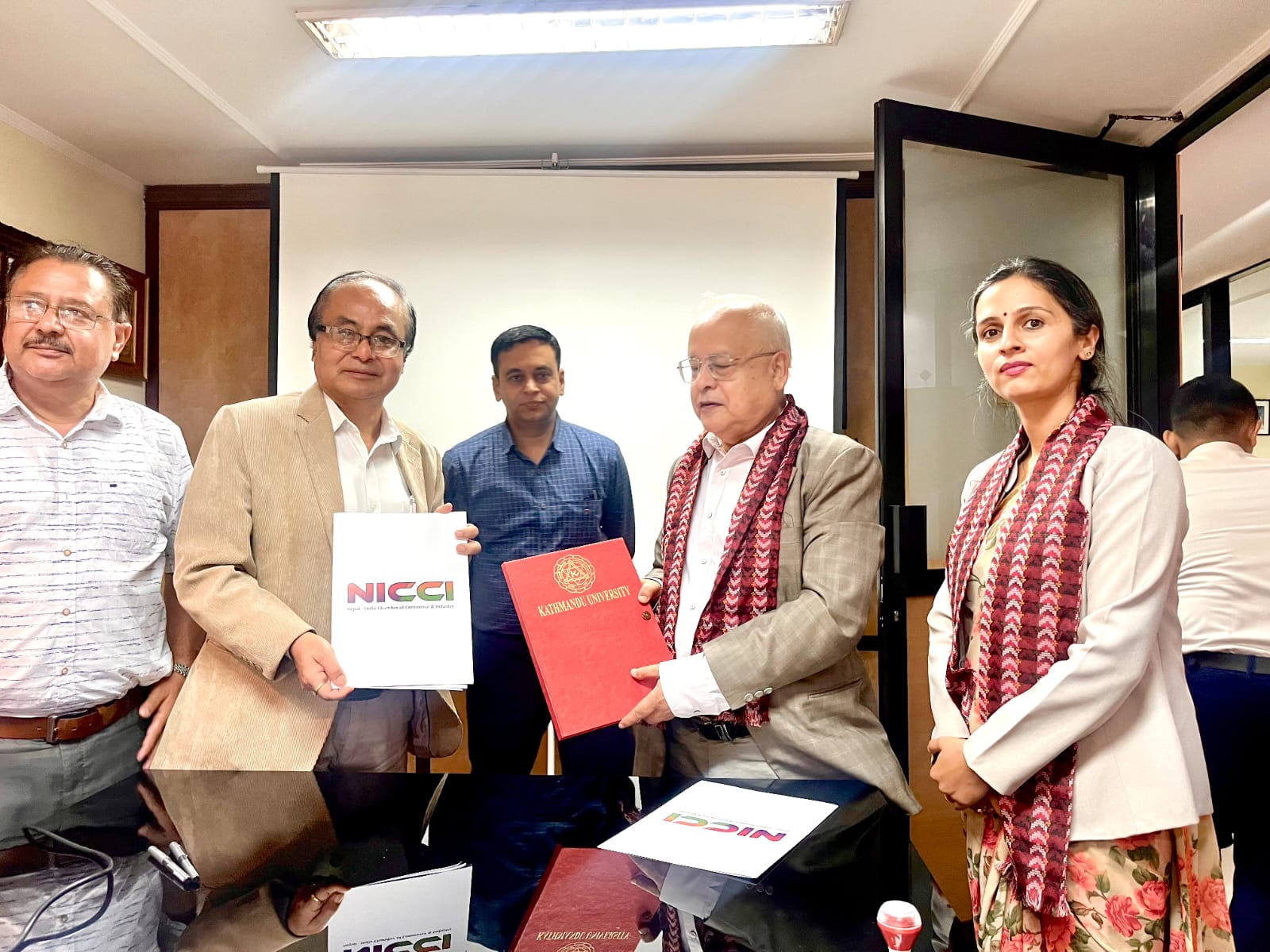
NICCI and KUSOM partner to bridge industry-academia gap