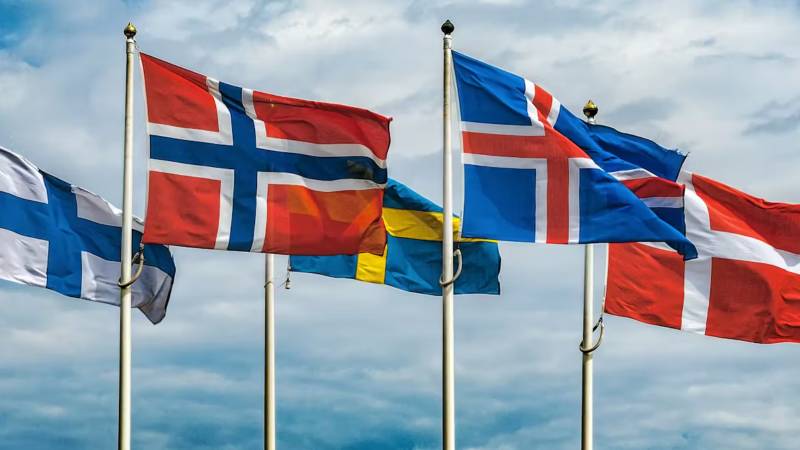
While engaging in development cooperation with Nepal, we, the Nordic countries, are aware of our own history. We try to consider what lessons, both good and bad, our region's history may provide for Nepal. Three generations ago, the Nordic countries, like the rest of Europe, were ravaged by the Second World War. Poverty was rife. However, today, citizens of Nordic countries enjoy a high standard of living. The Nordic countries—Denmark, Finland, Norway, Sweden and Iceland—have high GDP per capita, and regularly top international human development and economic rankings.The causes of the Nordic countries' success are manifold and complex. It cannot be explained just by pointing at one or a few factors. Our resource endowments are quite different, and each country has pursued independent development policies. At the same time, we have much in common, and this includes certain long-term development choices that helped the Nordic countries arrive at where they are today. In light of Nepal's vision to move from a Least Developed Country (LDC) to a Developing Country within the next decade, choices made by the Nordic countries might provide some insights that are relevant for Nepal.
Power potential
An important factor leading to the Nordic countries' wealth is energy. A hundred years ago, they lacked access to electricity, much like Nepal today. Norway, for instance, was among the poorest countries in Europe. However, the situation in Norway changed as the development of hydropower laid the ground for rapid economic growth and gave rise to some of the country's largest industrial corporations. Norway actively worked to attract companies with international competence and experience. The Norwegian hydropower adventure would not have been possible without the presence of foreign companies and foreign direct investment (FDI).
Moreover, the Norwegian parliament adopted legislation allowing foreign investment in Norwegian hydropower industry on the condition that power stations would be returned to the government after a fixed time (the Hjemfall Principle). The result was robust industrial development and new employment opportunities in Norway aided by FDI, while simultaneously ensuring national ownership of the country's natural resources.
For Denmark and Finland as well, giving clear priority to developing their national energy resources was important in facilitating progression towards industrialized countries. During the last three decades the economic growth in Denmark has increased approximately 78 percent while energy consumption has been kept at the same level. Today, Denmark has the lowest energy consumption since 1983, and new solutions within wind, solar, biomass, wave and geothermal energy is being developed and implemented throughout the country. In 2020, it is expected that 30 percent of Denmark's energy will come from renewable sources.
Nepal is extremely rich in hydro-resources, and by developing its hydropower in a long-term and sustainable manner, the country can prosper. To get more FDI, favorable investment climate with stable conditions has to be developed. Furthermore, exporting surplus energy can play an important role in unleashing more investments. We, the Nordic countries, are well aware of this, as our countries benefited greatly from integrating into a common Nordic electricity market. We believe the power trade agreement recently signed between Nepal and India is an important milestone that can open new opportunities for Nepal.
Prioritizing education
In addition to energy resources, knowledge is a major reason for Nordic countries' prosperity. In the Nordics, education is free for all, from primary level and up to university, including medical school. These policies were not initiated while the Nordic countries were rich. To the contrary, it was institutionalized much before.
In the 1960s, Finland made the decision to choose universal public education as main strategy for the country's economic growth. Fifty years on, these school policies have paid off, as Finland's economy today is primarily knowledge-based, and in addition, Finland is considered a world leader in education. Finnish schools are publicly funded; there is an emphasis on quality public education instead of parallel public and private education systems. Every school has the same national goals and draws from the same pool of trained teachers. The result is that a Finnish child has a good shot at getting the same quality education, irrespective of whether he or she lives in a rural village or an urban district.
Students of higher education in all Nordic countries can apply for state-sponsored scholarships and cheap loans, to help cover living costs. A student pays back her/his loan when s/he has graduated and gets a job. This system has created an educational revolution; these days more than 50 percent of Nordic youth take higher education. This is also the case for women, who constitute the majority of students in academic institutions.
Our experience teaches that education constitutes an important part of cooperation between Nepal and the Nordic countries. State Secretary of Norway, Morten Høglund, is visiting Nepal this week, and will be engaged in discussion around education and opportunities for young people in Nepal. The Nordic countries would like to take part in facilitating a 'public educational revolution' in Nepal. Such a revolution would be a significant step for long-term development. It would be an important social and economic investment and would establish a strong social contract between citizens from different backgrounds.
Efficient agro
Along with high education level, an efficient agro-industry also plays an important role in creating wealth and jobs in Nordic countries. For instance, Denmark is the most innovative country in Europe in relation to food. The reason is linked to proficient utilization of resources and close collaboration within value chains. Denmark has developed a model where farmers, scientists, and processing industry work closely to produce best products in the most efficient way. The model has placed Denmark in the lead when it comes to food quality and safety and development of new agricultural products. In addition, Denmark has the highest market share of organic products in the world, and the market is growing.
Agriculture is the cornerstone of Nepali economy, providing livelihood for three-fourths the population and accounting for one-third of GDP. Nepal would benefit tremendously if value chains of agriculture are improved, and competiveness of products increases. Therefore, the Danish Government has committed more than EUR 50 million for an inclusive growth program, called UNNATI, to strengthen Nepali agriculture industry and reduce poverty and improve living conditions.
Development graduation
Graduating from the group of LDCs and reaching Developing Country status by 2022, is without a doubt, a weighty task. Some may argue that moving a country out of poverty is in some ways even more difficult today than in the previous century. What is certain is that globalization, and with it, increased international competition, has created a different global economic regime. In the current regime, LDCs have to navigate and compete in different ways than what was done by poor countries through the 20th century. In such a new setting, can lessons from Nordic countries still be of value? We think so. The exchange of ideas, policy approaches and best practices can foster favorable results, especially when adapted to local structures and conditions.
The Nordic countries full-heartedly support the Government of Nepal's vision to reach Developing Country status by 2022. However, it will require years of political stability and strong economic growth, which will depend on infrastructure development, human resource development through education, good governance and sustainable planning for the country's future. The international community, the Nordic countries included, has expectations that Nepal will develop further and reach the next level in years to come. Norway, Denmark and Finland will continue to be keen participants in this endeavor.
Pettersen is Norwegian Ambassador, Geelan the Danish Ambassador, and Luukkainen the Finnish Ambassador to Nepal
Related story
Lessons from Southeast Asia