In your view, was there a better legal alternative to dissolving CA?
Anything you think of as an alternative would have had to come through political consensus. Any such alternative would require constitutional amendment or passing of the constitution. Either option would have called for a two-third majority in the CA. Thus, in either case you could not have saved the CA without consensus between the political parties.
Would the retention of the parliamentary role of the CA have had any legal backing?
One of the ways could have been converting the CA into a legislature-Parliament. If the constitutional and legal frameworks were revised to open the way for fresh election of CA, then the legislature-parliament could have continued until the next election. But that didn’t happen. So it went into dissolution.

But some parties had been arguing that a ‘transformed’ legislature-parliament could have played a law-making role in order to settle the remaining issues.
No, the body could have continued only to make the government accountable to the people through Parliament. But legislative-Parliament could not have functioned as a Constituent Assembly. It could have functioned as a legislative-Parliament and exercised its constitution amending power if the Constituent Assembly had promulgated a constitution and provisioned for its continuation as legislature-Parliament until fresh election.
On Tuesday, President Ram Baran Yadav formally declared the current government to be a caretaker government. What are its implications?
No country can function without a government. In the interim constitution, there is a provision for caretaker government. If the CA gets dissolved, the legislature-Parliament also goes as it only acts as a shadow of the CA. Once the CA goes, all its members lose their status as members of Parliament. So even the prime minister has lost his status of a parliamentarian. And once he loses that status, he ceases to be the prime minster. And once that happens, he also loses his official status as a regular prime minister. The interim constitution says that the prime minister will continue as a caretaker prime minister and his government as a caretaker government until the next prime minister is elected as per the provisions of the constitution. As a caretaker Prime Minister, Baburam Bhattarai is supposed to look after daily administrative work but not take major policy decisions that have long-term impact.
There have been arguments from some quarters that the president can intervene to countenance CA’s dissolution. Can he play any such role?
In my evaluation, whatever the president did yesterday by way of declaration of the current government as caretaker, it was according to the provisions of the constitution. As a guardian of the constitution, the president has two functions: he himself has to adhere by the constitution and he also has to make sure others abide by it. So the question of the president going out of the bounds of the constitution and taking over does not arise.
There have also been demands for the reinstitution of the dissolved CA. Is that possible?
These are political questions. We had the restoration of the Parliament dissolved by King Gyanendra. That restoration happened because that was the only political solution at that time. The legitimacy for the restoration came from the popular movement of the people. So if there is again to be restoration of CA, it will not be on legal but on purely political grounds. But there is an important difference. King Gyanendra dismissed the parliament before the expiry of its tenure in an unconstitutional move. In the present case, the CA came to an end because it failed to deliver its end product within the designated time. So I would say that possibility of restoring CA is very remote.
Prime Minister Bhattarai has announced new CA polls for November 22. But who decides on the number of members and timeframe?
The caretaker government has made a decision to have the election on Nov. 22. Right now, we don’t have a constituent assembly, we don’t have a legislature-Parliament; we only have a caretaker government and the president. Now the caretaker government has decided to go for a fresh election. The present government’s announcement for election is for a constituent assembly, not for a Parliament. And this CA election would be held in the same manner that the last CA polls were held because the interim constitution is the same and the provisions and compositions of the constituent assembly remain the same. There is no Parliament or any other institution to modify the size and tenure of the constituent assembly.
So the next CA will also have a life span of two years and 601 members?
No, actually it will be for four years and will be 601-strong because they have already amended the interim constitution several times extending the CA’s tenure to four years. It remains as it is.
Before the enactment of a federal democratic republican constitution, the form of government and state structure as it exists is unitary.
What happens if someone files a petition at the Supreme Court arguing four years is too long and 601 a far greater number than needed?
The Supreme Court is there to interpret the provisions of the constitution, it cannot amend the constitution.
How do you view the Supreme Court’s directive that the term of CA could no longer be extended?
In my view, the Supreme Court has entered area of political questions. The decision was very popular, but from the view of constitutional jurisprudence, the decision is questionable. There are certain areas where the Supreme Court as an interpreter of the constitution would be advised to refrain from direct involvement, primarily on political questions. The matter of extension of CA was to be settled by political actors, not by judges.
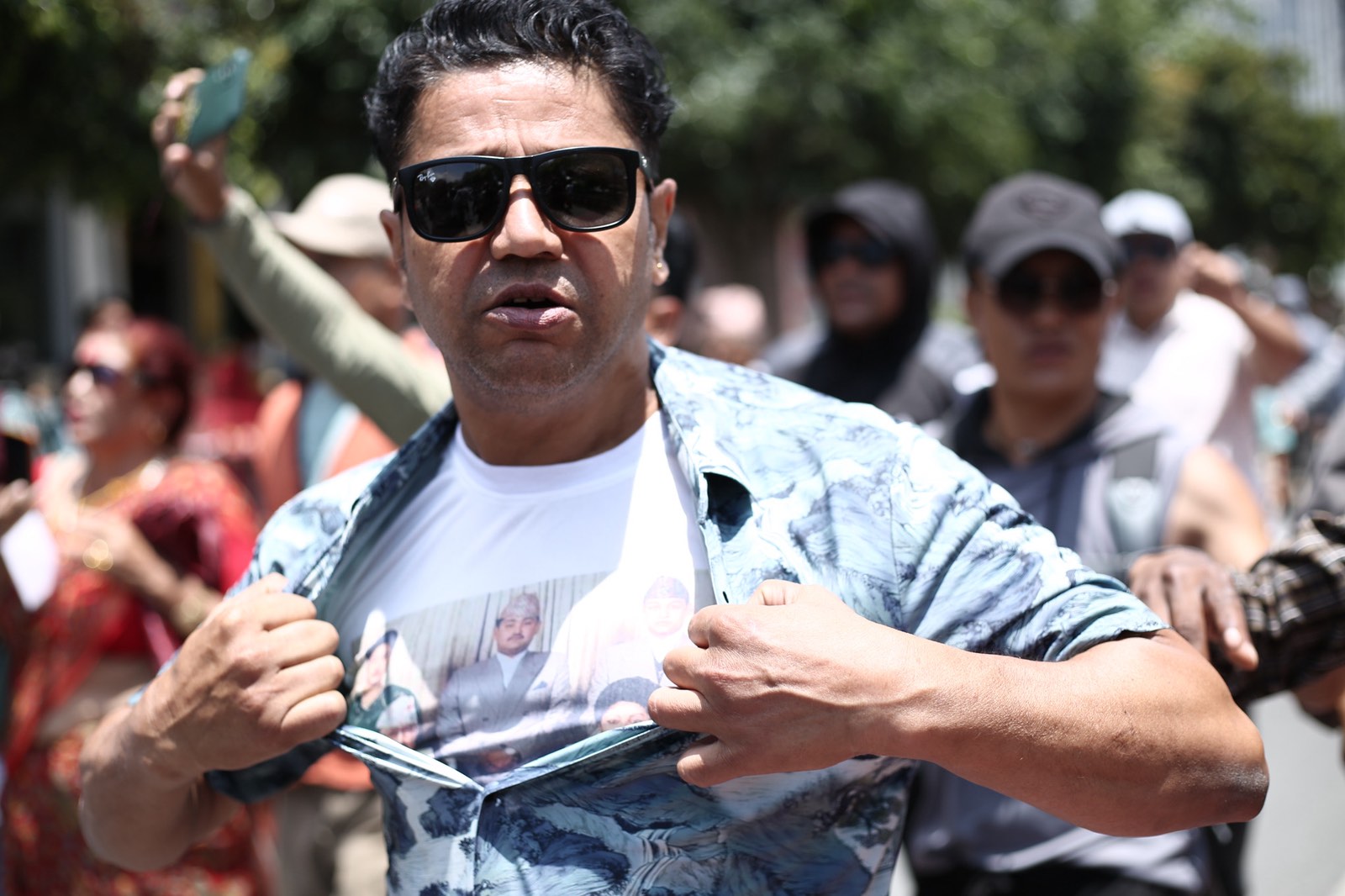
The royalists are now arguing that all decisions taken by the dissolved CA have to be declared null and void, including its decision to abolish monarchy and declaration of the country as a secular republic. Do these demands have legal grounds?
There is a group of people who believe that with the CA dissolved, monarchy and the constitution of the Kingdom of Nepal 1990 could be revived. They basically talk about the ‘doctrine of eclipse’ for that kind of interpretation but that’s wrong. Because any constitution that gets replaced by another constitution does not get revived, it has to be reenacted by sovereign power. The question of automatic revival is not in keeping with constitutional jurisprudence. The interim constitution of 2007 clearly abrogates the 1990 constitution. The interim constitution rules the country at present. Unless something happens which leads to abrogation of interim constitution, reenactment of 1990 constitution, and with it return of monarchy, is not viable.
So whatever happens, Nepal’s status as a federal, democratic republic cannot be reversed?
Not necessarily. The interim constitution has declared its goal of going to a federal, democratic republic. But it could not achieve that goal because it could not declare a federal, democratic republican constitution. So you never know. In the future when the constituent assembly will be reelected, it will be elected as a sovereign constituent assembly. It will be that CA which will exercise the sovereign power of the people and decide what form of government and state we could have in Nepal. Without the enactment of a federal democratic republican constitution, Nepal will never be a federal democratic republic. The form of government and state structure as it exists under the interim constitution is unitary. So unless we are able to enact a new constitution, the country will not have a federal structure. So far as the issue of republicanism is concerned, the country is already a republic. It is only the federalism part that remains aspirational as it could not be enacted by a new constitution. So the monarchy is a gone chapter. It cannot be restored unless there is another revolution to bring back kingship.
How will the new CA function? Will it have only constitution making role or will it also have parliamentary component as the erstwhile CA?
There is an argument for separate bodies to settle constitutional and day-to-day administrative issues. That is a possibility. For that, you need to amend the constitution which will again call for political consensus. But since the CA is dissolved, we cannot amend the interim constitution.
Since the president has declared the current government a caretaker government, and since the two major parties are out of it, does such a government have the legitimacy to hold election?
In the past too, we have had caretaker governments conducting elections. But since the next election will not be for a regular Parliament, but for a new constituent assembly, the president, as a guardian of the constitution and head of the state, has advised the government to look for political consensus for holding election for new constituent assembly. As the head of the state, the president has the prerogative to advise, caution and warn the government. The president’s recent move has to be taken positively. What the president cannot do is dismiss the current government and replace it with another government that does not enjoy the support of all major parties. So you either have an all-party government under the current leadership or under another person who can garner the support of the present ruling coalition. It is a time for the president and the prime minister to work together, it is time for the government to seek broader consensus and it is time for all major parties to work towards a political consensus. There is no other way out.
Related story
Photo Feature: Pro-monarchy supporters take to streets demandin...