

The government has removed Nepal Police Inspector General Dan Bahadur Karki and appointed him as security adviser to Prime Minister Balendra Shah, raising serious questions about its approach to state institutions. Replacing a serving police chief with another officer before the completion of his tenure is an extraordinary step. Giving him an advisory position at the Prime Minister's Office does little to disguise the fact that he has been removed from the command of the country's police force. For a career police officer who rose through the ranks on the basis of seniority and experience, the new assignment is hardly an equivalent position. The decision follows a prolonged tussle between Karki and the Prime Minister's Office. Disagreements reportedly emerged over police investigations, the arrest of individuals and the extent to which the police leadership should comply with instructions from political authorities. The controversy surrounding the detention of journalists and the investigation involving a young middleman, Inam Sapkota, further strained relations. Karki also reportedly resisted some instructions, raising questions about their legal basis. These disputes may have contributed to the government's dissatisfaction with him. However, dissatisfaction with a police chief does not automatically justify removing him without a transparent process. The timing and manner of the IGP’s dismissal are troubling. The Cabinet held an unscheduled meeting on Wednesday and decided to replace Karki, apparently without a convincing public explanation. Even Home Minister Sudan Gurung reportedly had little information about the move before it was announced.
Govt vows to end political interference, corruption in ANFA

Such an important change in police leadership should have followed institutional consultation and a clearly established procedure. The government has instead created the impression that decisions about a constitutional state's security apparatus can be driven by the whims of the Prime Minister's Office. Nepal has witnessed a similar event before. In 1997, then Home Minister Bamdev Gautam removed sitting IGP Achyut Krishna Kharel and appointed his junior, Dhruba Bahadur Pradhan, to lead the police force. Kharel challenged the decision in the Supreme Court. Although the case remained pending, a subsequent change of government led to his reinstatement, while Pradhan was moved to an advisory position. The episode caused considerable uncertainty within Nepal Police and damaged the morale of its personnel. Nearly three decades later, the government appears to have revived a practice that the country should have abandoned. The consequences could again be damaging. Police officers must be able to discharge their duties according to law, without fearing that questioning an instruction from political authorities could cost them their positions. Removing a serving IGP in the middle of his tenure sends an unsettling message down the chain of command. It also raises concerns among senior officers about whether professional standing and institutional experience will count for little when political interests come into play.
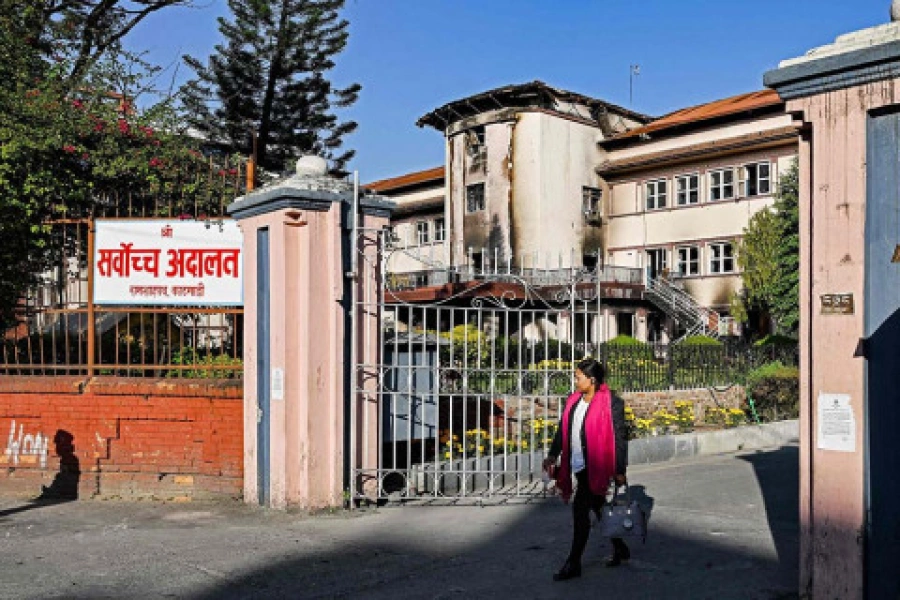
Karki has already decided to challenge the decision in the Supreme Court. His petition will test the government's authority to reassign a serving IGP before the end of his tenure and the legal safeguards governing such decisions. Meanwhile, the Shah government appears to be in a hurry to enforce its decisions, even when their democratic procedures and legality can raise questions against such a move. A strong parliamentary mandate does not give the executive unlimited authority. The Rastriya Swatantra Party received public support with expectations of better governance and institutional reform. That mandate should have encouraged the government to strengthen state institutions and instill professionalism in security organs, not treat them as obstacles to be managed or replaced. In the meantime, Nepal faces pressing problems involving employment, the economy, public services, corruption and the delivery of basic facilities. The government has sufficient political support to concentrate on these priorities. Instead, its preoccupation with controversial administrative decisions risks diverting attention from the work voters expect it to perform. What the Balen government must remember is the fact that the people gave it five years to deliver results, not permission to bypass established procedures.




-1793781552.webp)


