

With the final results of the 2026 general election now finalized, the shape of the new parliament has become clear. A total of 165 members of the House of Representatives (HoR) have already been elected through the first-past-the-post system. The EC has also allocated 110 Proportional Representation (PR) seats among political parties. Once the Election Commission submits the election report to President Ram Chandra Paudel, the process of government formation will formally begin. The election results clearly show that the Rastriya Swatantra Party (RSP) has received a mandate to form the government. In many respects, this election has set new benchmarks. For the first time in recent history, parliament is likely to witness a large influx of new faces. What political parties had failed to achieve through internal reform—generational renewal—has been accomplished through the ballot box. Leaders and veteran party workers who had long dominated parliamentary politics from major parties such as the Nepali Congress (NC), CPN-UML, the Nepali Communist Party have failed to return to parliament with the same strength this time. Not only has the election brought new faces, it has also reshaped the hierarchy of political parties. Until now, the NC, UML and NCP had remained the main forces in national politics. This time, however, the RSP has emerged as the largest party. The NC, which previously held that position, has been pushed into second place. Another noteworthy development is the emergence of Harka Sampang’s party in eastern Nepal. It has not only secured its first presence in parliament but has also taken an important step toward establishing itself as a new political force in the country.
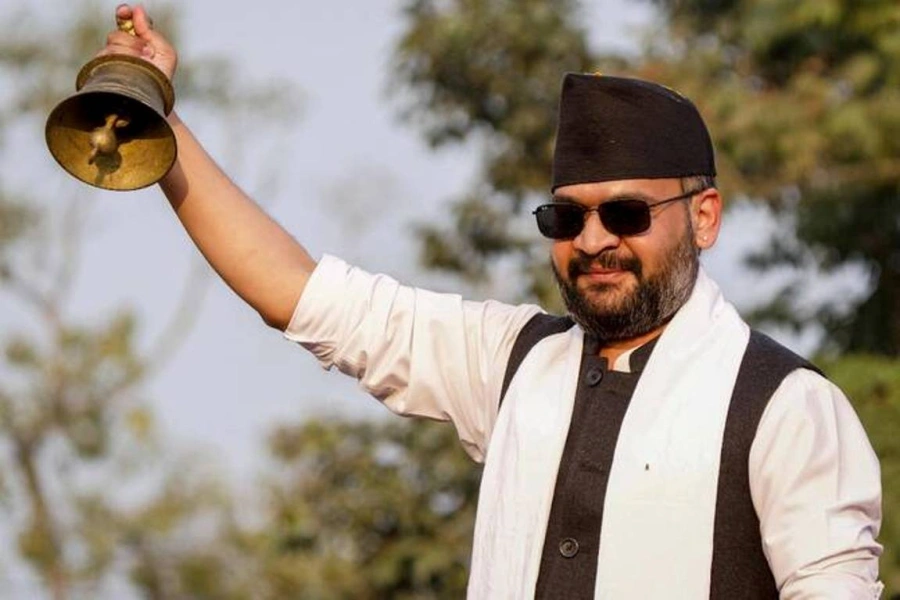
The bell will ring loud and clear: Rabi Lamichhane

The election has dealt a particularly severe blow to Madhes-based parties. They failed to secure victory in even a single constituency. Moreover, they were unable to garner sufficient votes under the Proportional Representation (PR) system, resulting in the loss of their status as national parties. The RSP’s strategy of projecting senior leader Balendra Shah as a future prime ministerial candidate appears to have paid off handsomely. Votes in Shah’s favor came from the mountains, hills and the Tarai alike, significantly contributing to the party’s sweeping success. The election has also revived a long-standing question in politics: do parties create leaders, or do leaders create parties? In this case, Balendra Shah’s popularity clearly made it easier for the RSP to mobilize voters. Across the country, ordinary citizens cast their ballots for the party’s election symbol—the bell—largely because of their trust in Shah. The election thus offers a clear example of how a strong and influential leader can transform the fortunes of a political party. Meanwhile, the leadership of Gagan Kumar Thapa, who rebelled within the NC and convened a special general convention shortly before the election, has also faced a degree of setback. Yet some observers believe that, after being elected the party’s president, he has still managed to establish his political standing rather than fade into irrelevance. The nationwide political wave affected the NC as well, but the greatest damage appears to have been suffered by the UML. Public anger and resentment toward UML chairman KP Sharma Oli were strongly reflected in the ballot boxes. Among the leaders of the traditional major parties, only Pushpa Kamal Dahal managed to retain his parliamentary seat.
The latest election results signal the arrival of a new leadership in Nepali politics. For the foreseeable future, the country’s political discourse is likely to revolve around Balendra Shah. In this sense, the election has provided relief to citizens weary of the recurring “musical chairs” of the same familiar faces in power. It has also instilled confidence among voters that they possess the power to reshape the nation’s political landscape. A democracy is considered mature when political power changes through the ballot rather than the bullet. The largely peaceful conduct of this election suggests that Nepal’s democracy is moving in that direction. Admittedly, the Gen Z protests of September 8–9 and the violence, vandalism and arson that accompanied them shook the nation deeply. Yet the country’s ability to recover quickly afterward is itself a significant achievement. The key challenge will now be to ensure that those in power remain accountable to the public. The government must deliver results across multiple fronts, and state institutions must function with greater efficiency and accountability. Only through a transformation in the way the state operates can public trust begin to be restored.






-1782782519.webp)


