Farmers in several districts already produce cash crops: coffee and mustard. Fruits including bananas, peach, berry, and pear can be, and are grown in this region. The eastern districts of Nepal have produced success stories with plants such as cardamom, ginger, and amriso. Some of that success could possibly be replicated in the mid-hills too. Cattle farming used to be the traditional way of life in Nepali hills and there's a lot of potential for production of cheese, yoghurt, butter and milk from cows, buffaloes, and goat.
What Nepal needs is international subsidy and market for the export of these products. Nepal should ask the foreign governments to reduce tariffs and allow these Nepali products to compete freely in their markets. The cost of production in Nepal is a lot lower than in many developed countries. Given fair conditions, Nepalis can make their villages sustainable and prosperous on their own. We should not be seeking more alms and handouts which make us dependent and lazy in the long term.
In order to help people be efficient and safe, Nepali government and local bodies should be strengthened so that they can provide adequate services to the villages. First, a local development model that saw a lot of success in the previous decades should be restored. But first there should be immediate election of local bodies. Nepal was made to pay a huge price during the two decades of turmoil, including a civil war. Opportunistic members of civil society remained silent as Nepal's successful local governance was allowed to die. The vibrant villages of Nepal, terrorized and silenced through terror at the local level and spin-doctoring in the capital's civil society, must be brought back to life.
The services that government and our international friends can help with include irrigation, credit to farmers, agricultural insurance, technical expertise, training, and access to market. Currently, because of the lack of infrastructure and access to market, many of these products do not get a competitive price. Not all farmers have the knowledge and expertise in large scale production and long-term planning. Training on management, financial, and marketing skills for local people could go a long way in making them confident and to cut through the competition.
International friends of Nepal, I request you to invest in these opportunities in our villages and towns. You can invest in the people of Nepal, their skills, and products. Nepal has a rich tradition of handiwork. We have a great diversity in culture and lifestyles. Our crafts and art can benefit from branding and access to international market. Let's not forget, restrictions in trade and imports of these products to your countries are currently a big hindrance. Please remove this barrier. This will be many times more effective than handouts and development aid that you provide.
Towns in Nepal's midhills have many educated people who can speak English and who have computer skills. Many of them have skills in computer software, and design too. Help us establish technical firms, and make it possible for them to trade with your markets. We can export software, web design, data entry services, and call services. We are a young country. We have good climate, and fertile soil. Our landscape is varied; our people are hardworking and patient. Thus the potential of our country is immense. Trust the abilities of our villagers, providing them the right incentives, and following their lead. We should not let this huge resource and opportunity go waste by crippling them with handouts. Let me illustrate my point with an example.
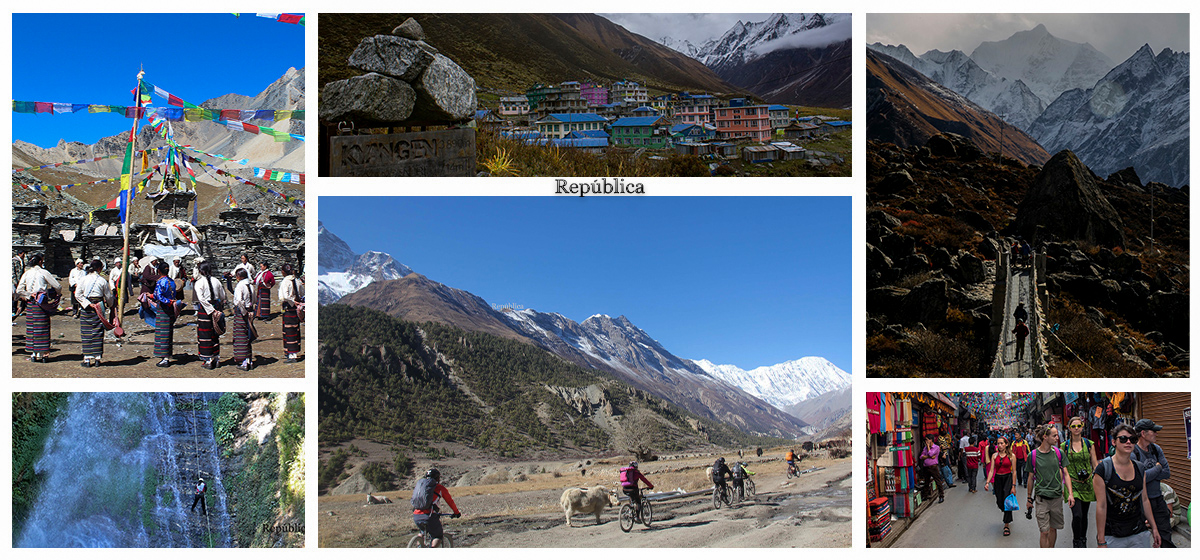
I was in Langtang a couple of months ago. Langtang is a high-altitude mountain village that was badly hit by the recent earthquake. A cheese factory at Kyanjin Gumba (above Langtang) has been producing yak-cheese since the 1950s. It was established with Swiss cooperation. The yaks in the high-altitude mountains graze on herbs like yarsagumba. Trust me, this cheese tastes good. With polishing and branding, this Nepali product could compete with any other cheese in the world. But all cheese is sold at its site of production, and with no price differentiation. Everyone who can walk up to that mountain village can pay a few dollars per kilogram of cheese. This cheese can fetch much more in international market, and even in Kathmandu. Sure, let's have some cheese for consumption in Nepal at lower prices, but we could surely sell it at different rates for different markets. But there is currently no route for this cheese out of the high mountain valley.
There are other problems too. Yaks can die when there's a heavy snowfall and it means a huge loss. Just days before I reached there, hundreds of yaks had died in an avalanche and snowstorm. There's no insurance, or protective and preventive measures for farmers. Better weather forecasting, and rescuing service could save many yaks. Elected local governments, and community-measures could improve grazing conditions and better utilize the funds collected from tourism tax. Such local bodies could set up farmers' cooperatives and determine price of milk and cheese based on competition from tourism.
At its peak, this cheese factory produced 70,000 kilograms of cheese per year. However, with the onset of modern tourism industry, locals started to abandon yak farming. Today, production is falling, but it still stands at roughly 30,000 kg a year (Numbers are from my memory and could be slightly off). The price for milk is determined by a central authority in Kathmandu, and it is not high enough to incentivize yak farming. The factory buys yak milk from farmers at the rate of Rs 50 per liter. In comparison, a glass of black tea sold to tourists fetches two to three times as much. This is the symptom of many other problems.
Tourism has made individuals richer, but the community as a whole did not seem to benefit. They had problems with drinking water supply, sanitation, no infrastructure for clearing snow, and lack of activities for tourists to spend their money on. It looks like a rentier economy and very short-sighted. People have given up traditional economic activities, and there are concrete houses everywhere. Houses that are cold, have no warm water or heating system, and whose children all study in expensive schools in Kathmandu or western countries. This village could be doing a lot better.
Donors, Nepal needs your help. But maybe in ways that you have not thought of before.
Twitter: @tistung
Related story
Awareness about special needs education low in Nepal: Prof Jung