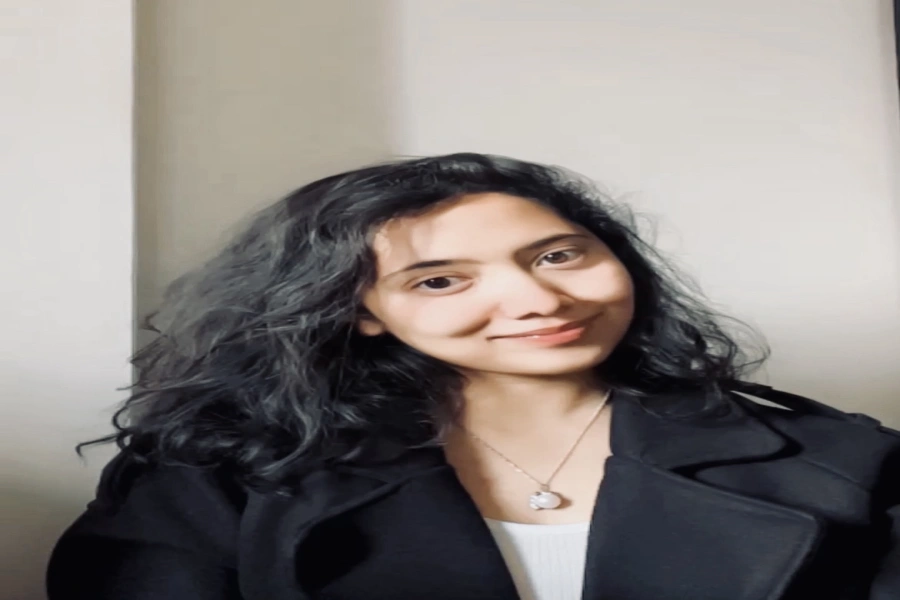
Ito is the first Japanese woman to obtain her Ph D from Niigata University of Japan on Nepali women’s rights, their rights to property and the civil laws of Nepal. But she isn’t satisfied with her academic feats, and her drive and curiosity to research more on the culture, system and status of women in Nepal haven’t fizzled out.[break]
When she speaks, you can’t help but admire her flawless command over the Nepali language. “Many have mistaken me for a Nepali and that in itself is a huge compliment for me. This further motivates me more to work amongst the Nepali people,” shares Ito cheerfully.
Ito has a large family back home. She’s a mother of four children who are all settled in their careers and six grandchildren whom she manages to meet whenever she can take a break from her work and travel. Her husband works in his own company, and Ito credits him for giving her space to explore her interests and supporting her in whatever way possible.

PHOTO: CHANDRA SHEKAR KARKI
Ito’s special relations with Nepal date back to 1980 when, just like many foreigners, she was lured to come here for trekking in the Annapurnas. She remembers every single detail of her first ever journey to this land.
“I was amazed to see people living in the hills, and because it’s a landlocked country, Nepal was different in every way from Japan,” says Ito.
While on her trek, Ito happened to stop by Pokhara. While away from the main city, she witnessed the way of life of the locals of Gurung villages.
“More than the mountain climbing, observing the locals fascinated me,” shares Ito of her first impressions of Nepal.
Someone who had always been interested in anthropology and history, Nepal’s rich and varied culture, ethnicity and geography served as a motivation to Ito who, then and there, made up her mind to visit Nepal again.
When Ito was back in Japan, she had her hands full with the job of a librarian at Saitama University. But one way or the other, she would manage time to research about Nepali culture and people. She then got introduced to a Nepali settled in Tokyo who gave her Nepali language classes every week.
“It took three hours for me to go back and forth for classes, but I knew I had to break the language barrier before I visited Nepal the next time,” she shares.
When Ito was headstrong about learning more about Nepal, at the same time she got an opportunity to be a student of Dor Bahadur Bista, the father of modern Nepali anthropology. She considers herself fortunate as the education she received from Prof Bista when he was in Japan in the early 1980s further helped in strengthening her understanding about Nepal.
While Ito was in Japan, she couldn’t stop thinking about the students in remote Nepal who were deprived of their basic rights of attending schools. She was sad about the fact that they didn’t even have access to proper reading materials, either. So the first thing she thought of doing was to supply them with books.
Meanwhile, even though Ito was getting familiar with Nepali language and culture, she thought that nothing pragmatic could be done until she made a move.
So Ito came back in 1983 with hopes and plans. The first thing she did was setting up a pre-primary school in Chakupat in Patan along with her Japanese friend. The project included supplying books, stationeries and funds to assist in the overall setup of the school.
“During that time, there weren’t any preschools in Nepal, as the concept of kindergarten facilities hadn’t developed much. So that’s how we came up with the idea to impart teaching methods as well,” she says.
In this way, through one small project or the other, Ito pursued her vision. Her determination has been so strong that she recently resigned her comfortable position of Vice Chairman at Nepal Japan Society in Tokyo to commit more time in Nepal.
She’s here for three years, now working as a Professor at Bal Kumari College in Narayangarh, Chitwan, where she teaches management discipline, system of Japan along with history and language courses.
Ito’s story, however, goes back to the early 1980s when she started visiting Nepal thrice every year to research on her own. She got the chance to directly engage and interact with the locals and started doing more in-depth and analytical research when she worked as a Research Officer at the Japanese Embassy in Kathmandu for two years since 1991.
In her decades of experience, working for the benefits of villagers is Ito’s drive and the biggest source of inspiration. This is the reason why she still doesn’t have a permanent residence in Nepal, as she keeps traveling to various parts as often as she can.
Since the 1980s, Ito has been involved in countless projects in the fields of education and women’s empowerment. She’s of the opinion that education plays a big role in empowering women. But knowing the fact that the conditions of schools in villages are not at par with those of cities, she got involved in a project to construct a dormitory at the Kanya Campus in Pokhara where ten students from western Nepal, especially from Jumla, were provided with scholarship to study for two years along with Rs 3,000 as stipend. The criteria included the precondition that the scholarship students would work as teachers back in their villages for three years after their graduation.
“The idea was to produce more female teachers because in the Terai there are a few female teachers. But in the hills, there were very few female teachers and were underpaid as well,” she says.
One such village development project that she took up and which is etched on her mind is at a place which was four hours away from Dhading. She was distraught to see a primary school functioning up to grade three with just two classrooms. She helped rebuild the school up to the secondary level, till grade seven.
Ito also wants to work in promoting Nepali culture which is how she came up with the idea of starting village tourism since 2003. As a part of cultural exchange programs, she brings twenty students every year to visit remote areas, especially Dhading, to interact with the locals. So far, hundreds Japanese students have made it here through this ongoing project.
Her wish, however, is to help improve the conditions of rural women of Nepal as she believes that, even though following the 1990 democracy movement and while it was also enshrined in the Constitution that women have equal rights like men, the reality turned out to be different.
“Women didn’t have property rights since long and even now their status hasn’t changed much, especially in the rural areas,” she says.
She talks about Japanese ladies being educated but being in a male-dominated society, it’s difficult to earn good status in Japanese society as compared to Nepal.
“In Japan, even if you have a good education, your male colleagues will get promoted to higher levels. It’s vital to break that stereotype practice,” she says, explaining that women stand better opportunities, at least in the city areas of Nepal.
She, however, feels that educated women in Kathmandu wouldn’t want to explore beyond the capital, and at the same time, women from rural areas are not even aware of the civil rights, rights to property and other basic rights.
So Ito wants to invest more time in helping the rural women. She also thinks that more efforts are needed to change the mindset of conservative village women. From her researches, she has studied that women in the rural areas are scared of the idea of learning new things, which is why she wants to help build their confidence.
“I want to help and support women’s empowerment because most of the youth are going abroad and there are less people here to work for development. So, unless we help empower women, it’ll be hard to develop the country,” she concludes.
Ito’s virtues have indeed brought her a long way. Striving each day in a world focused on self-interest, she relentlessly is in the pursuit to bring changes. While she has her hands full with the job of a professor, she still plans to venture out to the rural areas of Nepal to impart the knowledge and skills that she has gained throughout her journeys. Thus, this strong Japanese lady stands as a testimony to the fact of how individual efforts can reap huge positive changes.
nistha.rayamajhi11@gmail.com
Related story
Djokovic swats aside Ito to reach Australian Open third round