Since the beginning of the 21st century, profound transformations have reshaped the global economy, technological systems, and social structures. While globalization has continued to deepen, countries are facing increasingly complex development environments. Shifting drivers of economic growth, industrial restructuring, rapid technological innovation, and the growing impact of climate change have all challenged traditional development models. Against this backdrop, achieving more inclusive and sustainable development has become a shared concern for countries around the world.
For developing countries in particular, modernization is not merely about economic growth. It also involves balancing the pace of development with its quality, reconciling resource utilization with environmental protection, and integrating traditional strengths with innovation-driven transformation. As countries explore their own development paths, they need to build on their national realities while also learning from international experiences.
Nepal is currently at an important stage of socioeconomic transformation. How to leverage its abundant natural resources, rich cultural heritage, and unique geographical location to promote economic growth and social progress has become a central question in its modernization journey. Examining the development experiences of different countries can help broaden perspectives and enrich understanding of the diversity of modernization.
Modernization does not follow a single path.
In recent years, modernization has once again become a widely discussed topic in international discourse. From Asia and Africa to Latin America and the Middle East, many developing countries have been asking the same question: What does modernization mean in an era characterized by slower global economic growth, shifting geopolitical dynamics, and mounting climate challenges?
For decades, modernization was often understood through a relatively narrow lens, emphasizing industrialization, urbanization, and market-oriented economic development, with Western development experiences serving as the principal reference. However, decades of global development have demonstrated that countries differ significantly in their historical backgrounds, social structures, and resource endowments. There is no universal model of modernization.
Modernization of agriculture to reduce unemployment: PM Oli (wi...

An increasing number of development experiences suggest that modernization is better understood as a shared aspiration rather than a fixed blueprint. Different countries can pursue modernization in ways that reflect their own national conditions while engaging in international cooperation and mutual learning.
China’s Experience: A Development Case Worth Studying
China’s development experience has attracted growing international attention within this broader discussion. Since the launch of reform and opening up, China has undergone rapid industrialization, urbanization, and digital transformation. Its economy has expanded significantly, infrastructure has improved substantially, technological innovation has accelerated, and living standards have risen markedly. At the same time, China has faced challenges such as regional disparities, demographic changes, and environmental pressures, responding through continuous reforms and adjustments to its development model.
From the perspective of development studies, China’s experience has become an important case for understanding modernization in developing countries. Its significance does not lie in offering a model to be copied, but rather in demonstrating that alternative pathways to modernization are possible. Chinese modernization emphasizes pursuing development based on a country’s own history, culture, population size, and practical conditions. This perspective has also contributed to broader international discussions on the diversity of modernization.
Nepal’s Development Choices: Building on Comparative Advantages
Nepal’s modernization possesses its own distinct characteristics. As a Himalayan nation, Nepal enjoys abundant hydropower resources, unique ecological assets, a rich cultural heritage, and a strategic location connecting South Asia with China. At the same time, mountainous terrain, infrastructure constraints, limited industrial development, and employment challenges remain significant obstacles to future growth.
Consequently, Nepal’s modernization cannot simply replicate the experience of any other country. Instead, it must fully reflect its own national circumstances. Key questions include how to transform natural resource advantages into sustainable economic growth, promote industrial upgrading, improve public services, and create more employment opportunities for its young population.
Digital and Green Transformation: New Directions for Modernization
Digital technologies are reshaping traditional development patterns. In the past, mountainous countries were often constrained by transportation difficulties and geographical isolation. Today, the expansion of the internet, e-commerce, digital payments, and online services offers new opportunities to overcome these barriers.
China has accumulated valuable experience in developing the digital economy. Digital platforms have helped farmers reach broader markets, mobile payment systems have improved economic efficiency, and online public services have expanded access to education, healthcare, and government services. While these experiences may offer useful references for developing countries, including Nepal, digital transformation should always be adapted to local realities. Nepal will need to pursue a digital development strategy that reflects its own infrastructure, market conditions, and social needs.
At the same time, green development has become an essential dimension of modernization. Nepal is home to one of the world's most important mountain ecosystems. Achieving a balance between tourism development, energy utilization, and ecological conservation will be critical for its long-term sustainable development. China's recent efforts in renewable energy, green industries, and ecological governance also provide valuable experiences worthy of further study.
Cooperation as a Driver of Shared Development
Modernization is not an isolated process; it advances through openness, cooperation, and mutual learning. In recent years, China and Nepal have expanded cooperation in infrastructure, energy, tourism, cultural exchanges, and other fields. These partnerships extend beyond economic cooperation to include exchanges of development experience and capacity building.
For Nepal, engaging with different countries can broaden development perspectives and help identify experiences that are most relevant to its own needs. China's development journey likewise illustrates that every modernization process requires continuous adaptation and adjustment in light of changing national circumstances.
The significance of China’s experience lies not in providing a single answer, but in demonstrating that modernization can take multiple forms. Nepal’s future development will likewise depend on drawing upon international experience while charting a path that reflects its own national realities. There is no universal template for modernization, nor is there a single destination. As countries continue to learn from one another and deepen cooperation, finding development pathways suited to their own circumstances may well become one of the defining features of global modernization in the years ahead.
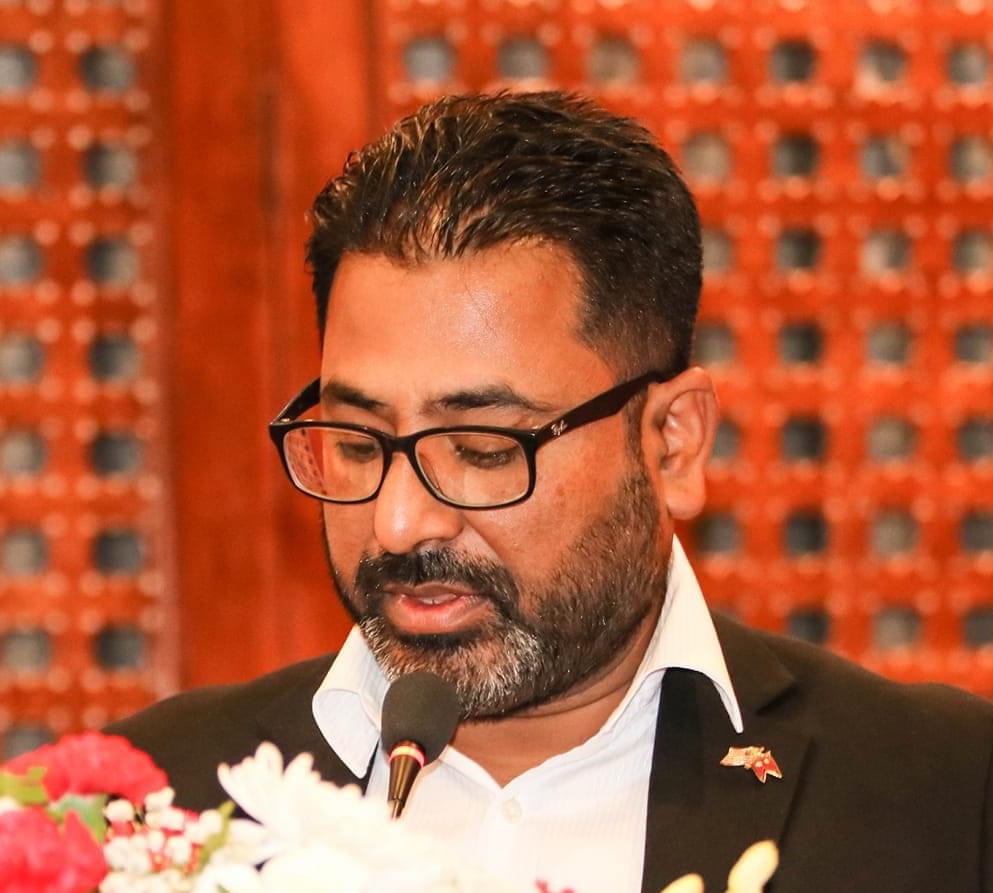
The author is Director of the Institute of South Asian Studies, Yunnan Academy of Social Sciences, China.