Looking back, a very thin line separated the Panchayat system of partyless democracy and the multi-party democracy that succeeded it. Now we can claim that we have full democracy—by virtue of the fact that we hold elections contested by political groups of varying persuasions. [break]

Unfortunately, despite the outside appearance of democracy, we are far from it. We may have met the necessary conditions for democracy, but those are not sufficient. A lot more needs to be done to meet the sufficiency requirements.
Imprints of anarchy
Writing of the Indian democracy in the early 1960s, John Kenneth Galbraith, then American Ambassador to India, characterized it as the world’s ‘largest functioning anarchy’. Of course, India was a democracy—world’s largest—and it remains so to this day. But what made Galbraith unhappy was that in India government ruled without accountability. Galbraith pointed out, in particular, of India’s uncaring and unresponsive bureaucracy; lethargic and non-functioning judiciary; unfathomably corrupt judges, bureaucrats, and security personnel; and criminality of the political machine that he found worrisome and unnerving. Government was the problem, not the solution to India’s problems, Galbraith concluded.
India has tided over many of these difficulties but it still has a long way to go to make governance work in favor of people rather than against them. Although the dream of government efficiency remains elusive, efforts in this direction have had a degree of success.
Looking at our own situation, it wouldn’t be an exaggeration to say that our governance system has collapsed—not relatively but in absolute terms. It is hard to believe that in this day and age and, above all, with a democratic government in place, crimes of such serious nature as murders, kidnappings, and unlawful usurpations of property are being perpetrated with impunity and a great part of population remain unprotected from incursions by criminals.
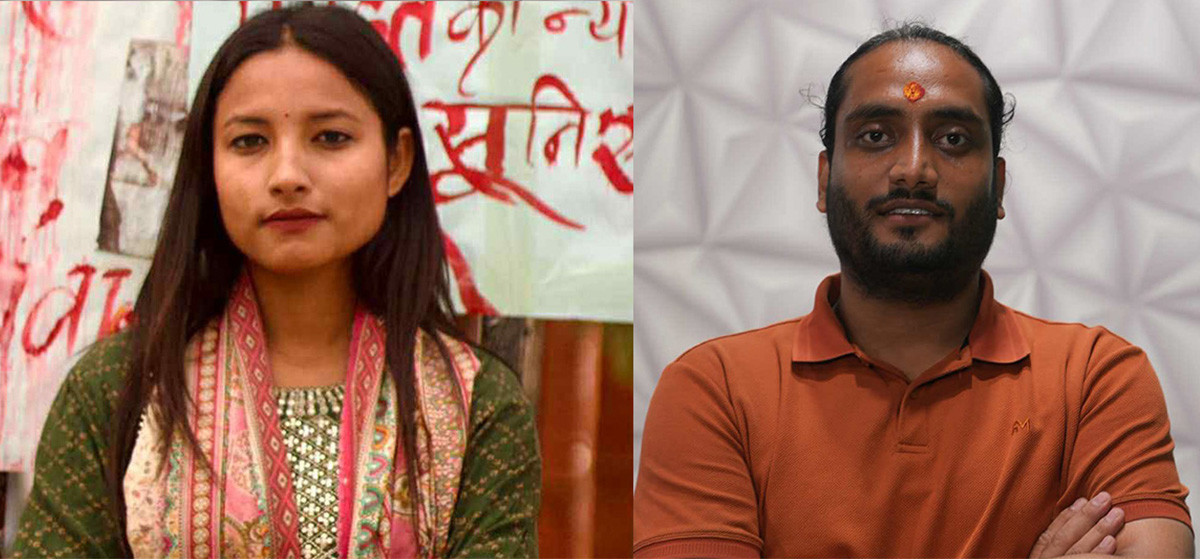
This aspect of the civil society problem is evident in one recent posting by Dinesh Tripathi, a practicing lawyer in Kathmandu: “Today [August 10], 16 members of civil society including myself were arrested while protesting in front of official residence of Chairperson of Council of Minister Khil Raj Regmi. We wanted to draw attention on the issue of Adhikari couple [that is] fasting unto death. They are demanding impartial investigation of [the] murder case of their son. But the government is obstructing the course of justice and accused are getting political protection.”
More generally, the entire gamut of public service institutions has become dysfunctional, with government support for legitimate enterprise and productive initiative either absent or secured only with enormous investment of time and money, much of it paid out to officials and politicians as bribes. The outcome is that it is almost impossible to operate a business in a lawful manner and, as a consequence, a large part of profit can be characterized as “social exploitation”—more commonly known as black money.
Autocratic politics
The multi-party system has given us democracy but democratic power is wielded by party leaders and officials, thereby undermining the normal functioning of government. For comparison, we can look at democracies in the West—the US in particular—where the general public is unaware of party machinery and party apparatchiks which is irrelevant to the functioning of governance. Nepal presents just the opposite case, where government literally belongs to party leaders, with ministers, high bureaucrats, and constitutional appointees more accountable to party heads than government in power.
The subordination of government authority to party leaders and high party officials is akin to what prevailed in the communist countries which, in large part, rendered that system undemocratic. More generally, the clout and power of party leaders are at variance with a democratic system in which elected officials are accountable to no one but to people who elect them. A similar situation existed under Panchayat: Panchayat stalwarts and high bureaucrats looked down upon government ministers and regularly went over their heads in making important appointments and promotions.
One important element of the undemocratic nature of democracy in Nepal—and to a large extent, in many of the emerging democracies—is the method of selecting candidates for election. This again is based on the whims of party leaders and has almost nothing to do with the people who would elect them. Although, in certain instances, there is background check of prospective candidates, their credentials and fitness-for-job matter less than their party loyalty and personal rapport with leaders.
Finally, the most visible symptom of our return to autocracy is implicit in the make-up of parliament. In the first general election held in 1959, 109 parliamentary seats were contested in direct election. This tradition of directly-elected parliament was continued in 1991 when multi-party system was restored after a thirty-year gap. Adherence to “direct democracy” somehow got mangled in the first CA election in 2008 when the system of proportional representation (PR) was introduced, with more than half of parliamentary seats filled through nominations, not election.
Although the intent of the PR system was to reserve space for backward and disadvantaged groups, the changed system was actually designed to enable party leaders to hand-pick parliament members, made up of acquaintances and loyalists. This special provision of carving out a large chuck of parliamentary seats was the ultimate disregard for democratic norms, which undermined the right of citizens to choose their own representatives.
Open democracy
The main challenge facing our democracy is to reduce the level of politicization of government operations by limiting the role of political parties to no more than preparing candidates for election. This would allow elected representatives to use their judgment independently, instead of being in bondage of unelected party leaders. Candidates using party labels wouldn’t be obligated—much less bonded—by the dictate of parties and their leaders.
To move towards such a system of open democracy, the first requirement would be US-style primary system of selecting candidates for election, which would require candidates to win an election to get nominated. This would replace the current system of discretionary choice of candidates by party bosses.
Second, the proportional system of representation must be done away with and, instead, all parliamentary seats be filled by directly elected representatives. Indirect election of members of parliament undercuts people’s representation and creates an opening for the centralization of state power under an autocratic regime. Third, with proportional system abolished, the number of parliamentary seats can be reduced to a bare minimum, both to economize on the cost of governance and to increase the effectiveness of representative system.
And fourth, with the role of political parties—and of professional politicians in particular—severely downsized and government operations depoliticized, much of the manpower—estimated over a million people—engaged in unproductive political work can be released for productive work elsewhere which would help add value to the national output.
Unfortunately, with the national mindset fixated at judging all actions and all affiliations with an eye on political correctness, there is little hope that our politics and governance system can be neutralized in a way that it allows people to exercise their free will and independent judgment—about political representation and government accountability. This is a dangerous development—wrongly perceived as accommodation of diversity and empowerment of people at the grassroots.
Related story
No one should dream of going against democracy: PM Deuba