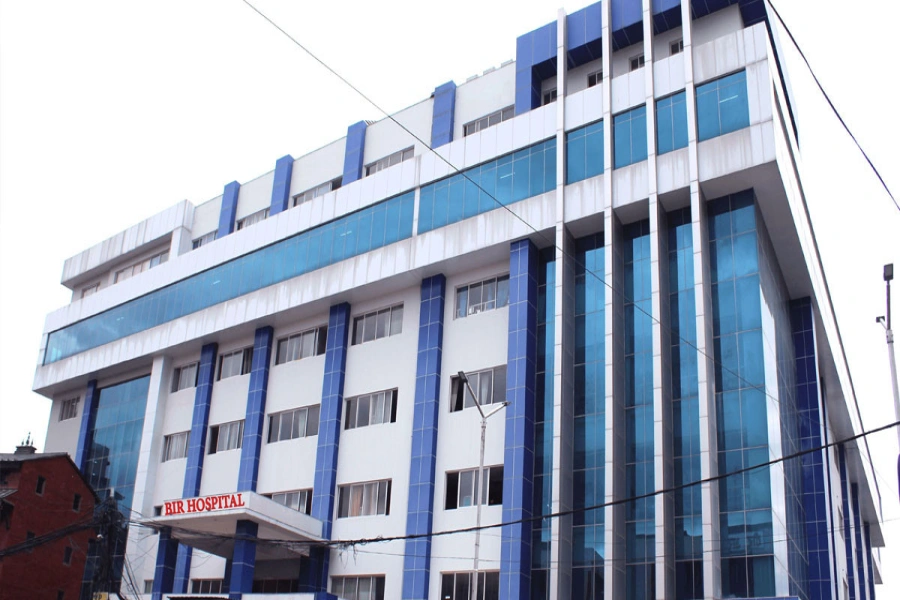
Now the time has changed. Narayanghat Bazaar and his village have transformed before his eyes. New bridges, buildings, roads, malls, colleges, hospitals continue to appear around. But the development does not excite Jagat Bahadur. He is worried about only one thing: How will his grandchildren survive now!
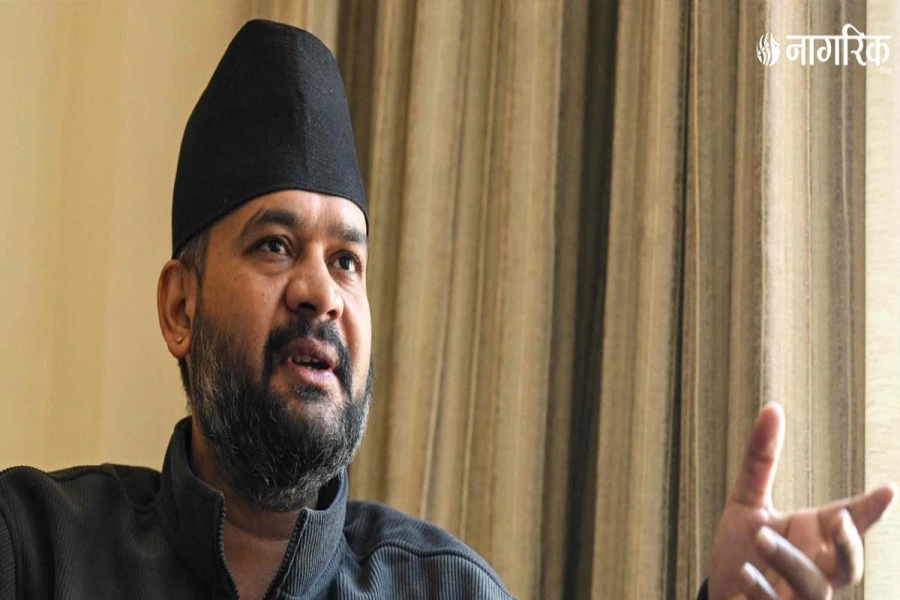
"I can't express in words how wonderful life was in those days. Boating and fishing was all we would do," says Jagat Bahadur. "You know, we would catch such big fish sometimes that they would last for days even if we ate lavishly," he added, trying to show the size with his hands.
But he realizes that those days are gone now and Jagat Bahatur takes deep breath and gazes at the river. The river is still there, still looks equally mighty but the occupation of the Bote community is under threat. "No one needs boat to cross the river now. We've lost our vocation," he says, adding that the river doesn't feed them anymore.
He was 35 when one day Jagat Bahadur was ordered by a policeman to catch a special fish from the river. That was an honor to the layman. He left no stone unturned to catch the biggest possible fish. His brother was there to help him and the giant fish caught was carried by the two brothers to the destination. Upon reaching the spot, he came to know that the fish was for the late King Mahendra.
"The fish was for the king. When we put the fish before him, he was so happy."The memory brings a warm glow on his face even today. After all, he had pleased a king with his magical fishing skills.
"In those days, there were few houses in Gaidakot. Even after the East-West Highway was built, we had no problem of employment. Not only people, even construction materials and other things would be carried across the river in our boats," recollects Jagat .
After the construction of the Narayani Bridge, boats sailed by the Bote community had little significance. People no more needed their help to cross the river. But that wasn't all. When a ban on fishing was imposed, it affected them even more.
In 2074 Chitwan National Park came in existence. Policies to conserve wildlife and environment started being implemented. The national park put restriction on fishing, hunting of wildlife, water animals and felling of trees in the park zone and beyond. The Botes were informed of the new regulations.
"That was when our real hardship began," remarks Indira Bote, a resident of Patihani near the national park. Also an advisor to the Bote Samaj Nepal, Chitwan, Indira added that the park office later gave them a permit that allowed them to fish in the river. However, there were several conditions and constraints, which somehow displaced them of the occupation.
As per a government survey in 2000, the total population of Bote, Majhi and Mushahar, all the marginalized groups living along the Narayani riverbank in Nawalparasi District, was 7,243. The study also pointed out that these communities had not yet adopted any new profession though many of them stopped fishing and sailing boats on the river. Unlike many other communities in the region, these people were not seen engaged in farming and
livestock.
"It may be due to the lack of awareness, skills or perhaps due to the lack of means to start with," said Indira. Jagat Bahadur's son and daughter-in-law are illiterate. The family tried hard to give good education to the new generation. But Ramesh, Jagat's grandson, dropped out of school in the eighth grade, leaving the elders hopeless about a better future.
According to Mitralal Bote, President of Bote Samaj Nepal, Chitwan, only a few people of the community are literate. Only a handful of people have passed SLC. "And when the educational background is so poor, it isn't surprising that we remain backward in everything," he said.
Across the country, there are around 10,000 Botes, as per Census 2011. They are scattered over 60 districts. "But the settlement is more in Nawalparasi, Syangja, Tanahu and Sarlahi," said Indira. She added that child marriage is rampant in the community. "There's early marriage, no education or opportunities for our community, and now we also have no means of earning. The situation is simply horrible," she concluded.
k6ramesh@gmail.com
Related story
Prime Life, Union Life and Gurans Life ink a merger agreement






-1200x560-1774606010.webp)
-1200x560-1783685616.webp)