

A youth with his roots in Terai gives a little insight on the Madhes issue, talks on Nepali social media sphere's reactions on trending topics and tells the tale of being a 'foreigner' in one's own land in this piece...
The gruesome murder of police officers and innocent bystanders by protesters in the Nepal Terai (or Madhesh), ignited outrage over social media. I understood the anger, which was natural. But to put things into perspective with proper context, I reminded the ‘twitterati’ that just a day before four protesters was killed, and there was very less outrage.
I explained that no form of violence has any space in civilized society. I further clarified my clear standing on this and during the interactions with people- including a few ‘intellects’. The result? I got labeled a separatist, conspiracy theorist, supporter of violence etc. My intention today is neither to blame anybody for their ‘selective’ outrage, nor to condone the gruesome crime by the protesters. I maintain that a crime is a crime. I also acknowledge the social media users’ fair and balanced posts condemning violence on both sides.
The Do's and Dont's before buying a laptop

But many Nepalis of a certain upbringing just don’t get it! Context and motive are important for any crime. Murder is a crime. There is no excuse for it. But ‘sadly’ there exist historic perspectives for protest and political unrest.
The social media-sphere of Nepal is pretty divided and largely represents a certain segment of Nepali society. If we analyze the demography of the Nepali tweeple, we can sense which socio-ethnic group makes up the highest number and why ‘certain’ agenda is always trending; and why positive discrimination/action to accommodate the historically oppressed community is generally ridiculed.
I call them the “echo-chamber”. But ignoring the grievances of oppressed communities of Nepal on social platform will further alienate them and also push them towards extremism. This is how the discourse has been breaking so far.
The question to all the moral police, I ask is: Yes, we need social peace and harmony, but at what cost? At the cost of the voice of oppressed trampled upon or at the cost of willful ignorance or at the cost of “we didn’t see it, media didn’t report it, it didn’t happen- ostrich syndrome” towards our socio-political problems? In today’s world, the way masses consume news cannot be dictated and controlled by main stream media.
The saddest part is that when we point to social, political and economic injustices against certain groups in Nepal, we are abused on Twitter with derogatory slurs like -- anti-nationalist, rhododendron hater, Indian, Paid agent, ‘Dhoti’”, etc. that is even if I tweeted something as simple as “I like roses” out of context.
The main problem with the chunk of youth of the privileged communities of Nepal is that they are never given time to understand their own country and various ethnic groups. And when they see these protests, gruesome violence- they neither understand this nor fathom the anger in certain communities. I appreciate their good intention of honest call to stop all these violence. But, the bridge of trust has long been burned between the communities after repeated betrayal of agreements by the establishment.
When I see tweets, like “What is the demand of Madhesh? What is the protest all about? Who betrayed the agreement, there’s one Madhesh Pradesh?” it gives the appearance as if the protesters are doing it for fun and they don’t actually have any agenda. I seriously want to explain the answers to them but the sheer number of such novice, yet honest social media users is beyond my capacity to educate in 140 characters, especially when they are not ready to grasp the difference between what they are observing, what they are feeling and what the narrative of the other side is.
Instance: When a Nepali farmer was bringing a sack of fertilizers from India, he got shot by Nepal Police personnel. Neither did the media give it due space nor did the police department take any action against the culprit officer. Social Media outrage: Zero!
I am not saying that the Nepal Police are racists or they target a particular community on purpose; all I am saying is that there are data, videos and public documentation of police brutality targeted towards certain communities. The population of Madhesis is 35% of total population and they fill only about 5% of government positions, police and army. Tell me, if this is not a form of ‘apartheid’ being practiced, then what is?
Irony is, out of 60 judges recommended by Judiciary Council of Nepal for district courts recently, only 1 is Madheshi, 1 woman, and 0 Dalit were included. Social Media outrage on exclusivity of a particular ethnic group: None!!
The social-media of Nepal has become intolerant and selective. Talk about inclusivity, progressiveness, women’s right and get truck-load of abuses, trolling and labeling.
Let’s accept it, our country is racist, anti-women, and the society is essentially Casteist. It needs a treatment. And, by treatment I don’t mean violence. I am sure ‘you’ think I am only capable of that. Yes, we are all Nepalis, but some are assumed to be more Nepali than others, some look/dress like Nepali, others don’t look/dress like Nepali. If so, let’s re-define what being Nepali means. The selective outrages are not helping the public discourse we are having on Nepali social media-sphere.
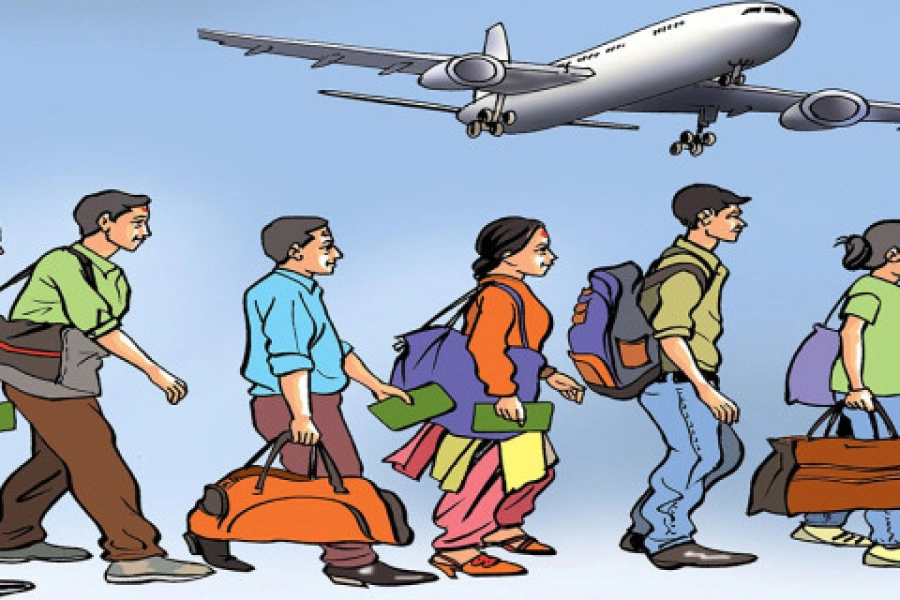
Lastly, my only appeal is for empathy, not sympathy. Try living the life of a Madhesi who always has to prove his/her allegiance to the nation. When I land at TIA, the police generally tells me, “Aap udhar jaiye, Indians ka line woh hai” (You go stand there, that’s the line for Indians). I calmly respond to them, “Hunchha dai!!” (Okay, brother).
Generally, I end up making friends with them, after all being a police officer’s son, I can relate to grievances of police officers as well.





-1779842101.webp)






