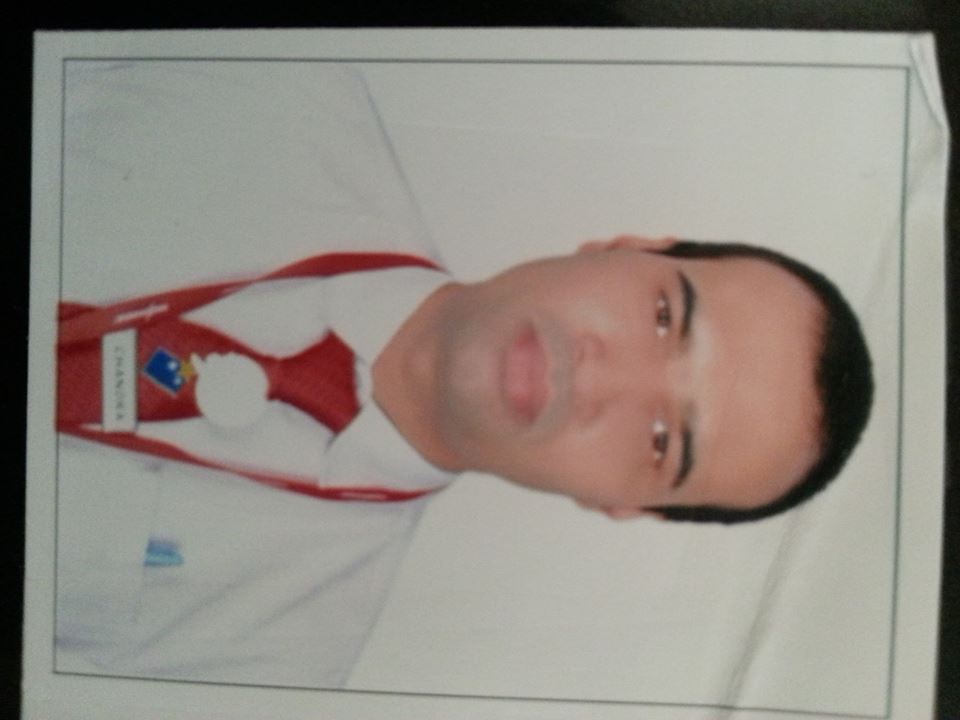
Though it might raise many eyebrows, but Acharyashree, as he is addressed by his disciples, minces no words when he says that the current education system is responsible for the mess we see all around in our society.[break]
Frustration, unemployment and delinquencies among youths and corruption in behavior and actions prevalent among people of all ages are all a result of the shortcomings in the existing education system, Pathik says.
Pathik, a mystique who has spent many years in contemplation, meditation and visiting mystic schools, is about to release his books on Trinity Education in July.
Throughhis Foundation in Satungal, he has been promoting the concept of Trinity Education for the past 30 years, which, he says, could rectify the errors in the education system of today.
Photos: Bhashwor Ojha
One recent morning, he shared with Republica’s Amendra Pokhrel his views on the current education system in Nepal and his vision about what can be done to improve the situation.
A child’s education begins at home, and by the time he reaches school age, he will already have developed an outlook – a sort of referential template – based on which he will grasp things the rest of his life. This kind of education is called socio-cultural education.
If a child who is just learning to walk gets hurt bumping against a chair, the parents pacify him by scolding or even hitting the chair. That experience creates a template in the child’s mind, that blaming others is both comforting and convenient. These sorts of templates are created everyday as he grows up. For example, the feeling of superiority or inferiority, based on caste, religion and nationality, creates over time a divisive person who is in conflict with himself and everything around him.
At present, there is no curriculum for socio-cultural education. But this learning, which begins when a child is just six months old, is going to influence his thinking in the years to come.
After a child steps into a school, the system says these are the subjects available, and it is up to you whether you wish to study or not. The current education system, therefore, is repressive in the sense that it does not give choices, and it does not try to understand and study a child’s behavior and let him pursue what interests him.
No wonder, almost half the students who appear in the SLC exams fail. What future can they hope for? Wouldn’t they want to try something else?
I know two boys who ran away from home in Saptari after they failed to pass their grade seven exams. They arrived in Kathmandu and started learning what they naturally loved to do: painting. Within four years, they were popular for their painting works, and in a few more years, their reputation grew and word spread that if anybody wanted good quality painting, these boys were the ones to go to.
Obviously, their business grew manifold, and they opened a big office and hired staff to assist them. They also bought a house in Kathmandu. But their talents needed even bigger place and they left for America, where they are doing as well as they had been doing here.
Just imagine what would have happened to them if they had somehow stayed in Saptari and labored till their 10th grade. They would have passed with poor grades and their certificates would have told the world that these guys were worthless.
But again, if the same school in Saptari had facilitated for their talents to grow by providing the right kind of environment, guidance and support, they would not have to run away. Everybody would have seen where their talents lay and nobody would have a shred of doubt that they would do well in life.
If one studies only imposed subjects, his talents are never fully exploited. If the subject available for a group of students is either engineering or medicine, my guess is only 2 percent will find them matching to their interest. The current education system stifles or ignores the inborn talent of 98 percent students, who end up feeling uninspired and directionless.
The two boys mentioned above and some like them are lucky to have discovered their natural talents early in their life and their endeavors backed by circumstances.
But we don’t want to leave it to the circumstances. We want conscious efforts to give that environment to every child, to every student, so that the seeds with which they are born get to bloom.
And, therefore, we are talking about generalizing talents, and that is where the Trinity Education comes in. Generalization of talents is not possible without the Trinity approach, which means educating all the three brains we have: the left, right and back.
Current education is entirely devoted to educating the left brain that is capable of only processing information. Students are taught how to receive and sell the information they have acquired in the classroom. Under this system, the right brain and the back brain remain dormant or unused.
The right brain is the storehouse of talents, where the seeds of natural, inborn skills lie. But under the existing system, it is just like the fertile ground that is never ploughed or cultivated and that gets hidden under weeds and grass due to neglect and disuse.
In order to change this situation, the Trinity Approach categorizes education in three parts: Human education, scientific skills education, and soul education.
Human education includes socio-cultural education and all non-technical subjects that are purely informational.
Technical subjects will come under skills education, but the approach of imparting them will significantly differ from the methods of today. The new method would focus on activating and nurturing the right brain.
It is easy to miss technical education for skill education. Though they are all interlinked, there is a difference of approach. Informative and technical education needs training, whereas skill education needs environment to unleash inborn talent.
We want to create an environment in which the talent that is in the latent state manifests and flourishes to its full potential.
The third type of education is soul education. It would address the concerns of ethics and morality and help people to live stress-free life by helping them maintain their spiritual balance.
The goal of the education system of the past was to produce clerks to fulfill the needs of that time. It has outlived its course and now we need to move on.
Human brain develops so fast, it is impossible to match the pace if we don’t renew our education system every five years. There should be a dedicated committee to overhaul the education system.
Our belief is that we just have to throw the idea among people. If these ideas are useful for humans, their minds will grasp it and find ways to bring it into use. Otherwise, we will just think of it as our utopia and rejoice in the fact that we made an effort.
Pathik Foundation is located inside the Dhawalagiri Awas area in Satungal, Kathmandu. For more information about the foundation and the mystique, log on to www.pathikfoundation.com.
The writer is a copy editor at Republica
amendra.pokhrel
@gmail.com
Related story
Data for public policy