Winds in late spring and early summer destroy some of mango flowers, but the accompanying raindrops save the remaining crop from completely drying up in the heat. It may sound incongruous, but traditional farmers in Mithila still believe that the Chaiti Bihaer—the April Hurricane—is a precursor of bumper harvest the following autumn and winter.
Even by the intensity of the Chaiti winds, storms that lashed eastern Tarai last week were devastating. Authorities across the border in Bihar claimed that the wind velocity was above 125 kilometers per hour. It’s not known whether the weather office in Nepal recorded the ferociousness of the gale. If they had, they probably didn’t find it necessary to publicize their work. But the wreckage wrought in its wake on the northern side of the international border was no less unnerving.
Roofs of thatched houses were blown away. Trees were uprooted. And the disrupted power supply is yet to resume in the entire Tarai belt between Birgunj and Biratnagar. People living at urban centers have adapted to the vagaries of load-shedding, but an unpredictable blackout has disturbing consequences on modern life. When there is no electricity, water pumps don’t work. For those living on the fourth flour of a modern building, the torment of ferrying water in plastic buckets to flush the commode down below can be extremely irritating even when domestics do the actual sweating.
For almost four days, telephone services were tardy because inverters at the offices of service-providers didn’t work. Users couldn’t recharge their mobile sets. Some police officers were heard complaining that even their communication system was badly hit by snags in power supply. In dusty and dirty Janakpur, flies and mosquitoes are perennial problems. But none of it deterred the political class from making a beeline to the heartland of Madhes. In anticipation of the showdown likely to ensue after May Day, nobody wants to miss out a region that is likely to play the decisive role in any political deal of the future.
Barring the political outfits of Upendra Yadav and Jayaprakash Prasad Gupta, almost all Madhes-based parties are complicit in the omissions and commissions of the present government.
The treadmill test
On of the main duties of police force in Dhanusha is to receive, escort and then see a visiting minister off to the airport. No one is keeping count, but the person who keeps the keys of the VIP Lounge at Janakpur Airport avers that at least fifteen ministers every week passes through his domain. With an inert government comfortably ensconced at Singha Durbar, it seems ministers in the ruling coalition have precious little to do in Kathmandu.
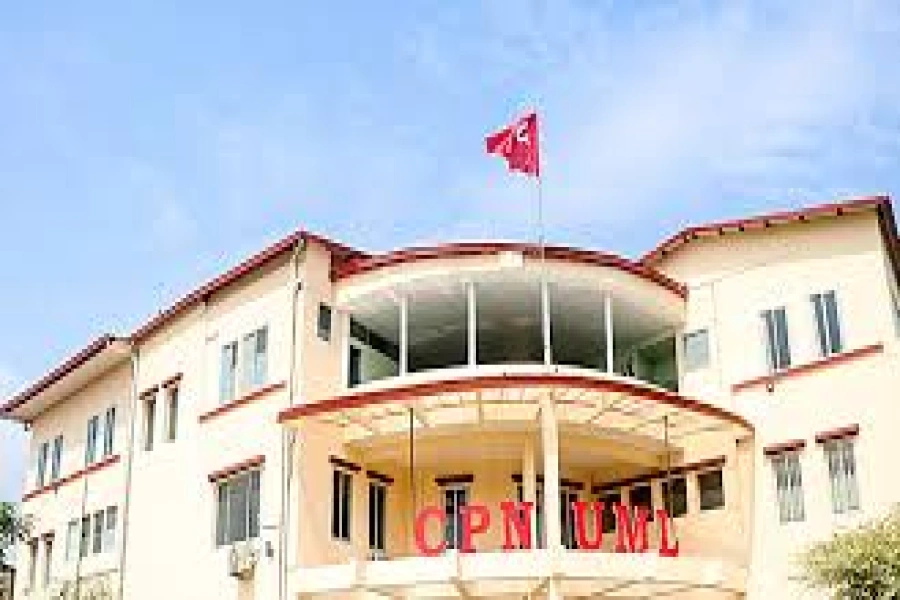
The more enterprising ministers manage to go abroad on seminar tourism or familiarization junkets. The rest have suddenly realized that they may have to find a constituency. Since they have no directly elected parliamentarian in the cabinet, the pressure upon CPN (UML) ministers is particularly heavy. The suicide of Diken Rajbanshi in front of the Balkhu Palace headquarters of UML on Saturday is symptomatic of a deeper malaise. The party has lost all touch with political undercurrents at the grassroots.
Raghubir Mahaseth may have managed to grab a seat in the Constituent Assembly in a by-election through a clever manipulation money, muscle and media power, but the overall position of UML in local politics of Tarai-Madhes has been marginalized even further since the formation of anti-Maoist government of Madhav Kumar Nepal. In fact, old-timers of the party refuse to acknowledge that the present government is led by UML; they characterize it merely as a private enterprise of Premier Nepal and his political clique.
Nepali Congress has been completely eclipsed on its historic home turf in the Mithila region. Despite the political weight of Bimalendra Nidhi in central politics, the steady decline in the support base of the dilapidated party hasn’t been checked. The NC simply doesn’t have the buzz—a sense of excitement and anticipation that attracts followers and inspires cadres—to face the challenges posed by Madhes-based parties.
However, the Madhes-based leaders too have lost some of their appeal. Few doubt the integrity of Mahantha Thakur, but he is increasingly being perceived as a leader who sold his political agenda to the anti-Maoist cabal and anti-Madhesi elites in Kathmandu. The colorful cabal of Bijay Gachchhadar is dismissed as rank opportunists and timeservers. Barring the political outfits of Upendra Yadav and Jayaprakash Prasad Gupta, almost all Madhes-based parties are complicit in the omissions and commissions of the present government.
Rajendra Mahato has been going on his self-declared Swabhiman Yatra without realizing that a cat can never grow up to be a tiger no matter how hard it exercises. His strife-torn political party is a joke in Tarai-Madhes—the hand (the original electoral symbol of Sadbhavana party is a palm) of minister for Nepal Oil Corporation has only the thumb to show for its politics.
The treadmill test clearly shows that Tarai-Madhes politics has become immune to regular workouts. Armed groups are proliferating because the politics since the Madhes Uprising in 2006 has become moribund. Clearly, Maoists will have an advantage at the next hustlings. But they are not showing their cards in the politically decisive region of Nepal as yet.
The void and the UN
It’s not just the ‘national’ political parties, even influential international players of governance in Nepal have little leverage in Tarai-Madhes. By backing discredited Madhesi leaders in their anti-Maoist games in Kathmandu, Indians have lost whatever influence they had in this region, which was not much to begin with anyway. Madhesis are peripheral to India’s security, water and energy interests and are treated with indifference or condescension.
British lost face when they reneged on their promise of protecting the interests of Madhesis when the Tarai plains were returned to the Gorkha court in the wake of Sugauli Treaty. The DFID may be a big donor in the hills and mountains. In Tarai, all one sees are their luxurious SUVs passing along the East-West Highway.
Americans funded the resettlement of Pahadis in Tarai and Madhesis constitute a minority in the US Green Card diplomacy. A few in the comfortable class may boast of American connections, but the biggest US-funded ‘project’ one sees is a wall painting at the departure area of Janakpur Airport.
Occasionally, white SUVs with JICA, SNV or SDC markings can be spotted cruising around in Tarai towns, but they are mostly there on INGO or NGO duty. Even giant moneylenders like the World Bank or the Asian Development Bank are not familiar names in eastern Tarai—their funding is probably channeled through line agencies of the government.
So, it was no surprise that when the World Bank, the DFID and the Asian Development bank wanted to hold public consultation in Tarai, they chose Biratnagar in the east and Nepalgunj in the west, two of the most Pahadi-dominated settlements in Madhes. The charitable explanation could be that they bypassed Janakpur because it didn’t have lodging facilities suitable for international consultants. However, when there is another Madhes Uprising, Nepal’s influential donors will probably be as clueless as they were the first time round.
Perhaps some UN agencies could be exceptions. The UNMIN and UNHCR may be resented in the political and civil society of Kathmandu, but they generate some confidence in the marginalized section of Madhesi population. They too may not have dome anything tangible, but there appears to be a feeling that if things were to go out of hand in Tarai with the military and the Maoists running amok after May Day disturbances, the presence of UN agency could work at least as an impartial witnesses.
Expectations in Tarai-Madhes from the influential players in the distant capital are rather low. But the distrust of the system is so deep that few seem to believe that the government is either willing or capable of delivering justice to long-suffering Madhesis.
cklal@hotmail.com
Related story
First national gathering of Bonpo Lama Monks from Nov 10