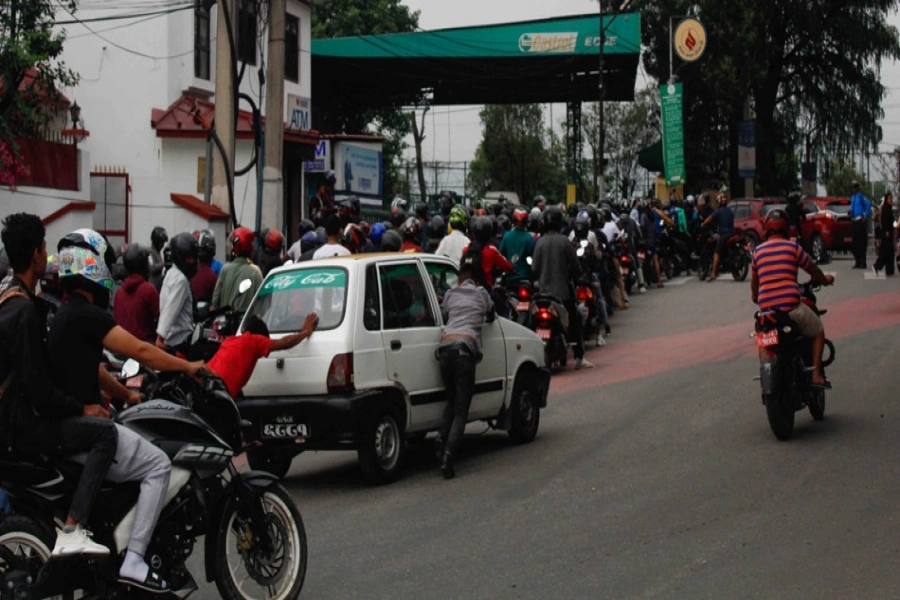
Here we go again. The Nepal Oil Corporation (NOC) has jacked up the price of petro-products yet again, for the fifth time in nine months. The litany of NOC excuses for price revision sound familiar: volatility in international oil market, mounting losses, and the equally worrisome arrears to Indian Oil Corporation (IOC), its sole supplier. Though all these grievances might be genuine, they are beside the point, say consumer activists.
Unless the government plugs the gaping loopholes in NOC management and bureaucracy, they reckon, it is unjust to burden common people with random price upticks. They have a very good point. NOC has traditionally been seen as a cash-cow, the control of the company subject to intense political lobbying during formation of every government. So much so that the mismanagement and corruption in NOC, fuelled by constant political meddling, has become an epitome of all that ails the country’s public sector enterprises.
We are not against free-market principles per se. If certain commodity witnesses price increment in the international market, adjustments will have to be made here too; in the pricing of gold, for instance. But fuel is not just any commodity. Prime Minister Baburam Bhattarai has time and again reiterated that although the national economy will by and large operate on free market principles, the government will shield the people from price volatility in essential products, and petro-products certainly fall under this category. PM Bhattarai, we are afraid, has failed to keep yet another of his big promises. If anything, he seems to be spoiling for another nasty fight. Even as consumer rights activists and student unions are up in arms against the recent price hike, the government, instead of listening to their genuine grievances, has upped the ante by indicating the prices of petro-products could go up yet again in the near future.
The government has been right to subsidize diesel and LPG which are used by people across the income range, while surcharging petrol and aviation fuel, brought into use by the relatively well off. But if the prices continue to increase across the board, the puny subsidies will mean little. Even before Sunday’s hike, the price of daily commodities had been steadily rising. The increase in petro-product prices will make them dearer still, putting even more burden on common people on the eve of the festive season. They thus have every right to question the rather whimsical price revisions. One after another independent commission set up to investigate oil-price fluctuations have suggested that if NOC could plug loopholes in the import and distribution mechanisms, its losses could be cut by at least 10 percent.
People will be ready to buy NOC’s argument of ‘mounting losses’ and ‘ price volatility’ only when they see evidence of much-needed reforms in the sclerotic oil body. The recent fuel price hike will also dampen the growth prospects of the Nepali economy, already battered by long hours of power cuts. Announced ahead of the much-awaited festivities, the uptick in petro prices is sure to bring PM Bhattarai another few steps down on the credibility ladder, his promise of relief for the poor sounding as hollow as his vow of a timely constitution.
Related story
Central bank tightens oversight of digital payments to prevent...