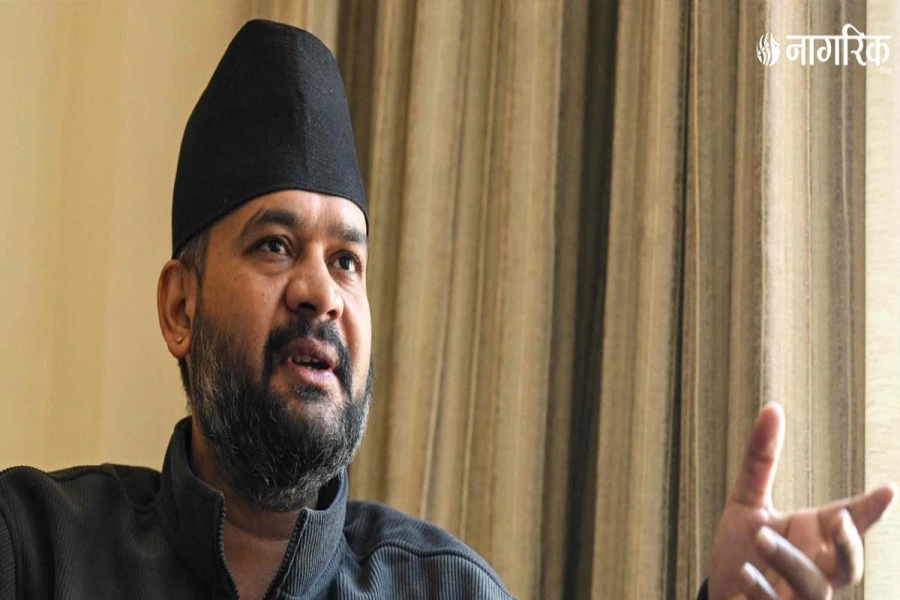
Maharjan says getting involved in judo from his childhood days prevented him from straying on to the wrong path. [break]
“Judo teaches us discipline so I didn´t get into the habit of smoking, drinking and taking tobacco. I never thought of those things because they reduce our stamina,” he said.
“Learning judo at an early age has an advantage because the body is flexible and the mind is more attentive at that time,” he said.
“I wouldn´t have learnt judo had it not been included in my school´s curriculum,” he added.
The husky player has not only excelled in the national tournaments, defeating senior players, but has ample experience in international games, winning gold in the Indo-Nepal Inter-school Judo Championship in 2005 and the best player award in Indo-Nepal Public School Judo Championship in 2004.
Maharjan´s highest achievement was winning the gold in South Asian Judo Championship 2011 last month in Islamabad, Pakistan. Nepal also bagged another gold in the championship in team event. With his victory in the men´s U-60 kg, the total number of golds that Nepal has to its credit in the regional level has reached seven, including three from the Seventh South Asian Games.
The judoka from Maharajgunj, Kathmandu also plays football, basketball and cricket but only as a hobby. He has participated in various school and college level tournaments of other sports but is serious only about judo. He wants to dedicate his whole life to the game.

“I will never quit judo,” said the player who is well aware that competing in games alone is not enough to maintain livelihood.
“We cannot give our full time to judo because we have to fulfill other responsibilities,” said Maharjan, who works as a marketing executive at ABC Television.
A third-year BBS student at Shanker Dev Campus, Maharjan regularly attends judo training at Multipurpose Martial Arts Centre, Nayabazar in the evening after a hard day´s work at office.
Having spent 12 years learning judo, Maharjan says he has missed lots of things in life as he couldn´t give time to his family and friends. “But I think they understand my situation,” he said.
He also expressed his gratitude to his family members and his office for their support.
“It would not have been impossible to win medal without their support. My office had agreed to a flexible working hours for me,” he said.
While Maharjan has been dedicating himself to judo, leaving behind his personal interests, he still thinks that the training at personal level is not sufficient to maintain the standard in the international level.
The government and concerned sport bodies provide training to players only ahead of major tournaments. The players have to train by themselves rest of times.
“We could have won four golds instead of two if we had got proper training,” he rued.
“The short-term training we receive not only makes it difficult to win medals but might even result in the decline of our overall competence level the next time we participate in any event.”
Related story
Keeping the tradition alive


-1200x560-1783685616.webp)



-1200x560-1774606010.webp)