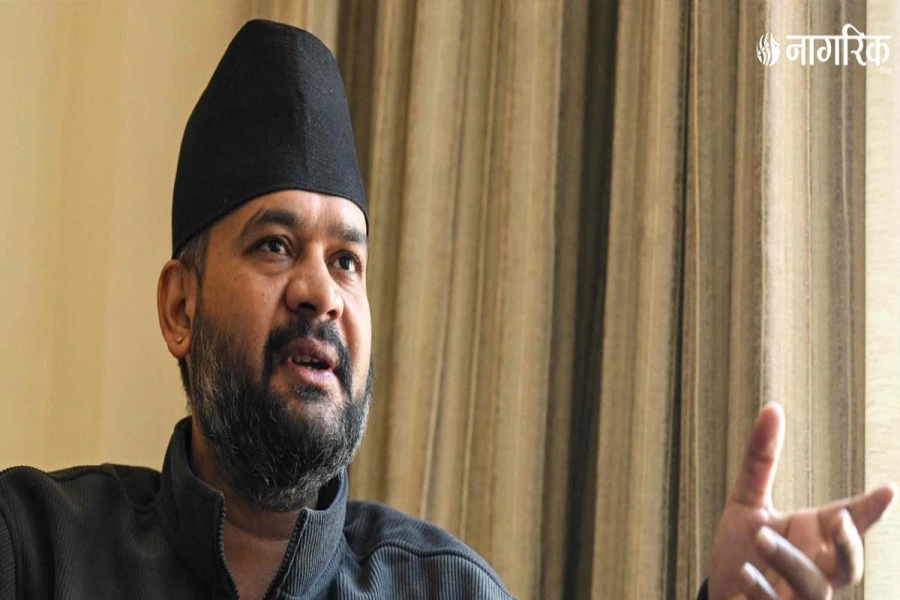
KP, the only living leader of the trio, who started his political career when he was just 17 by taking part in the ‘Quit India’ movement of 1942 in Benaras, is no more. The leader, who spent nearly 14 years of his life in jails or house arrests of Nepal’s autocratic monarchs, passed away on March 4. Never married, he lived a humble, solitary life in a government provided house as he didn’t possess a house of his own. A true believer in god and a scholar and practitioner of Bhagabad-Gita, he believed in aparigraha (no unnecessary possession of worldly things); his belongings were as few and modest as an earthen jar, an umbrella, a small trunk and a transistor radio.
Uncharacteristic of today’s brand of politicians he never tried to use state power to acquire personal and political gains. As a leader who always heeded the call of conscience rather than that of populism, his death is a great loss to the nation, although the selfish and lowbrow leaders of today dismissed him as an outdated leader saying that his political line had become irrelevant during last some years. Whether their accusation is true or he was enlightened and courageous enough to speak the truth amidst a political madness that is hell-bent on destroying everything in the name of change is something history alone will decide. So will his decision to quit the party he co-founded and nurtured for more than six decades, apparently on grounds of his disagreement with the party’s switch to republicanism.
Nicknamed as saint politician for his sagely life and works, KP was not without political ambitions or for that matter without inner-contradictions and complications; more often than not his words and actions would carry different purpose and connotations from what they would carry on the face of it.
A man who was very firm in his convictions and clear in his conscience, even BP wouldn’t be able to convince KP to mend his ways. He chose to remain in jail even when BP and GM were released from their 8-year long imprisonment following the royal coup of 1960 as he declined to endorse Subarna Shumsher’s statement, which was conciliatory toward the king, the way BP and GM endorsed. He was later released after two years during which he was named ‘Prisoner of Conscience of the Year” by Amnesty International. He once again disagreed with BP when the latter chose Indian soil to launch an armed revolt against the king’s autocratic rule; he instead opted to remain in Nepal and struggle for democracy.
KP was one of the most knowledgeable and widely read politicians of any time. BP along with Subarna Shumsher and Surya Prasad Upadhyaya- all voracious readers- would seek and respect his advice. A man of great forbearance, he never complained about his physical pain even during the prolonged and acutely painful illness that preceded his death the way he never complained about the adversities in his political life. Despite the humiliations and betrayals he suffered, especially at the hands of his friend-turned-rival GPK, he refrained from breaking the party although many, out of their own interests or biasness, advised and pressed him to do so.
However, KP was also an underachiever in terms of political and electoral success as he lacked the pre-requisites of physical energy, managerial efficiency and tactical strategy to succeed. His methods were lethargic and old-fashioned, such as maintaining a small diary and pen to note, longhand and slowly, rather than appointing efficient secretaries to do the job or using fast and efficient modern gadgets like computer, cell-phone etc. Besides, the mavericks’ off the cuff remarks often eclipsed or tinted his otherwise revered image. A witty man, he would skillfully dismiss difficult and contentious subjects with levity. But his obsession with humor, especially on socially taboo and politically sensitive subjects that ranged from the revelations of his sexual life or drinking habits to relationship with India, often dragged him into controversies. His often repeated jokes like ‘I am unmarried but I am not a celibate’ always proved public relation disasters; yet he never cared.
Nicknamed as saint politician for his sagely life and works, KP was not without political ambitions or for that matter without inner-contradictions and complications; more often than not his words and actions would carry different purpose and connotations from what they would carry on the face of it. On one hand he was so full of humility that he would not respond without doing namaste with both palms held together whenever someone enquired about his health; on the other hand, he would not show any courtesy and politeness to visitors that included ministers and senior leaders of the party, whom he disliked on account of their conduct.
Both as the head of the government or the party, his management and public relation skills wouldn’t match his intellectual, moral and spiritual height. During the 26 long years he headed the party organization (first as officiating President from 1976 to 1992 and elected thereafter till 1998) it was GPK who emerged as someone with a grip over the cadres. Similarly, as the prime minister between April 1990 to May 1991 and May 1999 to March 2000, although he personally was one of the most incorruptible leaders of his time, he was subjugated by GPK, who possessed far lower moral and intellectual capabilities than he possessed, on account of his poor organizational and public relation skills. In the intrigues of power politics, a philosopher and idealist KP was no match to a doer GP, who was energetic, restless, businesslike, far better organized and popular among the party cadres.
Speaker of the first elected Lower House of Parliament in 1960 at the age of 36, KP lost the polls for parliamentary seat both during 1960 and 1990 as a result of his own negligence and poor campaigning, although they were times when his party was at the pinnacle of popularity and strength. Later, in 1993 he lost the election mainly because of GPK’s betrayal who was also the prime minister at that time. Amidst the ensuing upheavals of intra-party feuds and half-hearted compromises he was offered the safest constituency during the 1999 general polls along with the offer of premiership which didn’t last long, thanks to his own working style as well as GPK’s maneuverings.
The nation will remember the journalist-turned-revolutionary (he was the editor of Benaras-based newspaper “Yugbani” back in the late 1940s as well as the first chairman of Association of Nepali Journalists and also the commander of rebel forces in Eastern Nepal which took control of the mid-eastern Tarai and inner-Tarai from the Rana loyalists during the 1950 armed revolution), saint, philosopher, scholar and politician for a long time for his saga and sacrifices for democracy. His vision and role as prime minister, notably in coordinating and balancing the conflicting interests of different stakeholders and groups, in successfully writing a democratic constitution during 1990 and in fairly and successfully conducting the parliamentary polls in 1991, thus safe landing the difficult political transition of that time should inspire the present day leaders, which unfortunately is not the case.
May his departed soul live in eternal peace in his heavenly abode!
Related story
Warhol’s ‘Marilyn’ auction nabs $195M; most for US artist




-1200x560-1774606010.webp)
-1200x560-1783685616.webp)