Social media never ceases to fascinate me. I’m not an avid user by any means even though I boast of accounts on multiple platforms. I do not tweet, update my statuses frequently nor post or share a lot of things online. I certainly won’t invite you to play those puerile games or shove one of those supposedly inspirational ‘pearls of wisdom’ down your throat.
The intrigue of this medium for me lies in seeing and observing people’s actions, their posted thoughts and shared emotions rather than the whole ‘involved’ experience of it. Hence on a balmy spring evening nearly a month ago, I found myself gearing up to write an article on the usefulness of social media. Its helpfulness has often been overshadowed by its well-publicized links to narcissistic behavior but there are obvious instances when social media was used to great effect to initiate change. The ‘Arab Spring’ and the US Presidential Elections 2012 are notable examples that I can recall off the top of my head. However, due to hurdles that seemed insurmountable at the time, I never got around to completing the said article and eventually dropped the thought altogether. Then came April 25.
Nepal European Union Film Festival to begin virtually

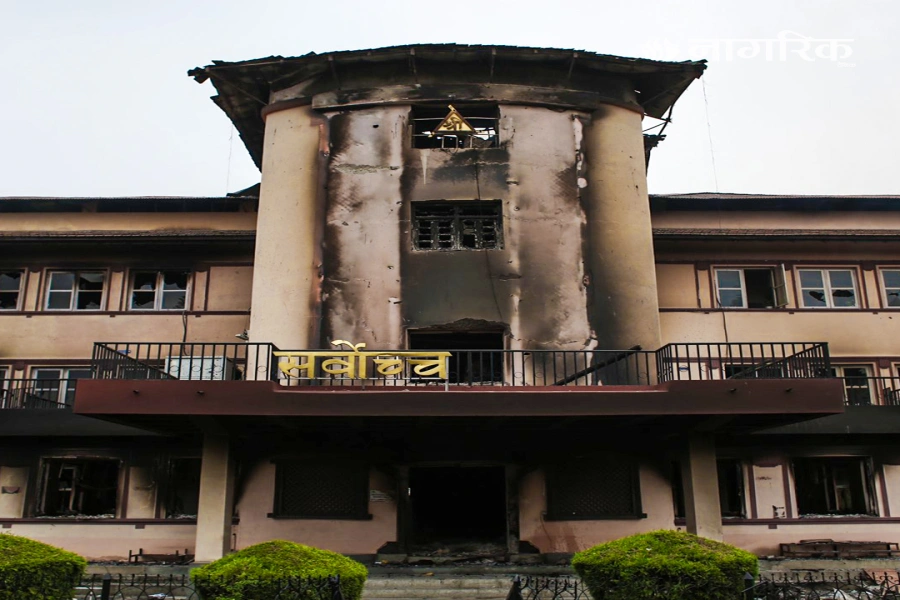
The earthquakes that hit Nepal on and since that fateful day not only damaged our national heritage and physical infrastructure, but also reverberated through our virtual walls online. Subsequently social media captured our frayed nerves and our battered collective psyche, laying it bare for all to see. It’s obvious that social media played a constructive part in alleviating the impact of this tragedy but the role it played makes for interesting examination.
In the immediate aftermath of the tragedy, the images and reports that did the rounds online touched a nerve amongst the populace. The democratization of media production tools meant that a lot of ordinary people were active in collecting, filtering and disseminating information on the earthquake. This lent the updates and information a visceral quality that professional reporting might not have managed.
The images of destruction and subsequent appeals for help probably played a big role in galvanizing a lot of people who might otherwise have remained mere spectators. In a way, these social networks played a huge part in the rescue and relief efforts. In some instances the organization and coordination done through online communication managed to put the government apparatus to shame. Even those who didn’t participate physically in the relief often shared information and news that helped to construct a bridge between the volunteers and the needy. That the youth of the country were at the forefront of these relief and rescue operations is testament to its potential. In the midst of all this upheaval, social media organizations like Viber, Facebook, and Google played a commendable part in ensuring that people were updated about their friends and family.
It’s in times of crises like this that social media can act as a barometer (albeit very crude) of national sentiments. Disbelief, fear, and sadness were the overriding emotions in the immediate aftermath of the quake and social media captured it all in grim detail. It helped portray our fears and uncertainty at the repeated aftershocks and our shared exasperation at the baseless earthquake ‘predictions’ made by among others some obscure ‘baba’ with dubious astrological leanings!
We slowly learnt not to believe in these ‘guesstimates’ and educated ourselves about earthquakes and tectonic plates in the process. This will hopefully makes us better prepared and less scared the next time (god forbid) it comes calling. It gave us a platform, if only for therapeutic purposes, to voice our frustration at our predicament and the ineptitude of our government. We also vented a lot of anger during this time with some of it directed towards our selfish politicians and online grandstanders.
A significant proportion of it, however, was justifiably reserved for the boorish mainstream media coverage of our southern neighbors. On a more positive side, we celebrated our own men in uniform who were the real heroes, saw the best and worst of our society, and learnt a lot about ourselves as a nation in this process. There is no ‘right’ time to be hit by an earthquake but a lot of people chose to look at the bright side considering the scenario that was envisaged if the ‘Big One’ were to strike Nepal. They stressed the fact that it could have been a lot worse and our misery compounded if it came in the middle of winter or the monsoon. And as always, there were the ubiquitous earthquake related memes doing the rounds. They did their best to mock our current predicament and force a smile on our faces in these trying circumstances.
They say distance gives us some perspective on the event. This is not a prediction, but that looks unlikely in the immediate future as aftershocks continue to terrorize us even now. It was well documented that social media can be a force for change and these earthquakes were unwelcome reminders of its potential. Our well-wishers, both within and outside the country, have a lot to thank social media for and many of us couldn’t have done without it. We only need to look as far as our Prime Minister for evidence of this fact.
gunjan.u@gmail.com