The IOM is the health arm of the National Academy of Sciences of the United States and serves as adviser to the country to improve health by providing evidence upon which the government and the private sector can rely on making health decisions.
The Center for Disease Control and Prevention (CDC), Atlanta, had asked the institute to convene a committee to assess the relationship between secondhand smoke exposure and effects on the heart. And in its 2009 report, Secondhand Smoke Exposure and Cardiovascular Effects: Making Sense of the Evidence, published on October 15, the committee concludes that “Data consistently demonstrate that secondhand smoke exposure increases the risk of coronary heart disease and heart attacks and that smoking bans reduce this risk.”
The report adds, “Given the prevalence of heart attacks and the resultant deaths, smoking bans can have a substantial impact on public health.”
A press release issued by the IOM says the committee conducted a comprehensive review of published and unpublished data and testimony on the relationship between secondhand smoke and short-term and long-term heart problems. “The committee was not able to determine the exact magnitude of the increased risk presented by breathing environmental tobacco smoke, but noted that studies consistently indicate it increases the risks by 25 to 30 percent,” the release adds.
The report also says there is compelling indirect evidence that suggests even a relatively brief exposure to secondhand smoke could precipitate a heart attack. “Data on particulate matter in smoke from other pollution sources suggest that a relatively brief exposure to such substances can initiate a heart attack, and particulate matter is a major component of secondhand smoke,” the press statement says in support.
Nepali context: Bill proposes ban on smoking in public
Nepal is a signatory to the World Health Organization Framework Convention on Tobacco Control (FCTC) adopted on May 21, 2003. The objective of the FCTC treaty is "to protect present and future generations from the devastating health, social, environmental and economic consequences of tobacco consumption and exposure to tobacco smoke," and is legally binding on the signatory countries.
In Article 8, the FCTC says the signatories has an obligation to protect all people from exposure to tobacco smoke in indoor workplaces, public transport and indoor public places.
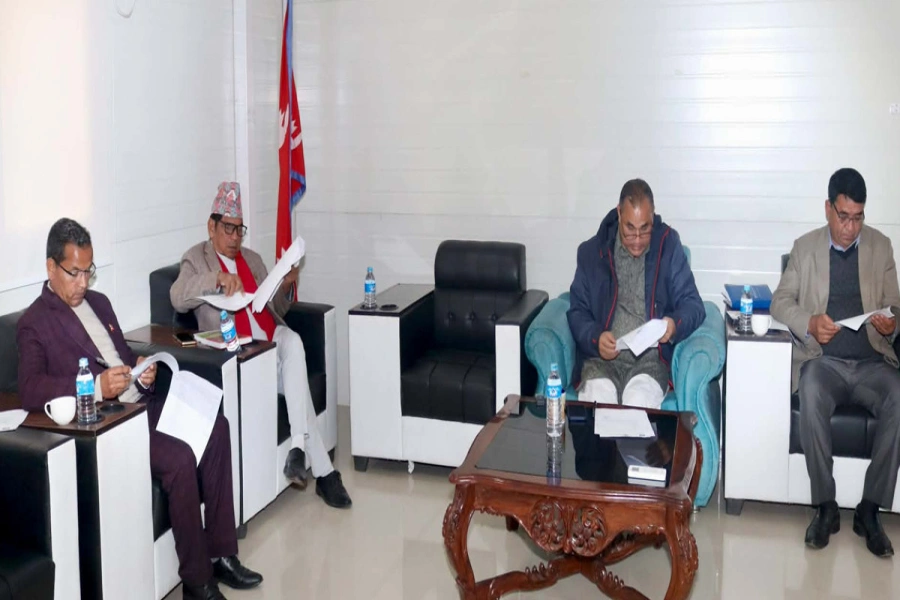
The Ministry of Health has prepared a Tobacco Control Bill, that also addresses the issue of passive smoking among others, but it has yet to be passed by the parliament. “We have presented it to the cabinet and its bill committee will deliberate on it tomorrow (Monday) to finalize it before presenting to the parliament,” says Health Secretary Dr Sudha Sharma.
The bill proposes ban on smoking at public places, workplaces, public transport or any spots adjoining to them, and up to certain distance from the gate of such places.
Data show there are more than 15,000 tobacco related deaths in Nepal every year. Though there are no studies done on the extent of harm to passive smokers in Nepal, experts believe it to be significant as they argue that a smoker inhales only around 25 percent of smoke and releases the rest to the environment.
premdhakal@myrepublica.com
Related story
Active vs Passive Smoking