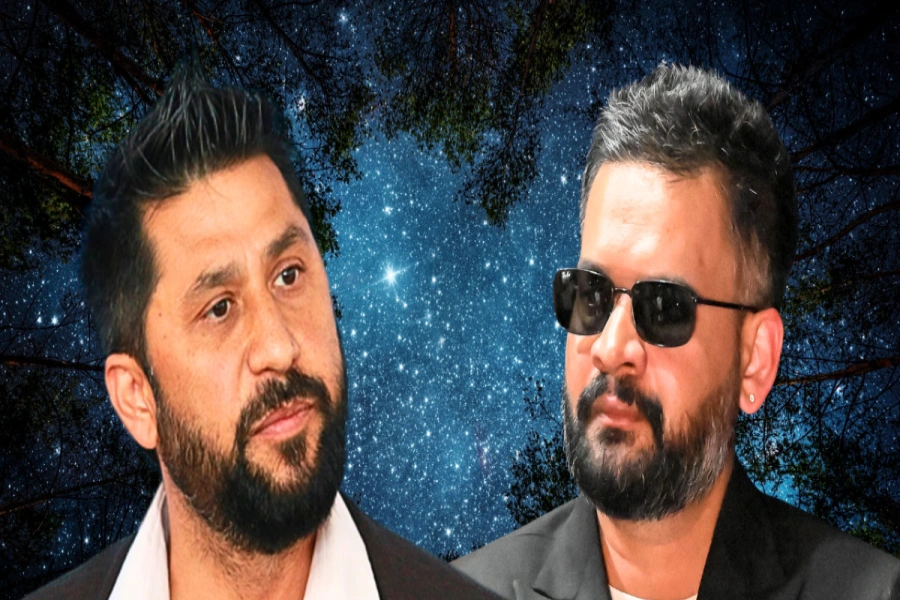
Nonetheless, local designers are coming up with their own labels to cash in on this soaring fashion trend. Among the many fashion designers in Kathmandu, some are faring well by creating their own niche of clientele. [break]
With the growing penchant among Kathmanduites to look and feel stylish, the future of Nepali fashion industry looks bright.
“I wouldn´t say we have a fashion industry in Nepal just yet because we are not that big,” says Nuzhat Qazi of House of Fashion. Qazi came into limelight after she did the styling for "Sano Sansar," the first production of Quest Entertainment.
What started as a hobby has now become a household name in Nepali fashion.
“We have sort of grown but majority of Nepalis are still not aware that local designers are available too. I think it will take another five to six years for fashion to be known as an industry in Nepal,” adds Qazi.

PHOTO: KESHAB THOKER
Tenzin Tsten Bhutia, who has been in the field since 2007 after completing his studies from National Institute of Fashion Technology (NIFT) in Banglore, India, concurred.
“When I started working with Himalayan Couture back in 2007, I expected to see designers being interviewed and their work shown on newspapers and magazines like in India, but nothing of that sort happened,” recollects Bhutia. “Before 2009, designers hardly appeared on newspapers but now the media has been covering and criticizing designers, which is good, I think. Media plays an important role in boosting fashion,” he adds.
Bhutia recollects that it was the buzz around Nuzhat Qazi when she was styling for Sano Sansar that inspired him to start his own venture named Tenzin Tsten Bhutia´s Creation.
Astik Sherchan of Astik Designs, however, differs from Bhutia and Qazi. He started his business two years back and has been catering to a niche crowd.
“I only cater to a small number of clientele and, though it´s not extremely profitable, it´s enough to sustain my business,” shares Sherchan, whose store is located at Ramalaya in Lazimpat. He further adds that people have started following fashion trends and that it´s changing the whole scenario.
“I think this change is brought about by the internet and media,” says Qazi.
But with limelight comes the pressure of creating something that´s worth putting out. Designers have long complained that unavailability of resources has been hampering the business.
Talking on the same line, Bhutia opines, “We don´t have textile designers. We have to import our fabrics from India or some other place. If we do buy the fabrics here, which comes from India again, many designers might be using the same thing and the essence of exclusivity is lost. Also it is quite possible that we won´t get what we exactly want.”
He also shares his grievance about the lack of skilled manpower and the problem of retaining workers in a volatile market. He explains, “I might get an order for 1000 outfits and hire some people. The project will complete in two months, but how will I sustain the workforce for rest of the year?”
However, talking on a positive light, Sherchan says that one has to work more creatively to overcome the challenges. Qazi, on the other hand, is of the view that technically there aren´t much problems.
“I have never faced the problem of fabrics. If one is innovative enough, you get plenty of that in Kathmandu. You just need time and patience to hunt for them.” Adding to that, Sherchan says, “I experiment with all kinds of fabrics but I do not compromise with the quality. Kathmandu is bigger than people actually think it is and it might take a long time to hunt for the right stuff. But if you live long enough, you know where to get it.”
As the fashion sector continues its forward leap, bringing in the much awaited fresh wave of changes, Kathmandu´s been hosting a fare share of fashion shows. Some are worth attending and talking about, while some are being organized, it seems, just to attract crowd.
“There were not many fashion shows organized in the past. So when shows began to be held more frequently, I thought it was good. But now it´s happening every other week,” says Qazi. She puts forward the idea that there should be a different platform for freshmen and professional designers and should have one fashion show every season. Sherchan too thinks along the same line and is hopeful that things will balance out soon.
No doubt that the field of fashion has grown overtime with people becoming more conscious about what and who to wear, be it clothes or shoes. But considering the purchasing power of Nepali consumers, the industry might take a little longer to establish itself.
Also, looking at the designs showcased at various fashion events, it wouldn´t be unfair to say that Nepali designers, too, have a long way to go to get recognized in the local market. As for the international market, it is still a long shot.
Related story
Fashion events in Asia