Issuing a statement, NFRS said that its District Food Security Networks (DFSN) meeting that reviewed the food security situation between mid-July to mid-November found improvement in the food security situation as compared to its earlier assessments.
The meeting was held in held in mid-November.
NFRS is a joint initiative of Ministry of Agricultural Development (MoAD), National Planning Commission (NPC), and World Food Programme (WFP) that tracks and analyzes household food security, emerging crises, markets and nutrition from across Nepal.
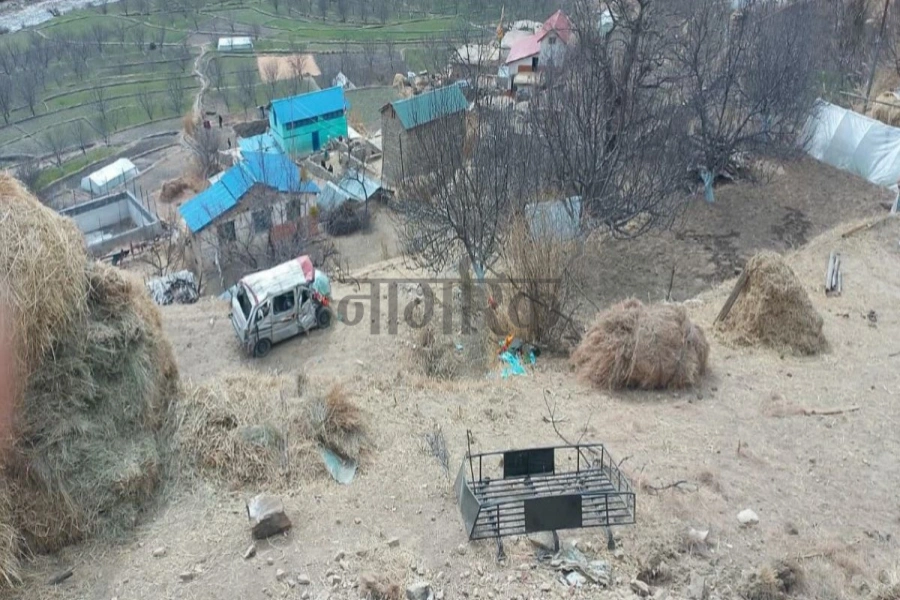
“The April 2015 earthquake and subsequent aftershocks produced significant impacts on livelihoods and food security, particularly in the central, western and eastern hills, which were still evident in this period as well,” reads the statement. “Nevertheless, DFSNs reported that the food security situation has generally improved in the earthquake-affected districts as compared to the previous rounds in mid-May and mid-July.”
While NFRS had classified 10 village development committees (VDCs) of Sindhupalchowk district as severely food insecure group, it did not find any such VDCs in its mid-November assessment.
Similarly, the number of 'highly food insecure' VDCs has come down to 120 in nine districts during the mid-November assessment from 224 VDCs in 11 districts which were lumped into this group.
According to NFRS, this phase defines a situation where household food consumption gaps are higher than normal and households are able to meet minimum food needs only through the accelerated depletion of livelihood assets. Still, NFRS estimates that roughly 260,000 people of 60,000 households were currently highly food insecure and 'require humanitarian assistance'.
“DFSN attributed the situation to earthquake impacts, production drops in summer crops (maize, paddy and millet), soaring market prices and the effects of the ongoing fuel crisis,” reads the statement.
NFRS said that its DFSNs in the earthquake-affected districts of the central hills are anticipating an improvement in the food security situation during mid-November 2015 to mid-March 2016. According to the statement, the number of highly food insecure VDCs is likely to decrease to 28 during the assessment compared to 71 in the current cycle.
“The summer crop harvest (maize, paddy, millet and potato), post-earthquake recovery interventions of the government and non-government agencies, and income from on-farm and off-farm activities and remittances were the key factors contributing to the positive outlook,” the statement added.
However, NFRS projects that significant number of VDCs will be still classified as moderately food insecure or worse off during the four-month period, starting mid-November 2015. “Production drops in summer crops, the lean season effect, the persistent impact of the earthquakes on food security and livelihoods, the fuel crisis, road blockades, and high market prices, are the factors that NFRS predict may prevent the food security situation getting better,” it added.
Related story
Eating junk food is bad for health!