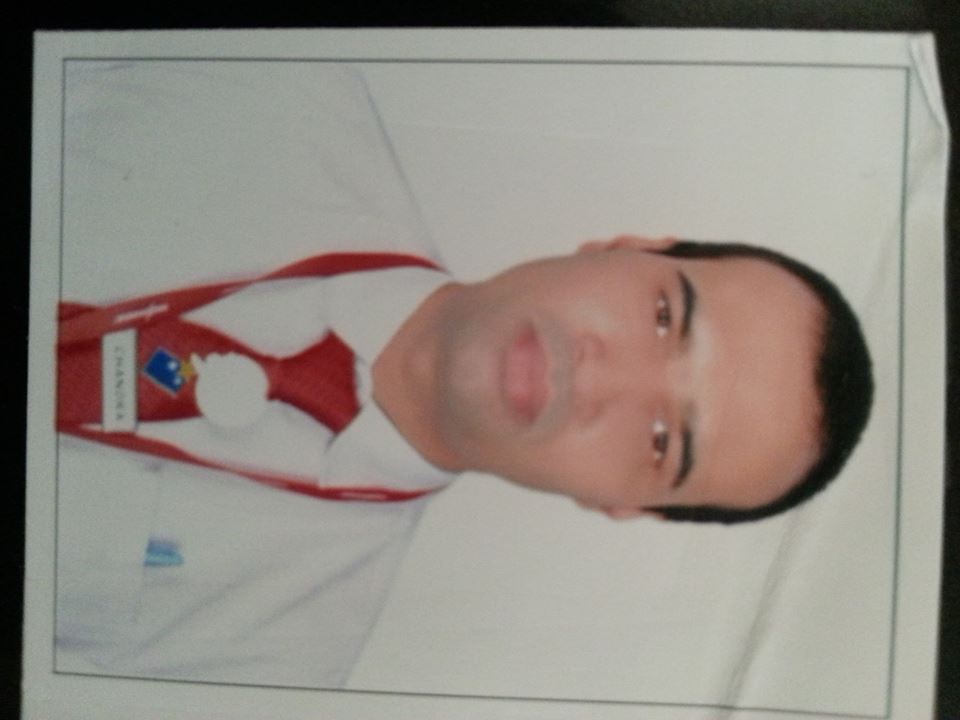
The new sartorial outfit of Nefin’s youngest ever president is formal: a combination of cotton pants, leather shoes, coat and Nepali topi. The 37-year-old says he did not own even a single pair of leather shoes and cotton pants before considering contesting the elections. “I wore only jeans and sports shoes until then,” says he. “I had to abandon all that informal wear to look more mature – mature enough to lead Nefin.”[break]
The swift transformation of Kumal’s appearance – from a young and aggressive ‘fighter’ to a mature and persuasive indigenous leader – symbolizes how Nefin itself is undergoing change. “I was like a fighter always ready to clash with any opposing political force on the streets,” says he. “My new get-up does not allow me to just hurl stones on the streets.”
Arguably the most significant change that the Nefin underwent is its take on federalism. In a 30-point manifesto passed by its eighth national convention, the Nefin did not talk of single ethic identity-based federalism. It just called for identity-based federalism. And, the Nefin leaders explain that identity is not just ethnicity. “It could be ethnicity,” says Kumal. “But, it could be language, culture, history, religion and even geography.”
Dipesh Shrestha/The Week File Photo
Nefin’s former president Raj Kumar Lekhi, who emerged as kingmaker by helping Kumal win the election and foiling the efforts of political leaders to unilaterally elect Chandra Bikram Rai as the new president, says, “In fact, single ethnic identity-based federalism was never our political agenda. It was floated by the Maoists. And, influenced by the Maoists, some indigenous leaders also started talking of single-ethnic identity.”
Lekhi says he had to struggle very hard to persuade other indigenous leaders to drop the demand for single-ethnic identity. “Throughout my tenure as Nefin’s president, I tried to persuade other leaders to fight for identity-based federalism and not single-ethnic identity,” says Lekhi. “In this sense, Nefin’s eighth convention was my victory. Only at this convention did Nefin for the first time drop the idea of single ethnic identity-based federalism.”
Although Nefin remained conspicuously silent on single-ethnic identity in its manifesto, Kumal still calls for preferential political rights for the excluded and marginalized ethnic communities in the identity-based federal provinces for a certain period. However, going by how indigenous leaders agreed to add zonal names like Bagmati and Gandaki to identity-based names like Newa and Tamsaling in the twilight hours of the now-dissolved Constituent Assembly (CA), one can easily understand that the demand for preferential rights can be used just as a bargaining chip in negotiations.
Last year, when the Caucus of lawmakers at the CA representing indigenous and ethnic communities saw no possibility of the top leaders agreeing to its agenda, it agreed to acknowledge geography as a basis for carving out the provinces under the new federal structure. “We wanted to help the political parties forge consensus on the thorny issue of federalism,” says Prithvi Subba Gurung, a politburo member of the CPN (UML) who led the Janjati Caucas. “Unfortunately, our flexibility did not help.”
What caused Nefin to stand for a more liberal view on federalism could be the growing disenchantment of people, not necessarily within the ethnic communities, with the dominance of certain groups in the prospective federal provinces. Although it is increasingly turning into a major political force among the ethnic and indigenous communities, Nefin is still essentially a social organization. Registered as an NGO and supported by donors, Nefin has its own limitations.
In 2011, when it called one general strike after another to push its demands, Nefin had to lose a huge chunk of funding that the British government’s Department for International Development (DfID) had pledged. With the withdrawal of DfID support, other donor agencies also stepped back, affecting several of Nefin’s programs. With the beginning of the transformation in Nefin, DfID is believed to have sent a green signal for the resumption of its assistance.
The Chitwan convention gave Nefin its first president from a minority group. For more than two decades since its inception, Nefin was always ruled by large indigenous communities like Magar, Gurung, Tamang, Rai and Limbu. At the eighth convention, the voice for handing over Nefin’s leadership to someone from a minority group had become very strong, and this facilitated Kumal’s emergence as the new indigenous leader.
Kumal’s victory also indicates that Nefin has now embarked on a journey to become much more inclusive, in keeping with its principal and policy. “It is a break with tradition,” says Surya Bahadur Bhujel, who is one of the newly elected vice-presidents of Nefin and also hails from another minority group.”Until the Chitwan convention, Nefin, contradictory to its own principal, had never been inclusive and representative of all in the true sense.”
If CJ can lead government, why can’t CA be revived?
After being elected president of the Nepal Federation of Indigenous Nationalities (Nefin), Nagendra Kumal has been busy in meetings with various political leaders to press the agendas of the ethnic communities. On Wednesday, shortly after he met chairman of the interim election government Khil Raj Regmi and coordinator of the High Level Political Committee (HLPC) Jhalnath Khanal, Republica caught up with him to learn about Nefin’s political agenda and view on federalism.
What agenda are you pressing during your meetings with political leaders?
Political parties seem to be in favor of the Election Commission (EC)’s recent proposal on downsizing the Constituent Assembly (CA), which will naturally lead to a reduction in the number of CA seats allocated under the proportional quota. They are also positive about the EC’s proposed provision of a threshold for seats under the Proportional Representation (PR) electoral system. We are dead against these two proposals. Although we have a wide range of demands, we are currently pressing these two issues.
Why is Nefin against these proposals?
We believe these provisions will weaken the voice of ethnic communities in the CA. This is an act of excluding the ethnic communities while drafting the new constitution. We will not remain passive if our voice is suppressed in the constitution-drafting process. We are not only for the proportional representation of ethnic communities but also for the participation of the most marginalized and excluded groups such as Raute, Kusunda and Dolpo. If they cannot win elections, their participation should be ensured through nominations or proportional quotas.
Is the participation of each and every ethnic community possible in the CA?
It should be made possible. The CA elections are not for electing the government or forming parliament. It is a process of drafting the constitution of the people. In such a historic process, no community should be left out. We should not even shy away from forming the largest ever CA if this will ensure the involvement of all ethnic communities in the constitution-drafting process. If this is not financially feasible, we can revive the dissolved CA for three months. Before its dissolution, the CA had completed 90 percent of its work. Only issues such as federalism were yet to be sorted out. We can complete the remaining task in the extended three month-period. But before we revive the CA, we must sort out all the remaining issues. The extended period of the CA should be only for technically finalizing the constitution.
Is it really possible to revive the CA?
Why not? Some say revival of the CA would be unconstitutional. But Chief Justice Khil Raj Regmi, who ruled out the possibility of any further extension of the CA term, has himself became head of the executive, ignoring the principal of separation of powers. If CJ Regmi can head the government with the consensus of the political parties, why can the CA not be revived if there is similar consensus? If the reinstatement of parliament was possible after the April uprising, why can the CA not be reinstated now?
What is Nefin’s stance on federalism?
As mentioned in our Sauraha manifesto, we want identity-based federalism. Identity does not mean just ethnicity. It could be language, religion, culture or history. In the identity-based federal provinces, all castes and ethnic communities should be given equal opportunities.
So, does Nefin not want preferential rights for ethnic communities in the identity-based federal provinces?
Those ethnic communities that have faced exclusion and marginalization for ages should be given preferential rights to lead the governments of the federal provinces for one or two terms. But, this should not be viewed as discriminatory. It is in fact for giving all castes and communities equal opportunity. As of now, only certain castes or groups have enjoyed the privilege of running the country. Now, the excluded and marginalized should be given opportunity to be at the helm of the federal provinces. Only then can equality be ensured.
Related story
Kumal community to mark Maghe Sankranti festival in Golaghat