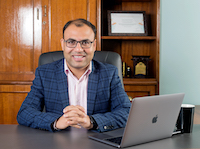
The manual was officially launched on Monday, September 26 at Dhokaima Café in Patan Dhoka.[break]
The manual is expected to guide and motivate the work of childcare service practitioners and is in line with the principles and provisions of the United Nation Convention on the Rights of Child, 1989, and UN Framework, Guideline for Alternative Care for Children 2009.
The chief guest at the program was Dharma Raj Shrestha, Executive Director of Central Child Welfare Board. The program opened with Gupta Prasad Sharma, Chairperson of Hope for Himalayan Kids, Nepal delivering his welcome speech.
“We’re gathered here to witness the launch of a crucially important book. Our organization works for the betterment of homeless children and we hope that the manual that we have prepared will be able to guide people in using it practically rather than just limiting it to the book itself,” said Shrestha.

Similarly, Nawjeet Karmacharya of Terre des hommes Foundation shed light on the context of the book.
Deborah McArthur and Aruna Khadka did a presentation on the contents of the book. McArthur, Kadka and Chandrika Khatiwada are the author and coauthors respectively of the manual.
“The word deinstitutionalization is long, and similarly the steps to it are long and difficult as well,” said Khadka, also the co-founder and Executive Director of Hope for Himalayan Kids, Nepal.
Giving the background of the organization, she informed that it was formed in 2006 and worked specifically for children.
Khadka explained that deinstitutionalization is the process of moving children from large institutions, such as orphanages, to family or similarly-based care.
“For the last five years, Hope for Himalayan Kids has been working for such homeless children,” she added. She further said that the aim of the ten-step manual is also to assist other institutions, like orphanages, by documenting the steps taken at Hope for Himalayan Kids and through the trials of the deinstitutionalization projects.
“For some orphanages, it’s become a business and an avenue for child abuse. So we’re trying to fight for the rights of such helpless children,” added Deborah McArthur.
Explaining how the manual works, McArthur talked about the contents and steps of the manual.
The first step, she said, is building community awareness and this step focuses on what is happening in the child protection services and what is happening about child rights internationally, nationally and in our community as well.
Step two is titled “What is happening around us?” and provides information on international legal instruments, regional legal instruments, national legislation and policy.
Similarly, the other steps are about managing the goals, discussing the elements around the care of children, the logistics of recreating an institutional service that delivers alternative care, among other pointers.
The program was followed by a question-answer session facilitated by Deborah McArthur and Aruna Khadka.
Related story
PM expresses govt commitment to protect child rights
_20230830114144.jpg)


-1781882999.webp)