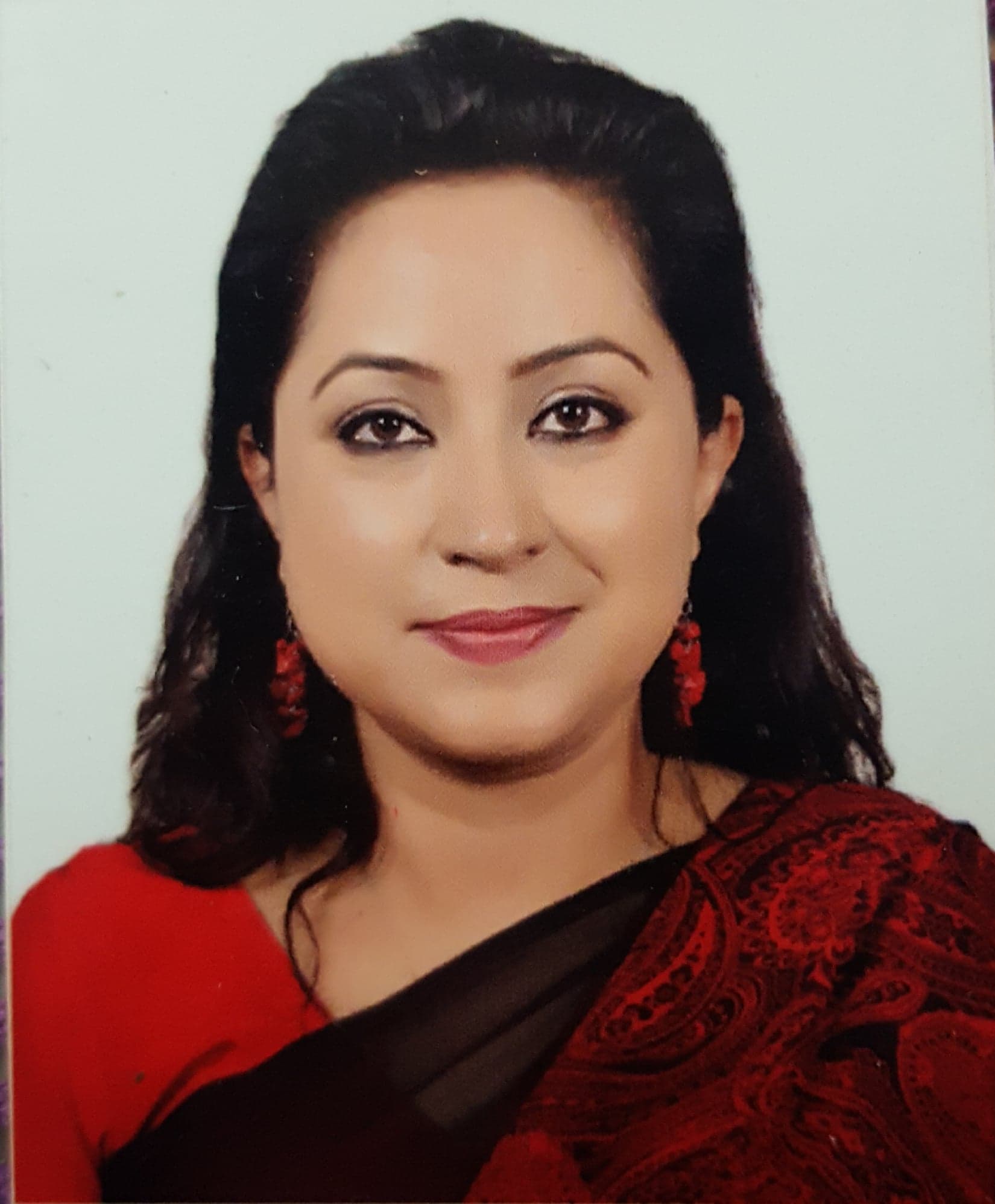
She also has had a two-year experience of working as Lecturer of Microbiology at HAMS Nursing College.
Besides, this 25-year-old engineer has also worked as a program presenter for the Times FM 90.6 Radio Station and as a dance instructor at different schools – Martyr’s Memorial, Galaxy, and Excelsior, to name a few. [bre]
At the same time, Sonu has also volunteered at the National People Awareness Development Society of Nepal (NPADSN), an NGO supporting orphans and needy children of the society in their education.
Here, Sonu talks about her present profession, the challenges and perks it offers, and many things in between.
What got you interested in biomedical engineering?
After I completed my high school studying Science, all of my friends went for MBBS. I didn’t want to follow that path, yet I wanted to be in the medical profession. Just then, I came across the course of Biomedical Engineering. Another factor that made my decision even clearer was the fact that there were only a few Biomedical Engineers in Nepal, and all of them men! So I took up Biomedical Engineering as my major subject.
Tell us about challenges you face as a biomedical engineer.
Being one among the first few Biomedical Engineers (BMEs) to have worked in any of the hospitals of Nepal, there were not just a few but many of my colleagues who actually didn’t know about my profession. That moment when I had to make each of them understand what a BME is and make a place for myself in the organization was challenging, yet rewarding at the same time. Even though the scenario is different today, the initial days were pretty tough when your male colleagues would look down upon you and try to make you feel inferior. I had to even fight with one of the doctors at the hospital during that phase. Today, people at least have an idea of what a BME is associated with.
Besides, having the right knowledge about how things work and what should be done about the medical equipments during certain conditions is a challenge as your decision could make or break that equipment and the process that you’re working on.
So what do you love about your job now?
To be able to work in the medical field and make a difference, even in the minimal scale, make me happy. I also love the fact that I’m contributing to establishing a place for my profession in the context of the whole country.
Tell us about your work ethics.
You should see things by yourself (firsthand) rather than listening and swaying to what others say, and make the right judgment irrespective of whom and what you’re dealing with. In a country like ours, where power speaks exponentially, you need to keep your head and belief high and strong to be move forward in the right manner.
What’s your greatest achievement till date?
Everyday is an achievement in itself. But I guess receiving the degree of a Biomedical Engineer and becoming one among the very first few engineers in this field should be my greatest achievement.
Your future career plans?
I’m planning to enroll myself for my postgraduate degree soon. As for the long run, I definitely see myself working harder on whatever I would be doing and contributing in one way or the other back to the society and the country as a whole. I’ll be doing all I can to make a difference in the medical field.
Related story
Nobel-worthy









-1778746562.webp)