Winner of several awards like the first prize at Boursiers Exhibition of Painting, Paris and other honors like Prix d’Honneur, International Art Exchange Exhibition, New York, Gorkha Dakshin Bahu Medal, Inter Nations Invitation, Germany, Shreshtha was recently in Kathmandu in search of some inspiration.[break]
The Week’s Nistha Rayamajhi caught up with the veteran artist to talk about his work and what inspires him.
Dipesh Shrestha
What made you venture into painting?
Even when I was just five year old, I used to draw a lot. I always wanted to be an artist and hence was more interested in drawing rather than history or geography in school. During my college days, I met an artist in Kathmandu and was really inspired. So, I ran away to Mumbai. It was in the 1960 that I got enrolled in Sir J.J. School of Art which is considered the best art school in Asia. The Dean there really supported me and gradually I progressed and started becoming first or second in class. After finishing my course, I immediately received a scholarship to go to Paris. It was there that I won the first prize in a world competition of Boursiers Exhibition of Painting, Paris. After returning to Mumbai, I also received the British Council Grantee at Central School of Art, London for two years. And that’s how it all happened.
What drove you to run off to Mumbai?
I went there purely on a whim. One of the reasons for running away was also because my family was against me becoming a painter. So I thought it would be best to just follow my dreams, go away and pave my own path. Luckily, it worked for me. I was 18 years old when I ran away. At that age, you aren’t mature enough to make it on your own as life is just beginning and there’s still so much you don’t know and understand at that phase of life. But I started learning a lot about life as I got around to experiencing a new culture and language.
What were the challenges like?
I’ve been through a lot of hardships during my initial days. There was a time when I didn’t have money for a whole year when I was in Mumbai. But since I stood first in college, the Indian government provided me with scholarship, and my hostel fee was covered as well. Sir J.J. School of Art has the tradition of giving away several prizes every year so I received four to five prizes and I used that money to buy local train tickets if I had to go somewhere. I was young and strong, so that’s how I survived. No one was aware of my condition but there was a person in the hostel canteen that provided me with food and told me that I could pay later. So you can say that I found good people who helped me along the way as I struggled.
How does travel inspire you?
I think it’s very necessary for people to travel, see new places, meet new people and try to understand their culture. Traveling has definitely inspired me in my work. I’ve lived and worked in Berlin for two years and New York for eleven years and I had a studio in Paris too. Even when I was young, I always needed to come back to the Himalayas to get some inspiration. If ever I got stuck somewhere and couldn’t solve a problem, I used to come to Kathmandu to look at the mountains and draw inspiration from that.
How did your experience in Paris inspire you?
I was lucky to get a scholarship to go study at École Nationale Supérieure des Beaux-Arts in Paris which, I believe, is just the right place for artists. It was during that time that I started to grow and understand life and art. I got a chance to meet great artists from all over the world. I believe that I met all the right people in that fascinating city.
In Paris, there’s a tradition where a famous painter accepts a student and lets the person learn under him. I, too, got that opportunity. It was one of the most rewarding experiences of my life.
I had always been inquisitive about art and had studied about the art history of Paris. I also learned about Van Gogh and Picasso. I visited museums which used to inspire me every single time. I also visited the places that Van Gogh had painted, like cafes where I just used to sit, have coffee and observe the surroundings and learn a great deal. Visiting galleries and museums, and meeting other artists was how I evolved and learnt, not only about art but also about life.
What, in general, inspires your work?
Life inspires me. There’re always some questions on your mind that you don’t have the answers to. That’s when you have to travel and get to know other people. You also have to listen to poetry, read books, and befriend poets, writers and musicians. Music has given a lot of depth in my paintings. So I’m very close to all these other forms of art. I traveled to a lot of places to find the answers to my questions as that’s the way to learn and grow and suddenly you start to understand yourself better. So inspiration thus comes from life, living intensely, and being aware all the time. I’m aware of everything that’s happening around me and that evokes inspiration. Every moment is a new beginning and that in itself is inspiring too.
What does art mean to you?
Initially, I really didn’t understand art that well. I think making good paintings doesn’t make someone an artist as anybody can master that. It takes a lot of time to really understand art and get into the soul of paintings. I’m an abstract painter who’s really intense and wants to get to the bottom of things. I believe there’s art in life. You read books, learn history, listen to old and new music and all these evoke certain emotions. And you want to express your feelings. What you express at that time with that knowledge can then be called art.
What are your upcoming plans and do you have any suggestions for emerging artists?
An abstract exhibition is taking place at Prince of Wales Museum in Mumbai, where my work will be featured. That will go on for six months. I’ll be visiting Paris after that where there’re a lot of exhibitions lined up.
If you’re really passionate about art and that’s the only thing you want from life, then you should go for it. Passion and creativity are all that you need to understand art and become an artist.
Related story
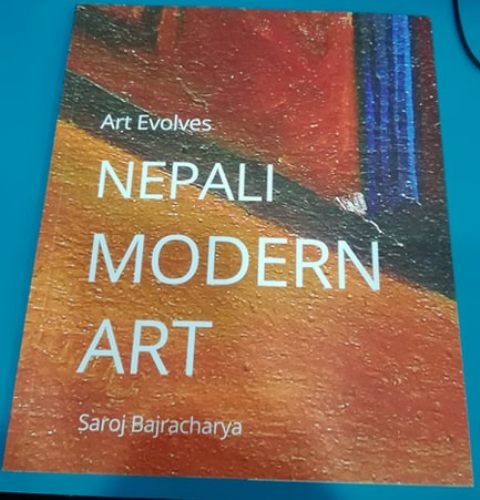
‘Art Evolves: Nepali Modern Art’: Review