You are a member of the four-man Maoist team negotiating with opposition forces. What solution do you propose to end the current crisis?
First, it is vital to take transitional politics to its meaningful end. This is the historical responsibility of political forces. At present, the only way of doing this is through new CA polls by May 29, 2013. But for this we need to be able to come to an understanding on national consensus government, make arrangements for new polls and create the bases for drafting new statute through new CA. We need to forge consensus toward this end in the next few days.

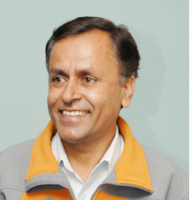
PHOTO: DIPESH SHRESTHA
The PM has been insisting opposition forces join the current government for a short period before leadership can be handed over to Nepali Congress. But opposition forces have made PM’s resignation a precondition. In this situation, how will the impasse end?
Our first priority is to transform current government into national consensus government and allow it to conduct polls. Thus if the opposition forces, mainly NC and UML, join this government, so much the better. The best bet would be to let this government decide on issues related to new polls before NC takes over the reins. This would be constitutionally right and relatively easy. But our bottom line is ensuring new CA polls. So we are open to other options if there is guarantee of new statue by new CA. If this is guaranteed, government leadership should not be an obstacle.
Of late party chairman Pushpa Kamal Dahal seems flexible on new government even while the PM seems adamant in his stand. This seems to be creating a rift between the PM and the chairman. Is that the case?
We have differences in the party on some political matters and how we should move ahead. We should acknowledge such differences and take it naturally. But our party is firm in its stand that the current government should be allowed to hold polls and the opposition forces should join it. So there is no difference between party line and PM’s stand. But the party does not consider that only the current government can hold polls. I do not see much difference between the party chairman and the PM. Nor has the PM put the chairman into a difficult situation.
Is it not true that PM’s rigid stand has put the chairman in a difficult spot?
The chairman has been acting in line with the party’s official stand. So there is no reason why there should be any rift between the PM and the chairman.
Even after the party’s split earlier in the year, UCPN (Maoist) is still believed to be faction-ridden, divided among one faction headed by you, one by chairman Dahal and one by PM Bhattarai.
There is no denying that there are differences among us in terms of ideology. So naturally there are different viewpoints on several issues between myself, the PM and the chairman. But regarding the key political roadmap and action plan, we have no differences at all. To tell you the truth, at no other time has there been such strong unity among us on key political issues. But this is not to say we do not have differences on other issues. The differences were there before, they are there now and some differences will remain even in the future. But we are against factionalism of any kind. Factionalism will be inimical to consolidating unity.
There were also speculations that you even thought of quitting owing to differences in the cabinet.
As you may know, party decision is greater than individual decision in the party system. Thus unless the party endorsed my resignation, it would hold no meaning. The party would not allow me to resign and I abided by the party decision.
Let us change topic. You have been working toward strict diplomatic code of conduct when it comes to meetings between foreign visitors and diplomatic heads and key political actors and government ministers. How effective has it been?
I have found that the code of conduct have been well observed by concerned stakeholders. Yet it is also true that leaders in responsible portfolios do not seem to have taken the issue seriously. The main political leaders, former prime ministers and other ministers do not seem to have understood the significance of observing code of conduct while meeting foreign dignitaries. Thus I have been calling on them to be serious about maintaining diplomatic norms.
It has come to the light that your strict stand on maintaining protocols has angered the President and the US Ambassador to Nepal.
I spoke to the President in private before I made the issue public. I reminded him that diplomatic code of conduct should be strictly followed. I told him it is vital for the head of the state to observe the protocols. And I requested him to go through foreign ministry’s channels if he wishes to confer with foreign dignitaries. He had taken my advice in good spirit. But there have been some problems. If he had taken my suggestion seriously as he had promised, perhaps I would not have made the issue public. I reminded him of the gravity of the issue once again. And this time around, he has assured me that he is really serious about foreign ministry’s concerns. As regards the US Ambassador, he has confided to me that he is really appreciative of the foreign ministry’s stand on maintaining protocols. So I don’t think I have disappointed the ambassador either.
There is also an allegation that you did not play a constructive role in arranging for the PM’s visit to China.
This is completely untrue. As much as I tried to make Chinese PM’s visit to Nepal possible, I have also tried to arrange for Nepali PM’s visit to China. I have taken this initiative not only through formal channels and diplomatic correspondence with Chinese government, I have done all that a foreign minister could do to make our PM’s visit to China possible.
It looks like you oppose virtually every agreement that the PM endorses. Is that the case?
We have had differences on many issues which have become public. There is nothing to hide about it. I object to any decisions that can have long term repercussions on national interest. I have been telling the party and the prime minister that I am not going to stay a spectator to policies that have serious consequences on national issues.
It is said that your approach to dealing with India is different to that of the PM.
Regarding India, my position is clear. India is our neighbor and we should maintain good diplomatic relations with it. Anti-Indian stand can never be the foundation of our foreign policy. Having said this, I also believe Nepalis should be able to decide on issues of national importance themselves. And that any deals with India should keep national interests and Nepali people at the center. My concern is that there should be no external interference in Nepali’s right to self-determination and independence. Thus there may have been some differences between the PM and myself on this. But Nepalis have fought for decades and sacrificed thousands of lives for the sake of national independence and integrity. We cannot compromise on this at any cost.
You were opposed to the BIPPA treaty and have expressed your opposition to the proposed modernization of Tribhuvan International Airport (TIA) immigration system by India. Where do you disagree with the PM in this?
I have spoken a lot about my reservations about BIPPA. In fact, I was opposed to it even at the time of signing of the agreement in Delhi. In TIA’s case, there is no denying that our immigration system needs to be urgently upgraded. This is related to our national security as well. Likewise, it is natural for India to want to keep the international airport of the country with which it shares open border in order. But I still believe that the project should be carried out through internal resources. We should not depend on our neighbor for such a sensitive project. After all, it’s not even a large project. We must complete the project but on our own initiative.
How do you assess India’s role in Nepal’s political affairs?
First, we should not blame others for our problems. That does not solve anything. If the political forces in Nepal are bold enough, no one can meddle into our internal affairs. So we are to blame for this situation where we have come to believe that there can be no meaningful political solutions without external interference. The situation is such that even if the political parties are successful in breaking the current logjam, people will suspect India’s hand. This is really sad. There is a lot to do to correct this misperception. But it would be best for our neighbors to stay away from our internal affairs to dispel doubts on their true intent.
PM Bhattarai is said to be enjoying New Delhi’s backing even now. Meanwhile, the President is currently in India on an official visit. There are speculations that the President will come back to Nepal with India’s message on breaking the logjam. What is your view on this?
I do not want to comment much about it. It is necessary for us to assure the people that we do not rely on external forces to solve our problems. As for President’s India visit, as a sitting foreign minister and a leader of a responsible political party, I had suggested to the President that this would not be the right time for the head of the state to go on six-day foreign visit, especially while he has been active in bringing political forces together and asking them to forge consensus. I had told him that as someone playing the coordinator’s role to break the political impasse, he should stay back. I even suggested that he could go to Benaras for one day, if he must.
Second, there is the question of reciprocity. We cannot take the President’s visit in negative light. But this is his third visit since he became President, while neither the Indian head of the state nor the Indian head of the government has paid a visit to Nepal for over a decade. I had requested the President to consider this aspect as well.
How do you assess the concerns of the broader international community on political development in Nepal?
I have found them really positive about our success in settling the issue of army integration. But they seem to be disappointed at the slow progress in constitution making. They want Nepal to get a constitution through new CA. They want to see the end of political deadlock at the earliest.
Indian media seems to be worried about growing Chinese assertiveness in Nepal. How do you view this development?
I do not see it that way. China considers Nepal a good neighbor. It has no other interest than to see prosperous and stable Nepal. China wants Nepal to maintain good relationship with India as well. Chinese officials and delegates have shared this concern with me.
Finally, do you see any hope of the current deadlock ending by the time the President returns Saturday?
Let’s hope so. But as I said, it all depends on whether the political parties will be bold enough to come to consensus by the time. But given the urgency, there is no other way as well.
Related story
Revised interest rate corridor system introduced