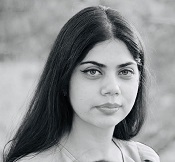
He wishes that people would know more about the place where almost 6000 people are functioning without a hospital, where there’s an acute scarcity of water and where the grants are spoiling the locals. “It’s sad how the people there are the least contributors of global warming but are the most affected,” he says.[break]
Where did you come up with the idea of installing a wind turbine?
In 2011, I was travelling to Ellora Caves in Maharastra discussing ways to harness the abundant wind energy in Mustang when I learnt that Jorge Ayarza, a wind expert, was staying in Auroville Ashram in Tamil Nadu. After I returned to Nepal, I started a fund raiser through which Funjok Gurung from Mustang and Jiwan Kumar Oli from Butwal was able to go to the Auroville Ashram to learn how to make a wind turbine from Ayarza. Jiwan had worked as an Alternative Energy Assistant with Annapurna Conservation Area Project for five years, and his technical expertise was important.
The normal wind speed in Mustang is six meters per second. So it can generate 10 kilowatts of wind energy per hour. We installed an 800 watt wind turbine in Nyamdok village. Since fiberglass is expensive, we used wood to construct the blades. We also asked the villagers to help. I’ve found that including villagers during the meeting, asking for their opinions and listening to them works wonderfully. It gives them a feeling of togetherness and a sense of community purpose. The wind turbine has the villagers excited, and like me they’re looking to a few more installations. They take walks around it every day. The turbine is installed at a distant area so there’s no visual pollution. There are beautiful 14th century monasteries there, and we didn’t want that view to be blocked.
Why did you opt to harness the wind energy in Mustang?
You have to understand that wind is viewed as a hazard in Mustang. People are constantly complaining about how last night’s wind shattered their window pane, how it brings in so much cold. I wished they would see it as something useful to them. In a race amongst wind, solar and hydro energy, the first will win the latter two because of the scarcity of water and the fragility of the solar panels. Also, building a wind turbine is cheaper.
Utilizing the wind energy solves a lot of problems for them. The locals will have electricity, they can use it to heat up water and the problem of sanitation will be lessened. The villagers can also start cooking their meals using electricity. Currently, they use caragana, a thorny plant which the villagers dry on their rooftops and use to cook food, as fuel. . Now with the extra meals that have to be cooked for the tourists there is extra need for fuel. People have begun marking territories to pick up caragana. Wind turbines will also facilitate the introduction of electrical cooking.
Photos: Dipesh Shrestha/Republica
How do you plan to take your idea further?
I’ve been sharing my ideas with the locals and the District Development Committee (DDC). There was talk of an international organization ready to fund the plan for some more turbines but I declined their help. The objective is to make sure that the villagers become a self sustainable community and we hope to receive grants from the district level. It’s quite easy to build a turbine and we want to see locals involved in the process. The plan, as we go on, is to have two bulbs per household. Then perhaps, we could ask them to pay Rs 50 per month. The money collected will go to a trust which will see to the repair and the maintenance of the wind turbines.
You seem to be very busy. What are you doing next, and how do you make time for everything?
I’ve exams in a few months and then I’ll be heading to Mustang. Apart from the wind turbine project, I volunteer in the capacity of a manager in Community Resource Action Joint Sub Committee (CRAJSC) there. CRAJSC was established by UNDP’s Upper Mustang Bio Diversity Project. UNDP stopped its funding after five years due to which the project closed. I was still volunteering as a teacher when I heard about it. CRAJSC is very important for Mustang because it takes care of everything. There was no reason for it to stop functioning.
Next, I will be off to Ladakh in India. My girlfriend is putting together a museum in a monastery. She’s collecting and restoring artifacts for the museum. I’m the Public Relations Manager for Nepal and India.
I don’t make any structured plans. I’m just lucky things have fallen into place.
Related story
All houses look similar in Sindhuli after reconstruction